Whatever Weds. Celestial and Birds

Copyright ©2025 Deborah M. Zajac. ALL RIGHTS RESERVED.

PLEASE DO NOT USE MY IMAGES WITHOUT EXPRESSED WRITTEN PERMISSION.

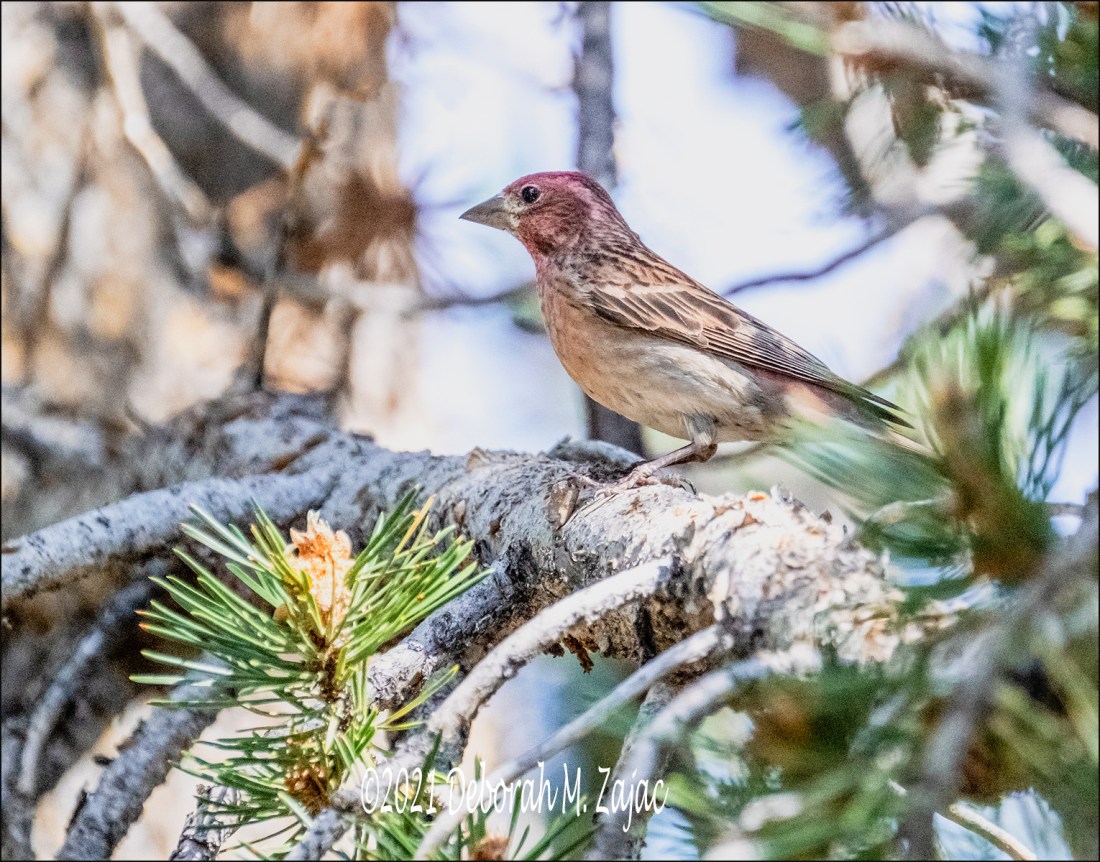
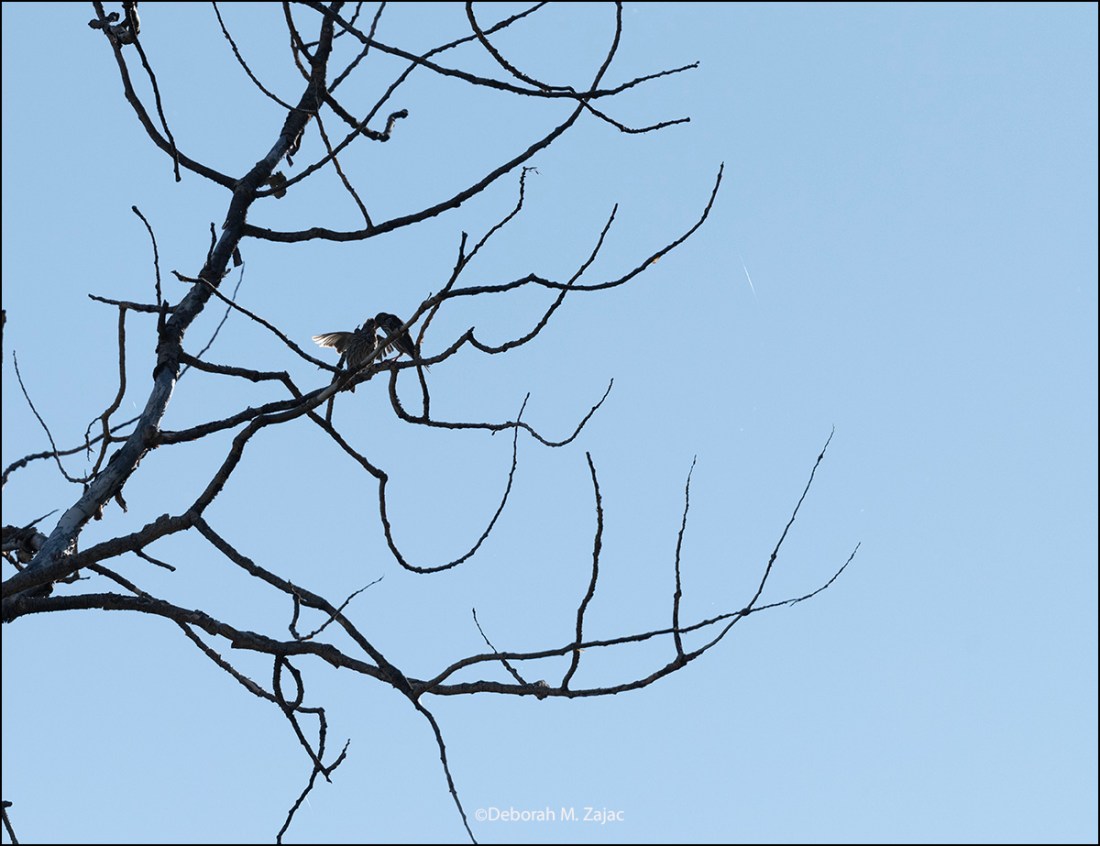
While birding last week I saw a Cassin’s Finch chick being fed by its parent and made several images of it. Unfortunately, they were facing me with the sun to their backs and in my face. So, the image isn’t great but, what is… is what I discovered once I uploaded my images.

Off to the right of the birds is a satellite flare. I think it’s a Starlink flare/glint which would be the first time I’ve photographed one of those.
©Deborah M. Zajac | http//:circadianreflections.com Image

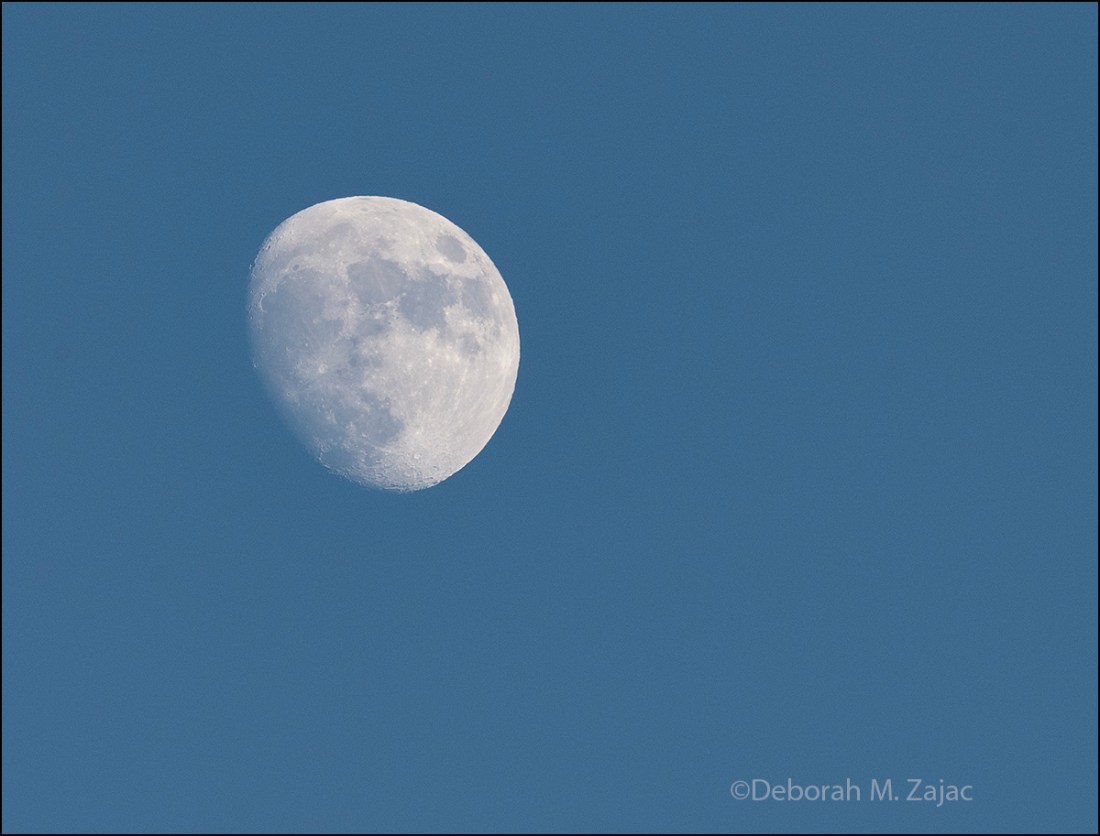
Regarding this next image- A friend had been sharing his images of the Moon several days ago with me so, the other evening when I saw the Moon shining out my living room window I was inspired to get up and photograph it.

Here’s the moon at 82.7% percent full. A waxing Gibbous Moon from July 6th.
©Deborah M. Zajac | http//:circadianreflections.com Image

The bottom crater is Tycho. I really like its crusty textured bits. I know the other large crater off on the left below the Sea of Showers is the Copernicus Crater. I wish I didn’t need a poster to help me every single time with the other sea and crater names, but I do.

July’s Full Moon is called the Buck Moon. It also has several other names like Thunder Moon, and Hay Moon.

The Full Moon this month is July 10th.

Fun Facts:

This full moon coincides with a Major Lunar Standstill in 2025, making the moon appear especially low in the sky after sunset due to its orbital path and the recent summer solstice.

  • It will be the farthest full moon from the Sun in 2025, occurring shortly after Earth reached aphelion — the point in its orbit farthest from the Sun.
  • In some regions, such as India, the full moon coincides with Guru Purnima, a spiritually significant event, enhancing its cultural importance.
  • The Buck Moon gets its name from the Algonquin-speaking Native American tribes, as July is the time when male deer (bucks) begin to grow new antlers covered in velvet, symbolizing renewal and growth.

Fun facts gleaned from Space.com

Nikon D850| Nikkor 500mm PF-e| Processed with Photoshop CC

more to come…
Friday’s Feathered Friends-Birds!

Copyright ©2024 Deborah M. Zajac. ALL RIGHTS RESERVED.

PLEASE DO NOT USE MY IMAGES WITHOUT EXPRESSED WRITTEN PERMISSION.

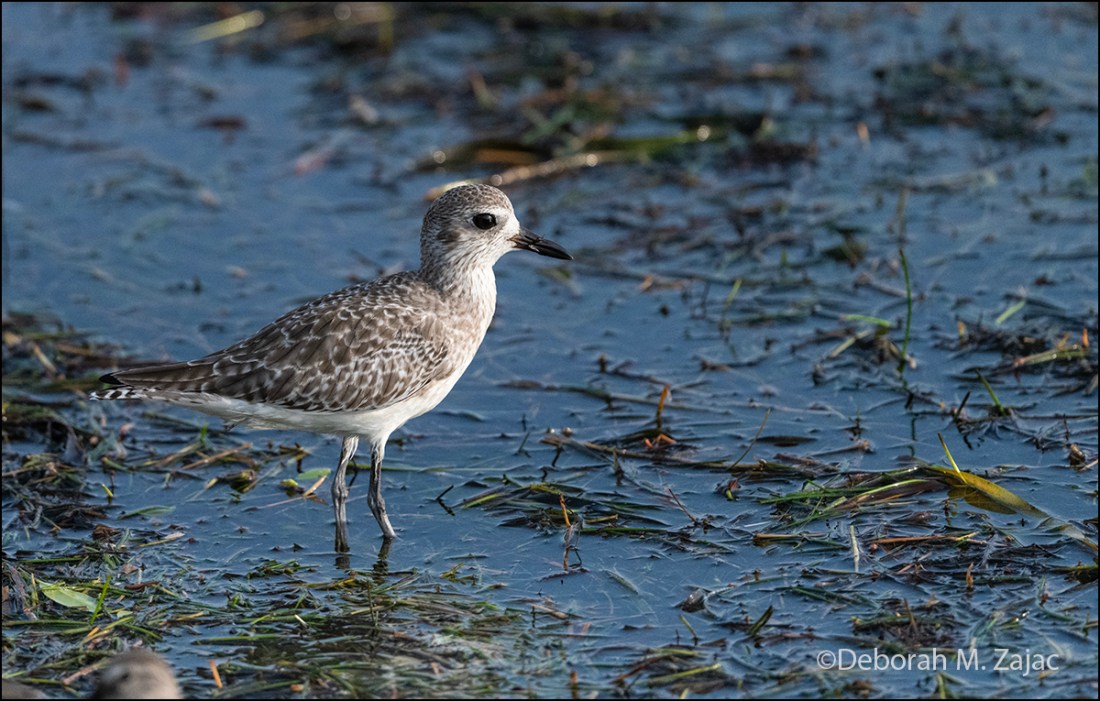
It’s been awhile since I shared any birds so I’m going to share several I saw while in Florida this past September. It was a fantastic trip. I saw 21 new to me birds aka “Lifers”. I won’t share all of them in this post. 😊

Black-bellied Plover

©Deborah M. Zajac | http//circadianreflections.com Image

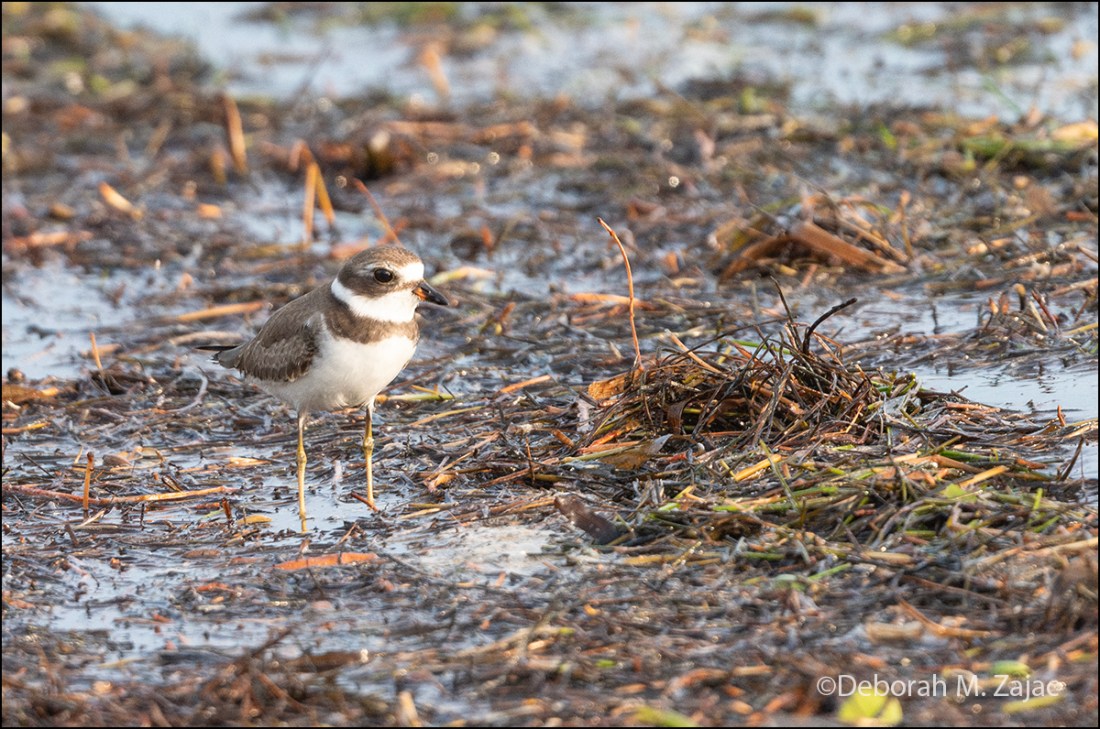
Semipalmated Plover

©Deborah M. Zajac | http//circadianreflections.com Image

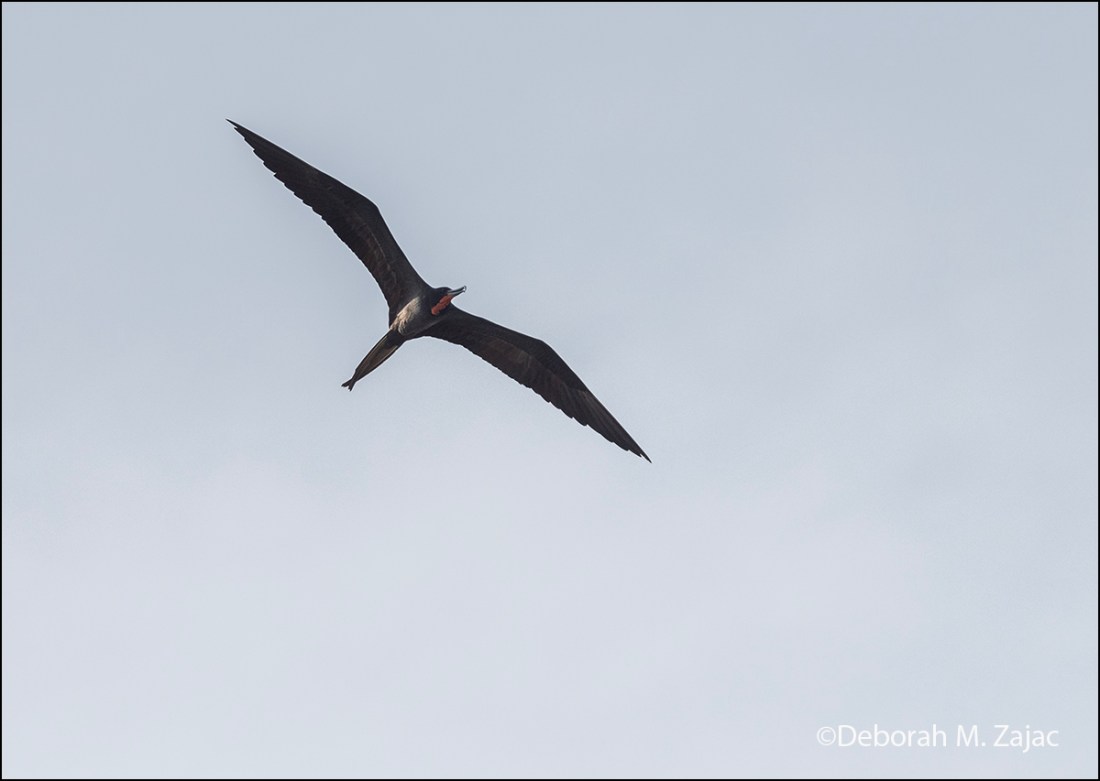
A Magnificent Frigatebird. This was the first time I’d ever seen it in the United States. I have seen it in Mexico before.

©Deborah M. Zajac | http//circadianreflections.com Image

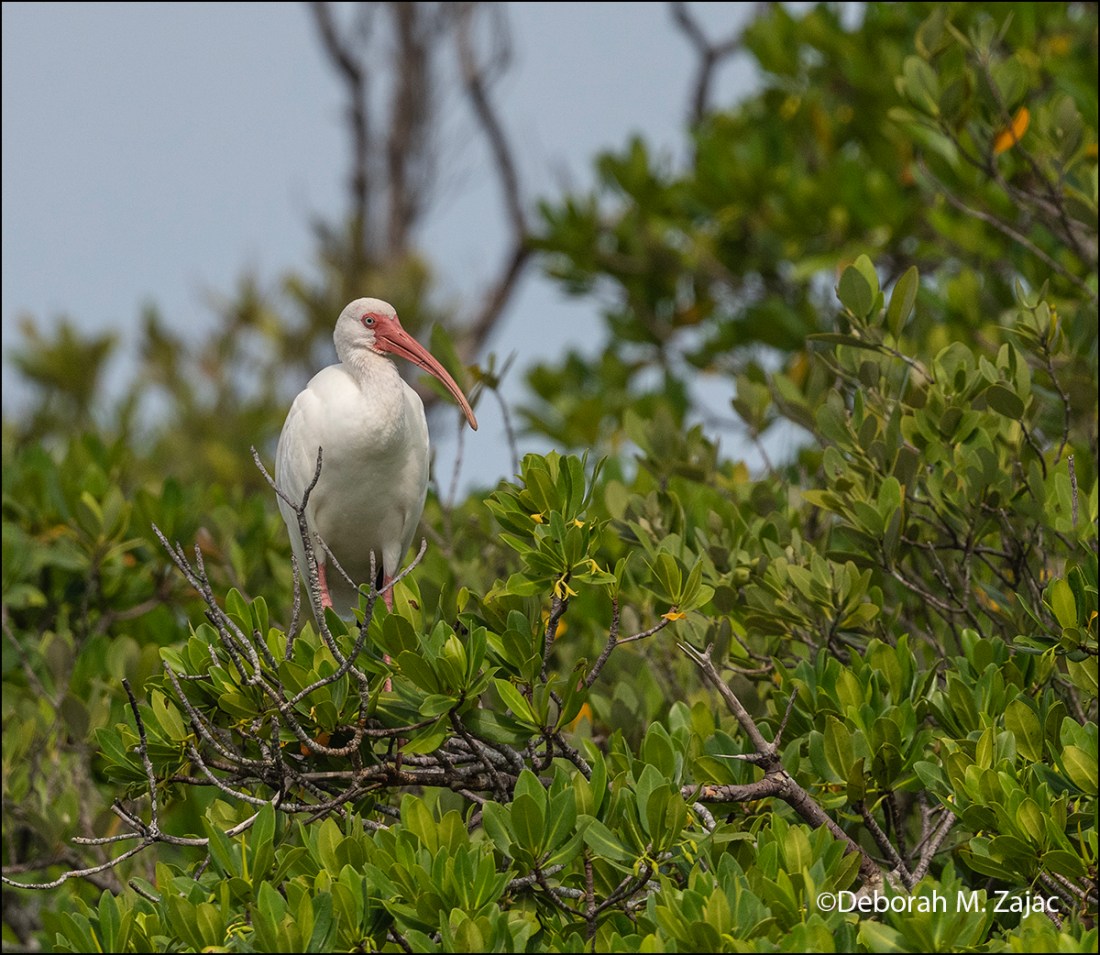
And a White Ibis

©Deborah M. Zajac | http//circadianreflections.com
Image

Aren’t they great? I’m still excited to have seen them.

How’d you all do with the time change for those of you in states and places that end Daylight Savings Time? How many clocks did you have to reset? We have 8 clocks we needed to change including the thermostat and our cars. I’ve been waking up earlier than normal so back to my natural rhythm at last!

I hope you all have a lovely week-end.

Nikon D850|Nikkor 500mm| PS CC

more to come…
Friday’s Feathered Friends-A Great Day Birding

Copyright ©2024 Deborah M. Zajac. ALL RIGHTS RESERVED.

PLEASE DO NOT USE MY IMAGES WITHOUT EXPRESSED WRITTEN PERMISSION.

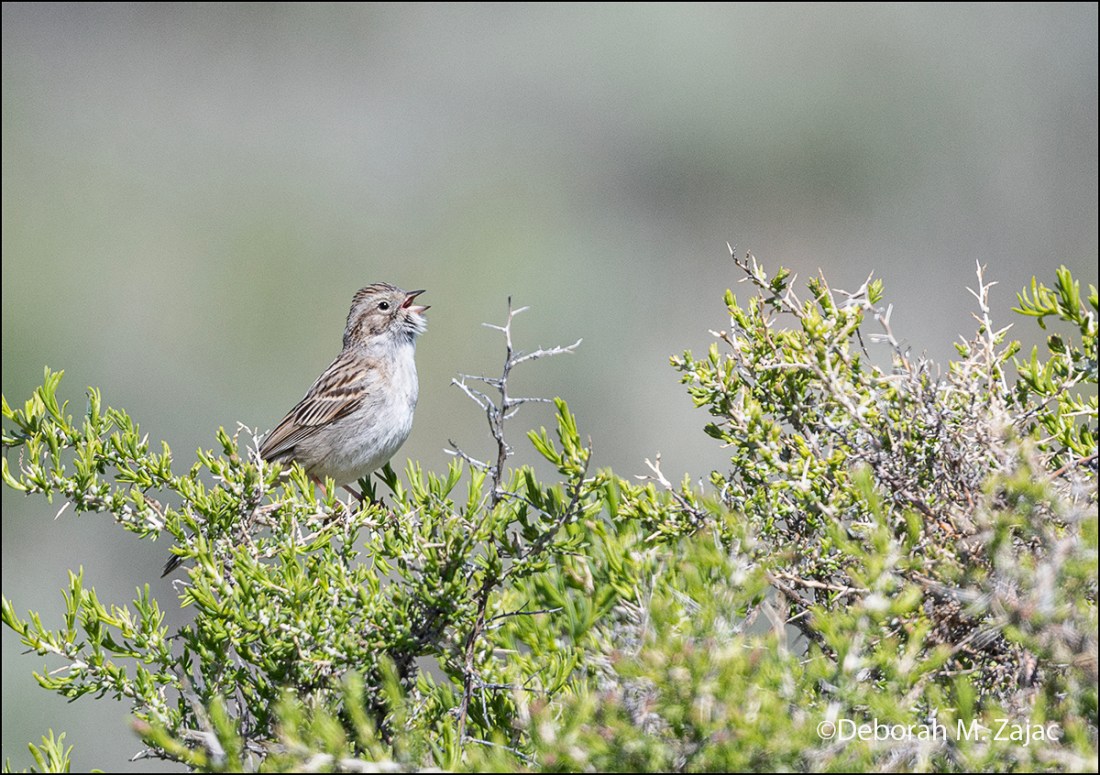
Last week I was birding with a group I belong to. We had a very exciting birding day with 66 species sighted. There were lots of great sightings, one was while in a big field in a Washoe Co. in the sagebrush, we saw a Brewer’s Sparrow and I got a few good images. It’s a “lifer” for me. A “lifer” is the first time you’ve ever seen a bird species.

Brewer’s Sparrow Singing its Morning Song

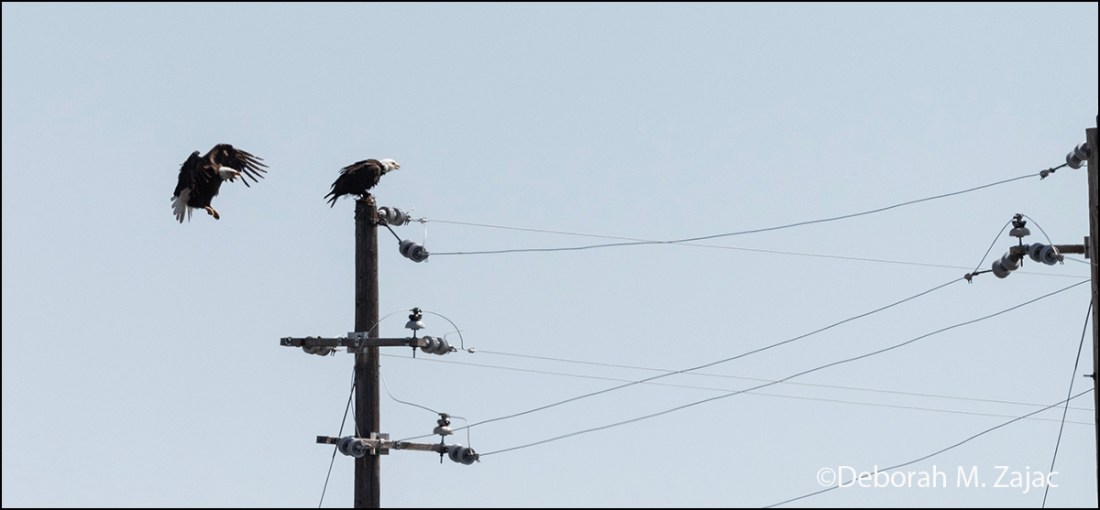
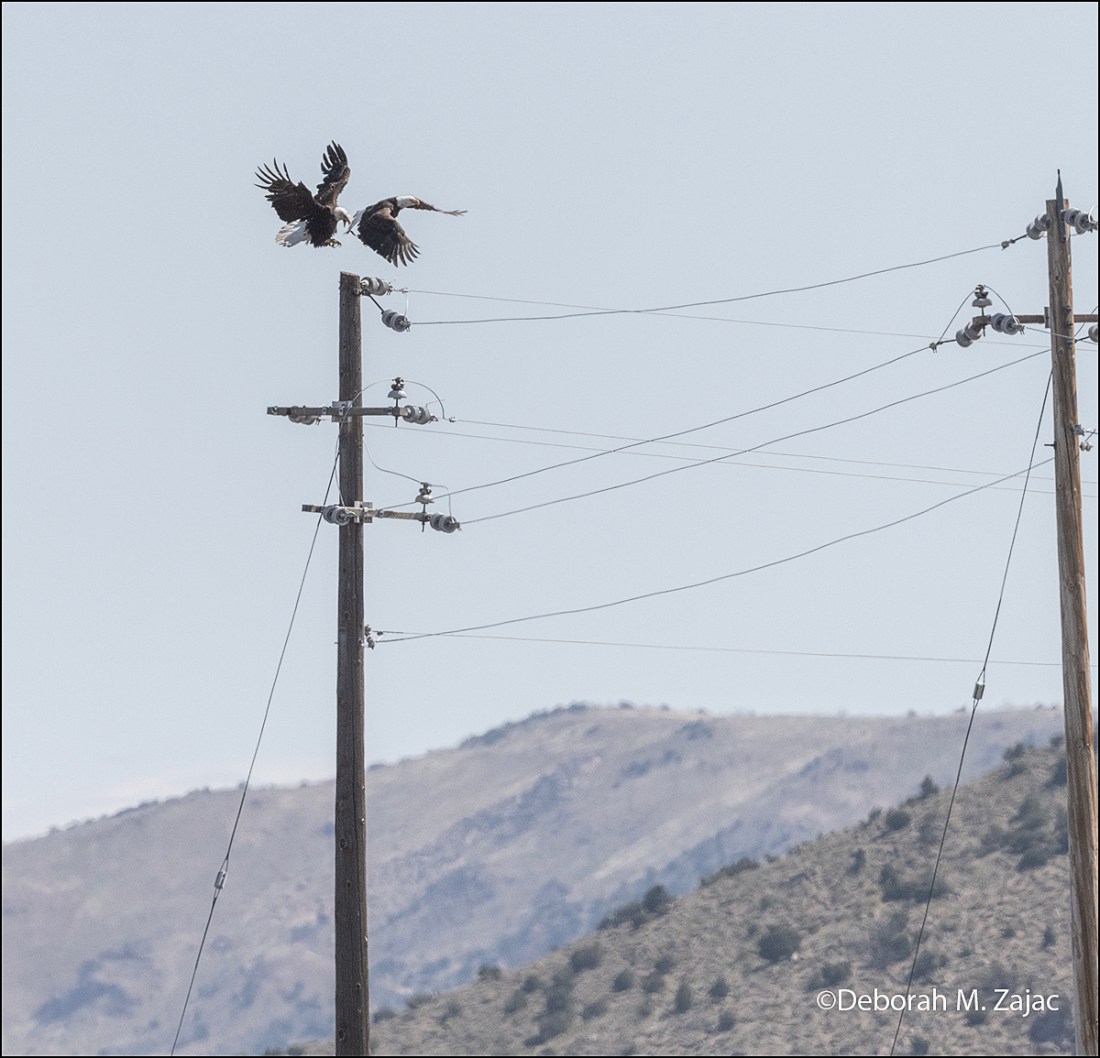
We saw two adult Bald Eagles which was exciting because one flew onto a telephone pole carrying food of some sort and started eating. Then we heard another Eagle call out and fly into the scene ready to attack from behind!

It tried to steal the food of the BE on the pole. The BE with the food took its prey and flew over to a nearby telephone pole and carried on eating while the would-be thief sat on top of the pole trying to figure out what went wrong and why he now had control of the pole but no food. 😂

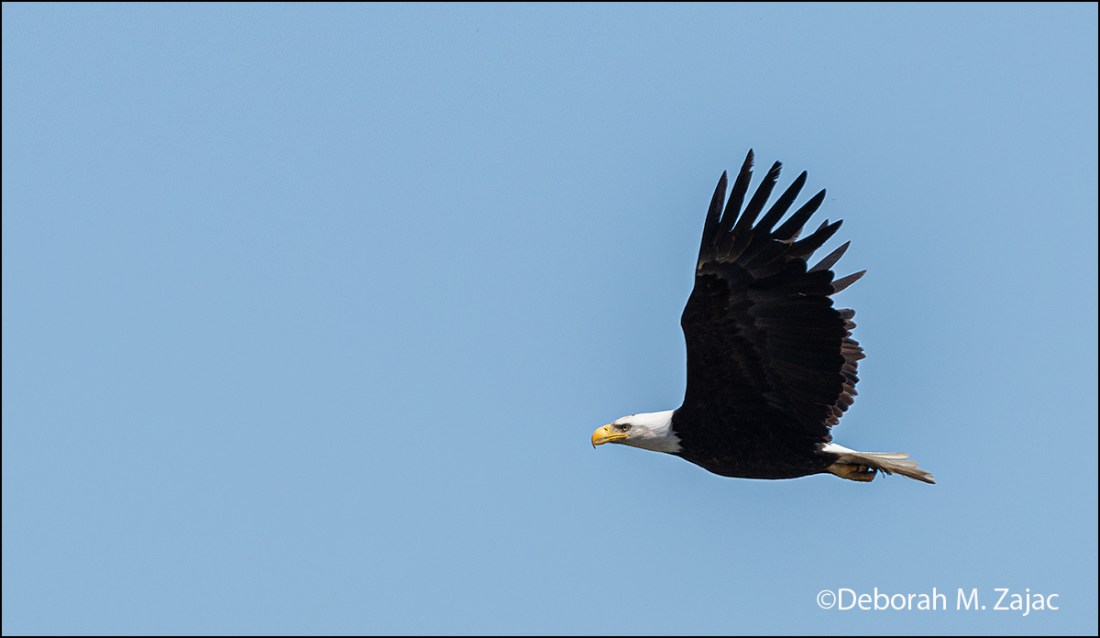
In three images: The approach, The Attack, and the would-be thief flying off several minutes later very disappointed.  I was too far away from the poles to get good images, but they’re keepers and good enough to tell the story with.  

Incoming attack from behind
The Attack, and Get-away.

The Would-be thief flyby was better as I had moved closer by then. 

American Bald Eagle in Flight

Some other cool birds I saw and photographed were:

Lark Sparrow in Flight
Sage Thrasher Perched
Black-billed Magpie with Blue reflected in its eye
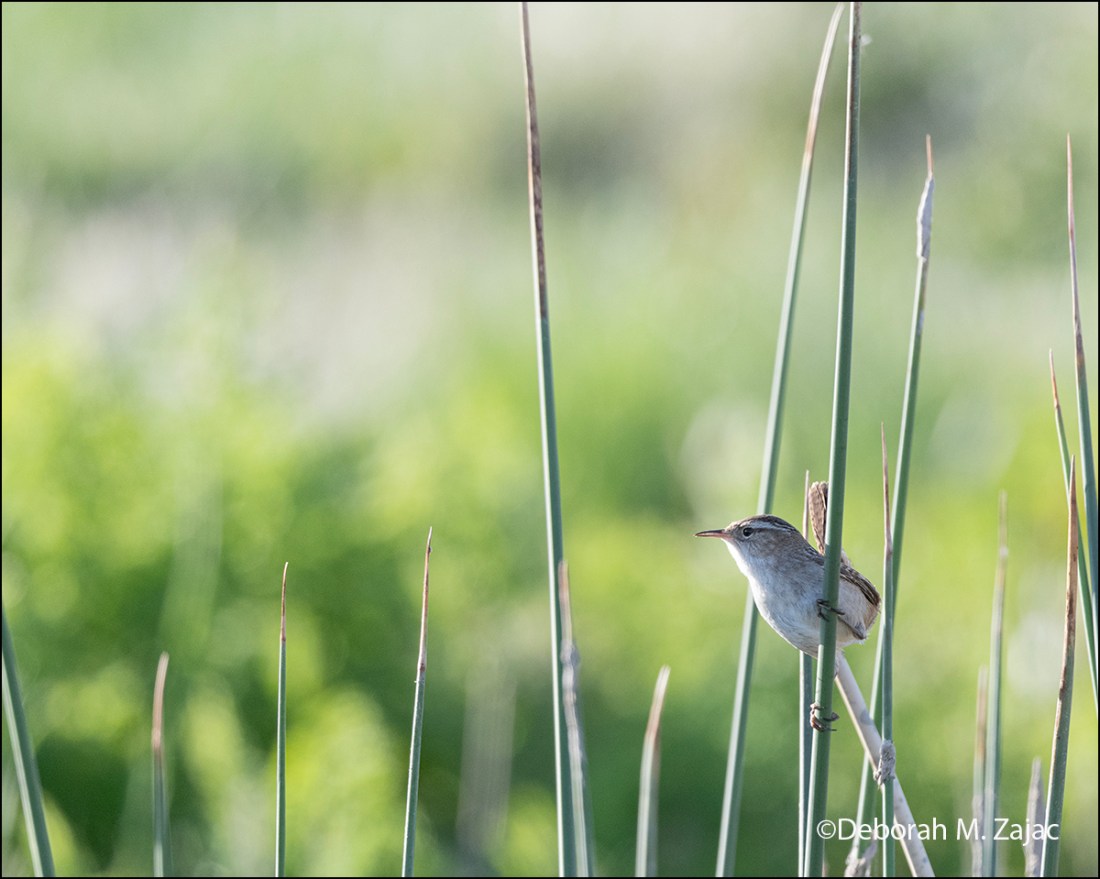
Marsh Wren-The Poser

I don’t have any cool bird fun facts for you today as the post would be too long. It’s already longer than my usual post.

FYI, I will be late getting back to you on the comments but, I will get to them.

I hope you all have a great week-end!

Nikon D850|Nikkor 500mm PF-e| PS CC 25.7.0

more to come…

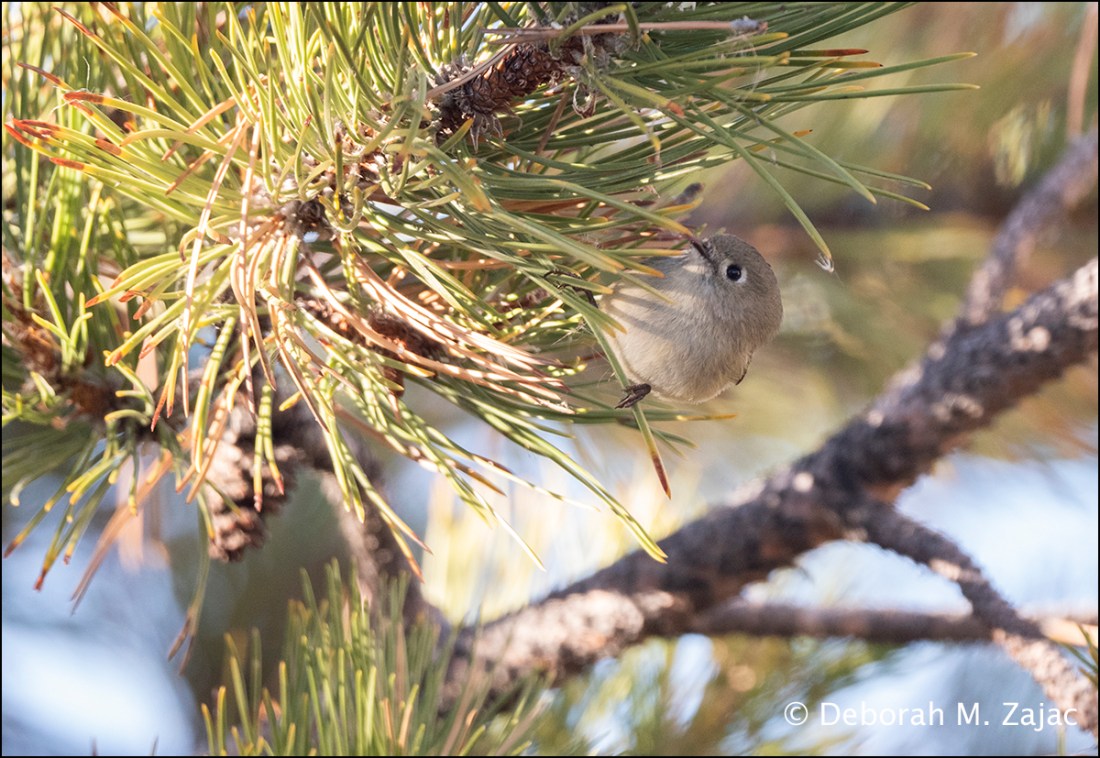
Something for Sat. Ruby Crowned-Kinglet

Copyright ©2024 Deborah M. Zajac. ALL RIGHTS RESERVED. 

PLEASE DO NOT USE MY IMAGES WITHOUT EXPRESSED WRITTEN PERMISSION.

I don’t want the week to go by without a post so here we have me posting on a rare Saturday.

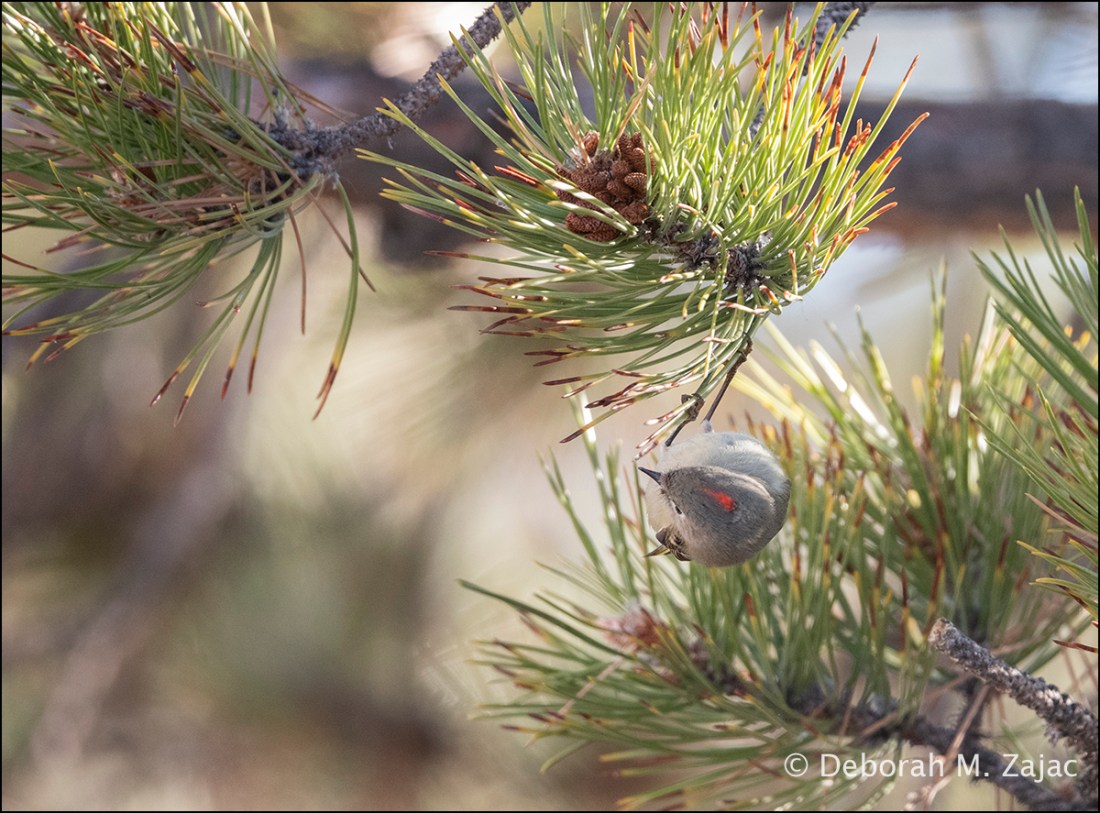
This little Kinglet is so cute, but very flitty normally but, on this day earlier this month I was able to get quite a few good looks at this one.

They’re a small bird being only 3.5-4.3 inches in length, and weigh 0.2-0.3 ounces.

They get their name from a Ruby spot on their crown.

I have yet to see it flared, but here’s a look at the top of its head showing the Ruby spot.

This one is busy being an acrobat which afforded me a good look at its Ruby Spot which was a treat. Just look at how light they are it’s holding onto those pine needles and they aren’t bending!

Fun Facts:

  • The Ruby-crowned Kinglet is a tiny bird that lays a very large clutch of eggs—there can be up to 12 in a single nest. Although the eggs themselves weigh only about a fiftieth of an ounce, an entire clutch can weigh as much as the female herself.
  • Ruby-crowned Kinglets seem nervous as they flit through the foliage, flicking their wings nearly constantly. Keeping an eye out for this habit can be a useful aid to identifying kinglets.
  • Metabolic studies on Ruby-crowned Kinglets suggest that these tiny birds use only about 10 calories (technically, kilocalories) per day.
  • The oldest known Ruby-crowned Kinglet was a female, and at least 8 years, 8 months old, when she was recaptured and rereleased during banding operations in Texas in 2017. She was banded in the same state in 2008.

Fun facts gleaned from allaboutbirds.orghttps://www.allaboutbirds.org/guide/Ruby-crowned_Kinglet/overview

I hope you all have a great week-end!

Nikon D810| Nikkor 500mm PF-e| PS CC 25.3.1

more to come…

Whatever Weds. This and That June 2023

Copyright ©2023 Deborah M. Zajac. ALL RIGHTS RESERVED. 

PLEASE DO NOT USE MY IMAGES WITHOUT EXPRESSED WRITTEN PERMISSION.

Peek-a- Boo!

Here are several images of things that have caught my eye since my last post. Oh, and I bought a new lens so, I’ve been using it exclusively to make sure it’s a good copy. The last time I took my 300mm lens out it was hunting an awful lot…like it was doing many years ago when the Auto-Focus motor was going out which did quit working soon after. I had it repaired/replaced then, but the lens is so old now it’s not worth repairing so it has become a bookend and, I upgraded to a newer, longer lens.

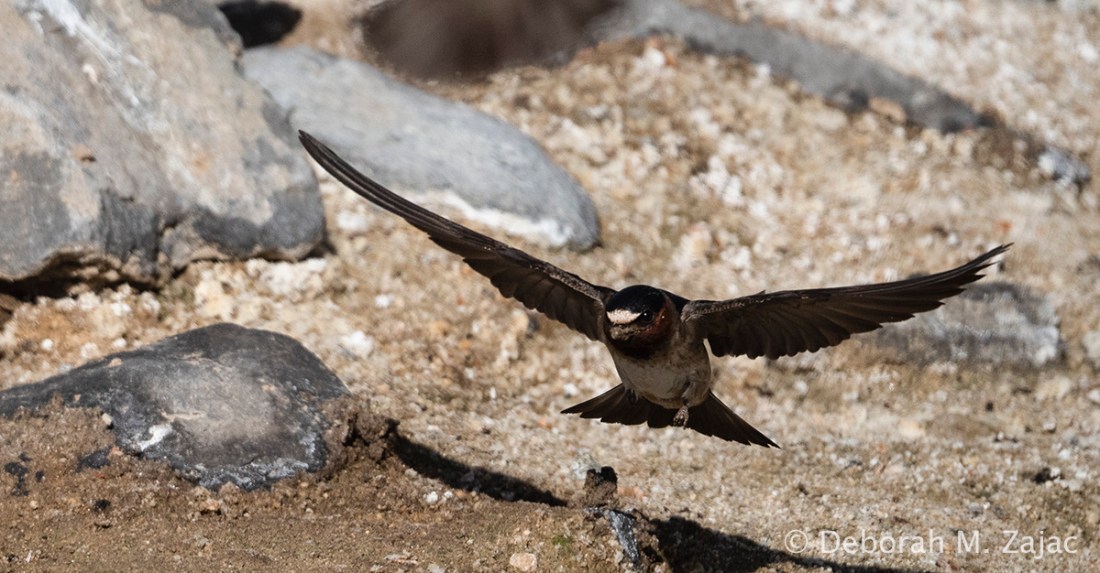
Cliff Swallow
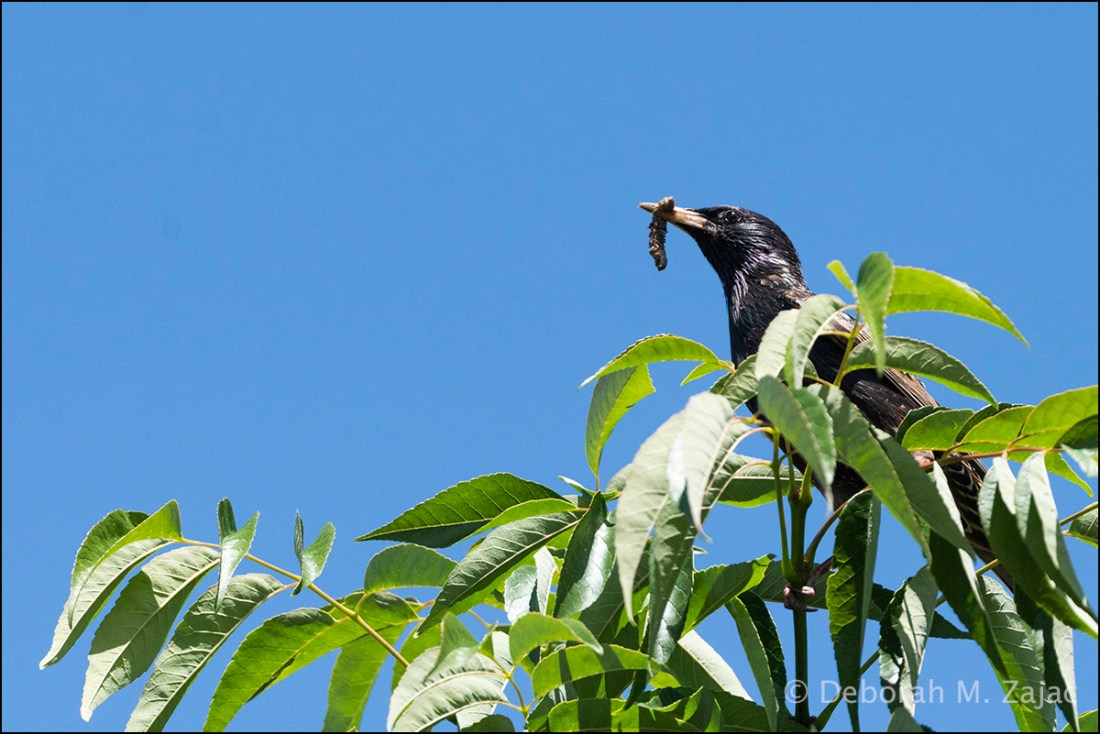
European Starling
Bee Wasp
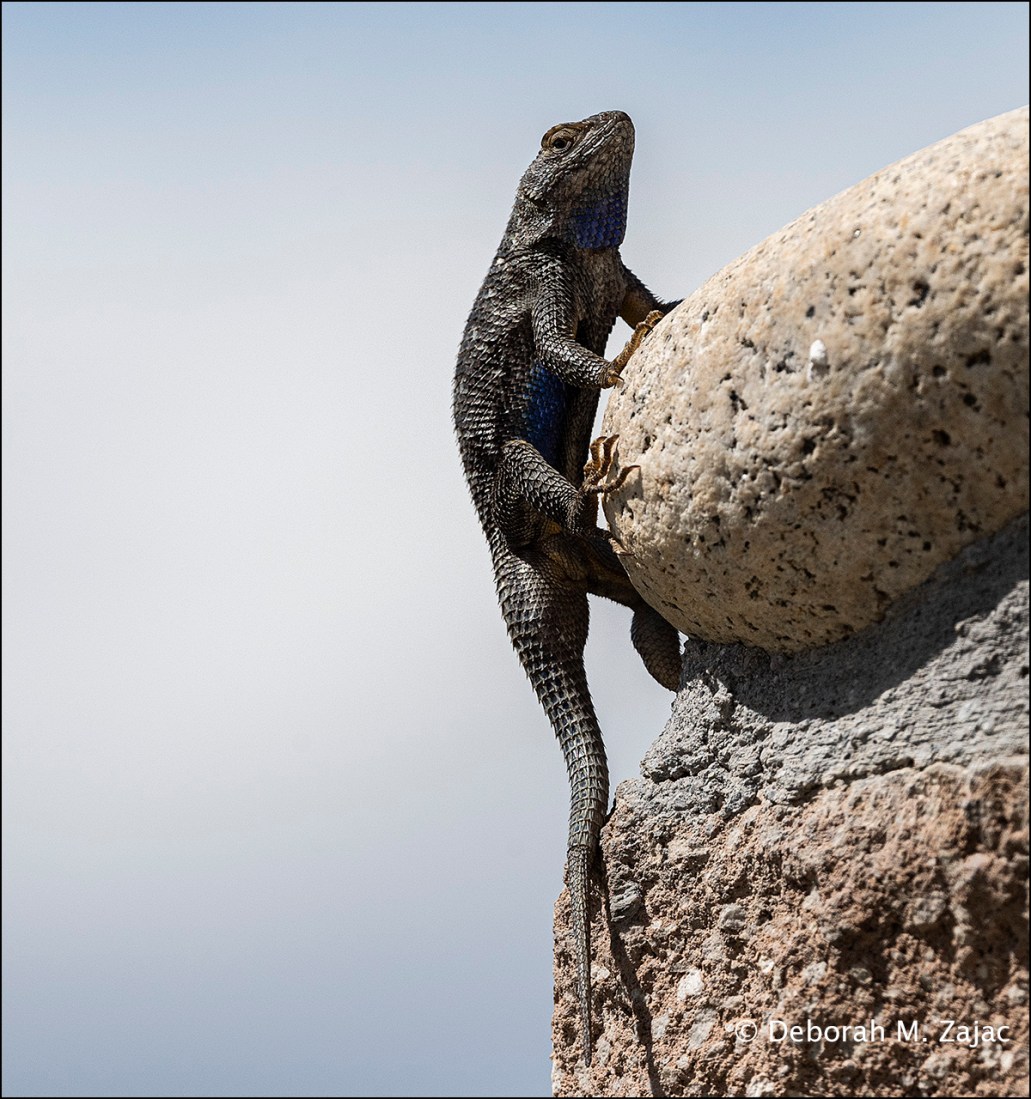
Western Fence Lizard aka Blue Belly Lizard
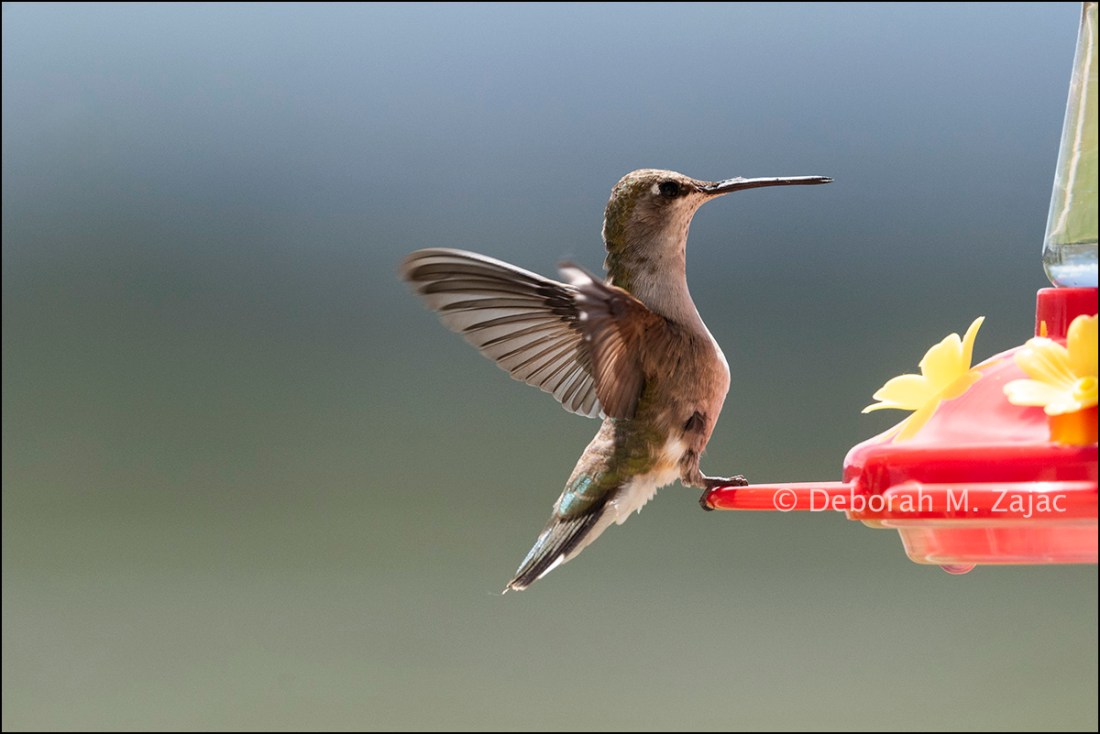
Black-chinned Hummingbird-First sighting of the year!

So, what do you think…the lens looks like a keeper? I love that it doesn’t weight a ton. It’s a little lighter than the 300mm it’s replaced!

#1 Grandson is here. He’s been here just over a week. We’ve been to the lake several times do some kayaking. We’re not sure how much longer he’s staying. He says another week. We’ll see. I think he’ll be missing his mom and littlest too much before then, but he can stay as long as he likes. 😍

I hope your week is going well, and your slide into the week-end is smooth and easy.

Nikon D810| Nikkor 500mm Pf-E| PS CC 24.5.0

more to come…

Friday Feathered Friends-Cassin’s Finch

Copyright ©2021 Deborah M. Zajac. ALL RIGHTS RESERVED

Back in July I saw this beauty, he was my 7th Lifer for the year!

Cassin’s Finch-Male

They live in the mountains of western North America. I am really surprised that it took me so long to spot one, but it did.

Fun Facts: gleaned from allaboutbirds.org

The Cassin’s Finch was first collected on an 1850s expedition to the southwestern mountains by the Pacific Railroad Survey. The eminent ornithologist John Cassin, who created illustrations for the survey, called the pink-tinged finch the “greatest bird in the lot.” Cassin asked his friend and colleague Spencer Baird to name the new species after him.

Male Cassin’s Finches have red crown feathers thanks to carotenoid pigments, which they acquire when they swallow colorful foods like the orange berries of firethorn plants.

Male Cassin’s Finches remain brownish and look like females during their first breeding season. During this time they sing, and this may give the false impression that both sexes sing. These young males may group into “bachelor flocks” during that first breeding season.

The Cassin’s Finch is an accomplished mimic, often adding the calls of other species into its own songs.

The Cassin’s Finch breeds semicolonially, with nests on average 80 feet apart. Nests are sometimes as close as 3 feet apart—this usually causes a fight between males until one of the pair gives up. If the first nest is substantially earlier than the other, however, such close nesting may be tolerated.

The Cassin’s Finch craves salt, and is often found visiting mineral deposits on the ground.

The oldest recorded Cassin’s Finch was a male, and at least seven years old when he was recaptured and released during banding operations in Oregon in 1979. He had been banded in the same state in 1974. ~ allaboutbirds.com

We’re still dealing with a lot of smoke from the two biggest fires in California.

As I type this on Thursday our AQI is bad, but not as awful as it was on Monday when we flew into Reno on our way home from visiting Big Baby Boy, and the Dark Haired Beauty. Monday the AQI was a whopping 398!

I saw the pilots on the way out of the plane and said, “I sure am glad you were able to see to land, because I couldn’t see a thing!” One of the pilots replied, ” We had one eye opened and hoped for the best.” 🤣😜

I’m glad it was the good eye!

He-Man said he was thinking about the scene in the movie Airplane. Flying on instruments LOL!!

I hope you all have a great week-end!!

Fuji X-T3| Fujinon 100-400mm| PS CC 22.5.0

more to come…

Friday’s Feathered Friends-Pine Grosbeak

Copyright ©2021 Deborah M. Zajac. ALL RIGHTS RESERVED

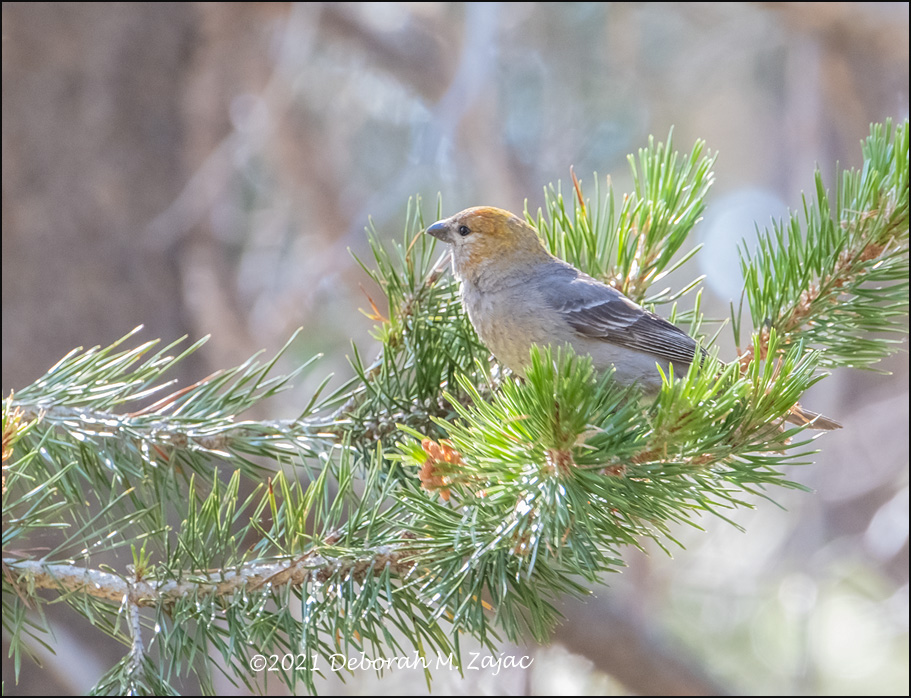
Last week I went birding with the Audubon Group and we were treated to a sighting that not only was a new to me bird, but a rare bird to this area too. Lifer number 6 for 2021 is the Pine Grosbeak. This is a female.

This was a “lifer” for about half the group and there were only 9 of us birding that morning. It was quite exciting!

Fun Facts-gleaned from allaboutbirds.org

  • Pine Grosbeaks eat a lot of plants, but it can be tough for their nestlings to eat and digest all that vegetation. Instead of feeding plants directly to their nestlings, they regurgitate a paste of insects and vegetable matter that they store in pouches at the lower part of their jaw on either side of their tongues.
  • Not all Pine Grosbeaks are the same. Not only do they differ in the amount and intensity of red across their range, they are also different sizes. Body size and wing and tail length generally increase from Newfoundland westward to the Yukon Territory. But birds on Haida Gwaii (Queen Charlotte Island) in British Columbia, Canada, and in California are among the smallest of all Pine Grosbeaks. Wings and tails of birds on Haida Gwaii are around a half inch smaller than birds in Alaska.
  • Pine Grosbeaks aren’t just in North America. They also breed in subalpine evergreen forests from eastern Asia to Scandinavia.
  • The tameness and slow-moving behavior of the Pine Grosbeak prompted locals in Newfoundland to affectionately call it a “mope.”
  • Winter flocks may stay near a tree with abundant fruit until all of it is consumed.
  • The oldest recorded Pine Grosbeak was a male, and at least 9 years, 9 months old when he was found in Quebec in 1970. He was first captured and banded in Connecticut in 1961.

I hope you all have a wonderful week-end!

Fuji X-T3| Fuji 100-400mm| PS CC 22.4.2

more to come…