Annular Solar Eclipse May 20, 2012

Copyright © 2012 Deborah M. Zajac. All Rights Reserved.
Several friends and I went to the Nevada desert to view and photograph the Annular Solar Eclipse from the centerline.
After weeks of calculations to determine the best spot to be on the centerline, and be doable in a day we had a couple of choices and nailed down our final choice Sat. Thanks to Rico’s, Phil’s, and Andy’s awesome calculations we were spot on the centerline.
As the afternoon wore on more photographers, and Eclipse viewers gathered around us to view the celestial show. One guy hiked up with a huge telescope. Kids big and small liked looking though that.

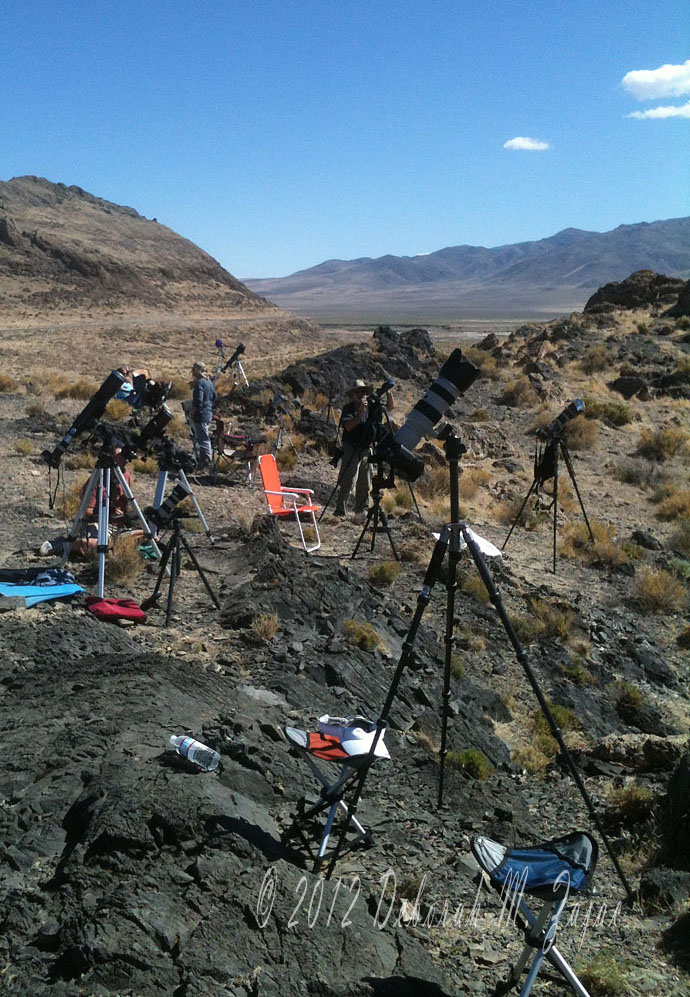
Here’s where we were based. That guy down there with the hat is setting up his Spotting Scope. There were cameras, lenses, and telescopes of all sizes. Some folks came out just to view it.
Wearing the right eye gear!


It was work for me. I don’t own a motorized tracker so I had to manually track the sun, making adjustments every 1-2 minutes for the entire 2.5 hours of the Eclipse.
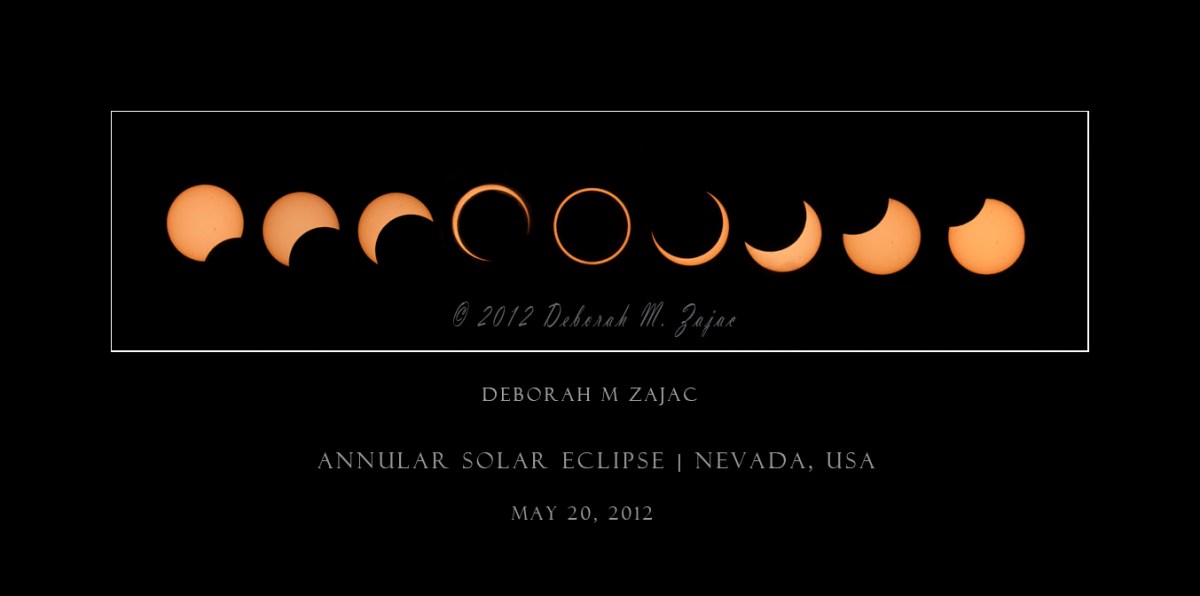
It was worth the effort.  This is also the first time I’ve photographed an Eclipse from start to finish then process the phases in Photoshop. It may be a bit uneven…forgive me! I couldn’t get my guides to work in my workspace so I eyeballed it.  I am pleased I was able to do this at all. I need to give a shout out to PJ for reminding that copy/paste works to do a step I needed too. Thank you!

Looking at my Poster are the phases of the Eclipse. Starting on the left is the beginning of the Eclipse with the “Ring of Fire” in the middle followed by the final pass of the Moon as it made its way across the sun. If you look close you can see the Sun Spots! It was the neatest thing to see from start to finish.

Our little group setting up and getting ready to shoot the Eclipse. I’m off to the right in the hat.  Although that man behind me wasn’t part of our group. He was a spectator who said he’s traveled all over to view Eclipses.  Thank you Rico for the Photo!

And to my traveling and planning companions THANK YOU, Anne, Dali, Phil, Steven, Andy, and Rico for a great day!

Nikon D300s| Nikkor 80-200mm + Tamron 1.4x TC| Manual Priority| Tripod| various shutter speeds, ISO 400| f11

more to come…

Viewing the Annular Solar Eclipse May 20, 2012

Copyright © 2012 Deborah M. Zajac. All Rights Reserved.

My mother asked me if I was going to photograph the upcoming Annular Solar Eclipse, and said she wasn’t sure if they would be able to see it in the San Francisco Bay Area.

I told her “Yes, I’m planning to view, and photograph it.”  and that she will be able to see a “Partial Solar Eclipse” if she stayed home or in the Bay Area.

In the Bay Area  you won’t see the Full Annular “Ring of Fire” to view that one must drive about 4+ hours to a place where you can see that. I gathered several links for her to glean some more information about what she could expect to see here in the Bay Area and thought I’d pass them along here too.

The link below is an animation of the what will be seen in the Bay Area. Click your refresh or reload button once the map page is open. It should be animated then.

http://astro.ukho.gov.uk/eclipse/0132012/San_Jose_CA_United_States_2012May20_anim.gif

To view the Full Annular Ring of Fire the map in the link below shows the path in the west one can view that. The red line is the center line on which one can view the Full Circle.

http://eclipse.gsfc.nasa.gov/SEgoogle/SEgoogle2001/SE2012May20Agoogle.html

Don’t look at  the Sun without protection. Use the old fashion cardboard box and paper method if you haven’t got Solar viewing glasses or a solar filter for a telescope or your camera’s lens. It’s called a Pinhole Camera. There are places around the Bay Area that are offering viewing too.

Making a Pinhole Camera
http://www.exploratorium.edu/eclipse/how.html

http://pacifica.patch.com/articles/ready-for-the-eclipse-how-to-view-it-safely-41c76507

Sun May 17, 2012

Copyright © 2012 Deborah M. Zajac. All Rights Reserved.

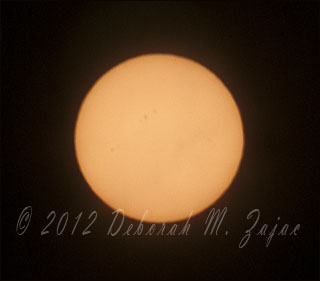
Still practicing for the upcoming Annular Solar Eclipse.

I’m working on getting the exposure right using Live View, and reading lots and lots of articles written by other photographers about how to go about photographing it.

This is a bit blurry you’ll notice. I think this is due to all the atmosphere between me and the sun;wind, dust, clouds, etc. This morning we have clouds in the sky.

Here’s an article I liked that has  handy settings charts for a good starting base. Here’s my friend Steven’s advice on Solar Filters. Don’t try to watch or photograph this event without proper protection for your eyes and camera! I use this Solar Filter.

I’ll be driving with friends 4-5hours away from home to view this event. Will you be traveling to view the Annular Solar Eclipse?

Nikon D300s| Nikkor 80-200@200mm+ Tamron 1.4x TC=420mm|f11| 1/200s| ISO 200| Manual Priority| Tripod| Orion Solar Filter


May 12, 2012 Sun

May 12, 2012 Sun, originally uploaded by dmzajac2004-.

Via Flickr:
Copyright © 2011 Deborah M. Zajac. All Rights Reserved

I haven’t had as much time as I’ve wanted to practice using my Solar filter and I haven’t tried a time-lapse with it yet either. Too many gray days, and other
distractions have been in the way.
The Solar Eclipse is this week! I hope to get more practice before Sunday’s event.

Yes, even though I left home without my Teleconverter I did get the sunspots.

I’m using this Solar filter:

http://www.telescope.com/410-ID-Orion-Full-Aperture-Solar-Filter/p/7733.uts?keyword=solar%20filter

Don’t try to capture the Eclipse without using proper protection for both your eyes and camera! Get a filter made especially to view the Sun! Time may be running out for you pick up a filter I recommend calling around and if you find one jump on it. I bought one that fits the end of my lens hood.

Nikon D700| Nikkor 80-200mm @ 200mm|
Costa Mesa, California, Afternoon, Sunspots, AstroPhotography

Moon-struck madness!

Copyright © Deborah M. Zajac. All Rights Reserved.

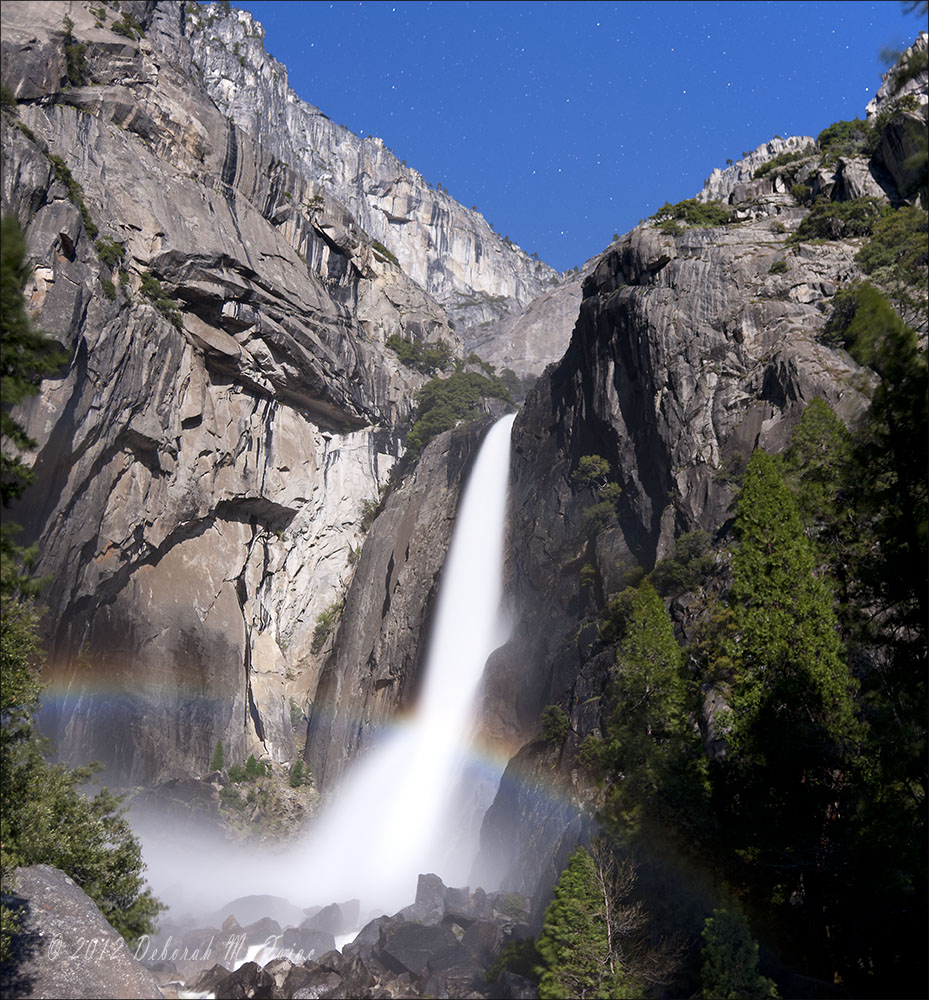
Yesterday myself and 3 friends went up to Yosemite National Park where we met more friends to photograph a Moonbow.
This is my first Moonbow, and my first Vertorama.

A moonbow can only happen when a full moon is shining reflected sunlight on the falls at an angle of 42º or lower, there must be water, or a mist, and it must be dark enough to see it.

There were nearly 200 people here on the little plaza and bridge to Lower Yosemite Fall last night by my quick head count in the dark. As the night wore on more people kept coming!

It was a lot of fun and I’m looking forward to capturing a Moonbow over Upper Yosemite Fall in the future.

I must say a word about the Vertorama. Paul Bruins a fellow Flickrite is the first person I knew of doing Vertoramas. He has generously written a tutorial for our use. You can read it here:
http://www.flickr.com/groups/vertoramas/discuss/72157602953001077/

I have to thank my freind Steven Christenson for “thinking out loud” last night and saying I think I’ll try a Vertorama too.” That was a reminder to me to finally try one.
I was a bit confused on how one moves the camera up, and Steven suggested the same thing Paul does and that is tilt the camera up without moving the tripod. So that is what I did. I’m going to try more of them now that I have the first one under my belt.
This is 2 frames stitched together in CS5. I’m looking forward to capturing a Moonbow on Upper Yosemite Fall in future.

Nikon D700| Nkkor 35mm f2 @ f2.8| 38 seconds| ISO 400| Manual Priority| Tripod

There is something about the stars that set the Gypsy blood astir…

Copyright © 2012 Deborah M. Zajac. All Rights Reserved.

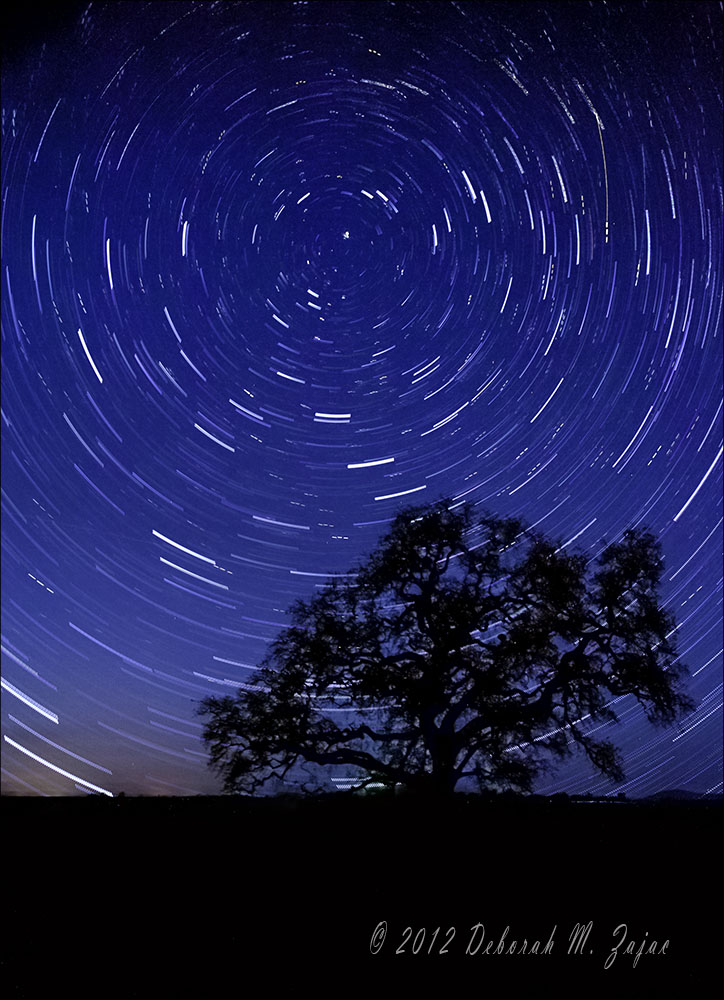
I am inspired by William Bliss Carman’s thought about things that stir the Gypsy blood for the title of this piece. The stars do stir my blood and I wish I could travel up there. Perhaps someday we will.

This tree was absolutely gorgeous, and in a perfect location for shooting a star trail at the end of a day of shooting wildflowers, creeks, and a waterfall in Northeastern California. I’d gone up with some friends to meet more photography friends in a Meet-up group we’re in. While we set up for the shot and finished up we listened to little frogs croaking, and following them were crickets. A lovely round of natures music that I’m sure continued long into the night.

My battery died short of where I wanted it to for this sequence of star trails. A lesson learned! I will insert a fresh battery from now on.

Nikon D700 Nikkor 18mm AI-S| f5.6| 211 seconds| ISO 200| Manual Priority| Tripod| 29 frames stacked with Photoshop CS5

In the Face of the Sun

Copyright © 2012 Deborah M. Zajac. All Rights Reserved.
“To fling my arms wide
In the face of the sun,
Dance! Whirl! Whirl!
Till the quick day is done.”
~ Langston Hughes-Dream Variations Sunrise over Lick Observatory San Jose California
Last week on the 21st of March several friends and I rose before dawn to meet to photograph the Crescent Moon rising over Mt. Hamilton, and James Lick Observatory in San Jose, CA.

We also knew that shortly after the Moon rose the sun would also rise over
Mt. Hamilton, and the observatory, but we needed to change our location
to get the angle right. Arriving at our chosen place; a wide open field that once was a neighborhood, long torn down;

the only reminders were the scars of streets, foundations, and the trees, shrubs, and grass which dripped with morning dew.

We walked carefully through it avoiding the holes that housed the Gophers who reside there now until we found just the angle that faced the Rising Sun.

We set up our tripods, camera gear, and we donned special armor this day; a filter to protect and shield our sensors, and eyes.

Then we waited and watched the brightening sky for the first little glimmer of the golden halo that announces the rising morning star!
Blended double processed frame + 1
Nikon D700 & D300s| Nikkor 80-200mm + Tamron 1.4x Extender
How I made it
When I took the photograph I used a Solar filter which protected my camera’s sensor, and my eyes.
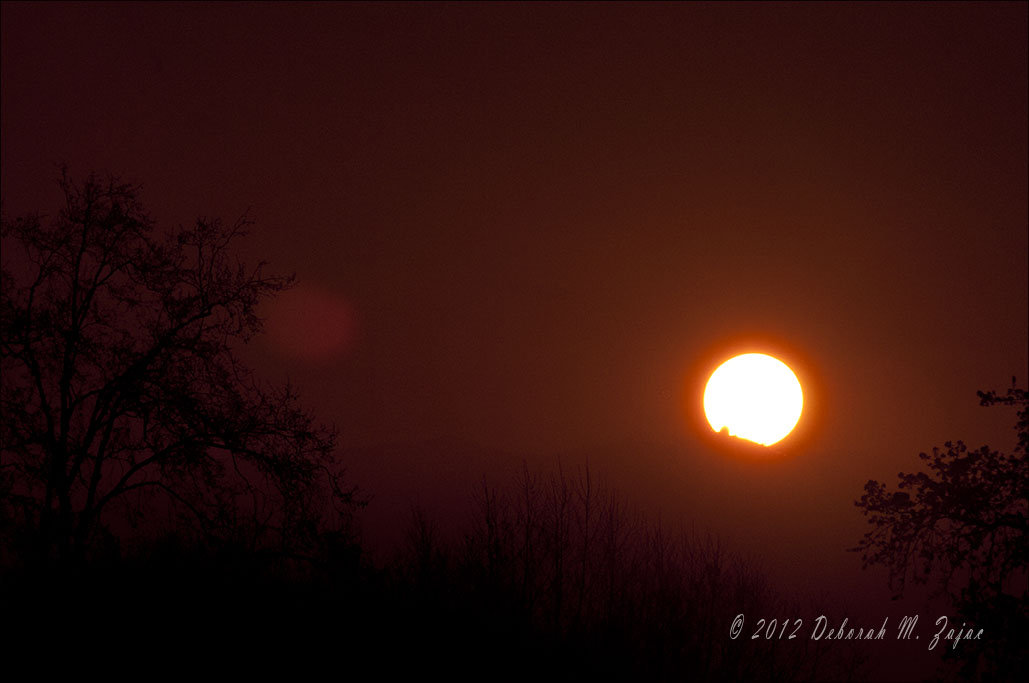
This is what it looks like RAW from my camera. I really like all the foliage in silhouette, but I knew in order to recover the color
of the sun I would lose all that detail.
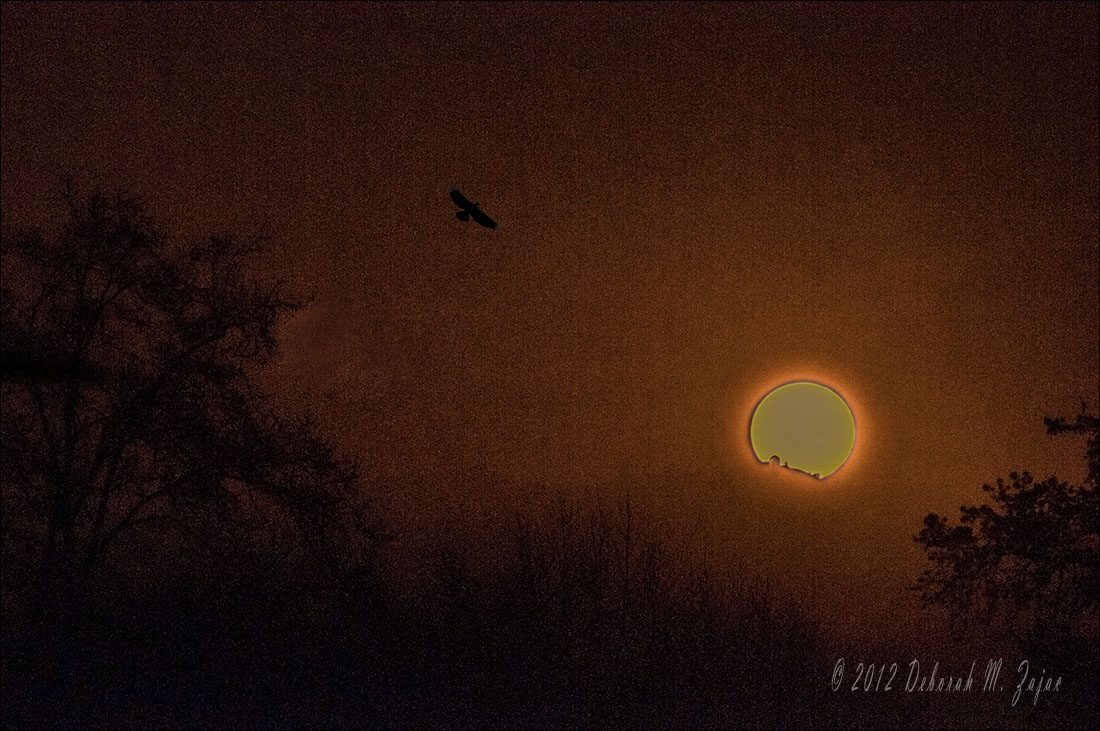
I wanted a finished photograph that included the silhouetted foliage, and color in the sun.
To do that I would have to blend or combine at least 2 frames. I made a copy of the negative above then uploaded that into my photo editing software Lightroom 4.
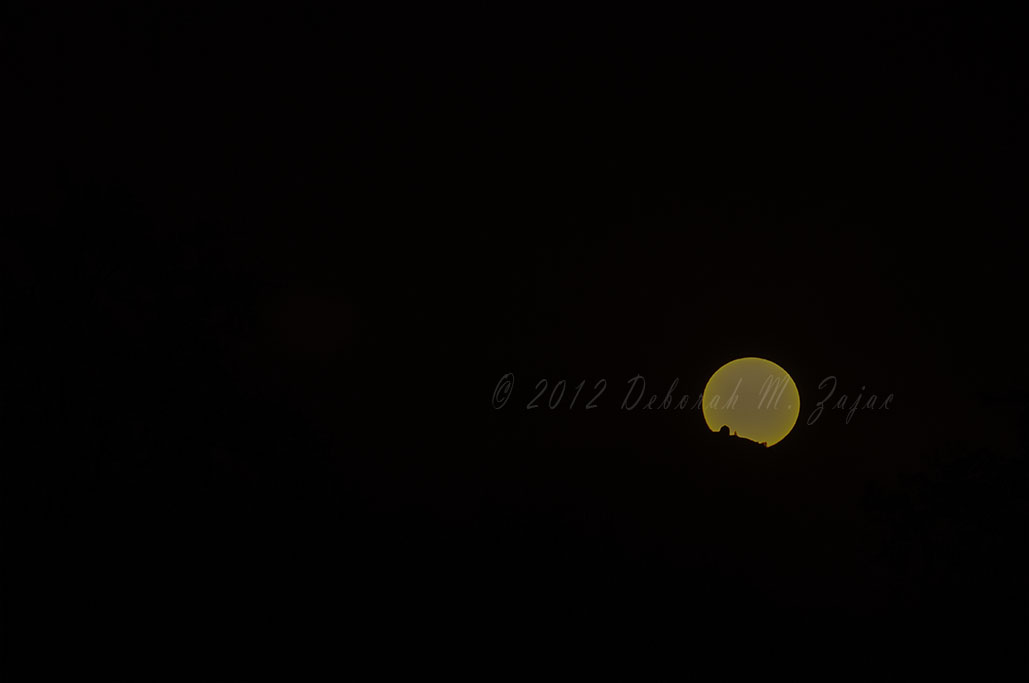
Then I removed all the color and silhouetted foliage in order to recover the sun’s color.
Once that was done I had this frame. I made another copy of my original negative then uploaded both it,
and the edited negative above into Photoshop CS5 where using layer masks I blended the two frames together.
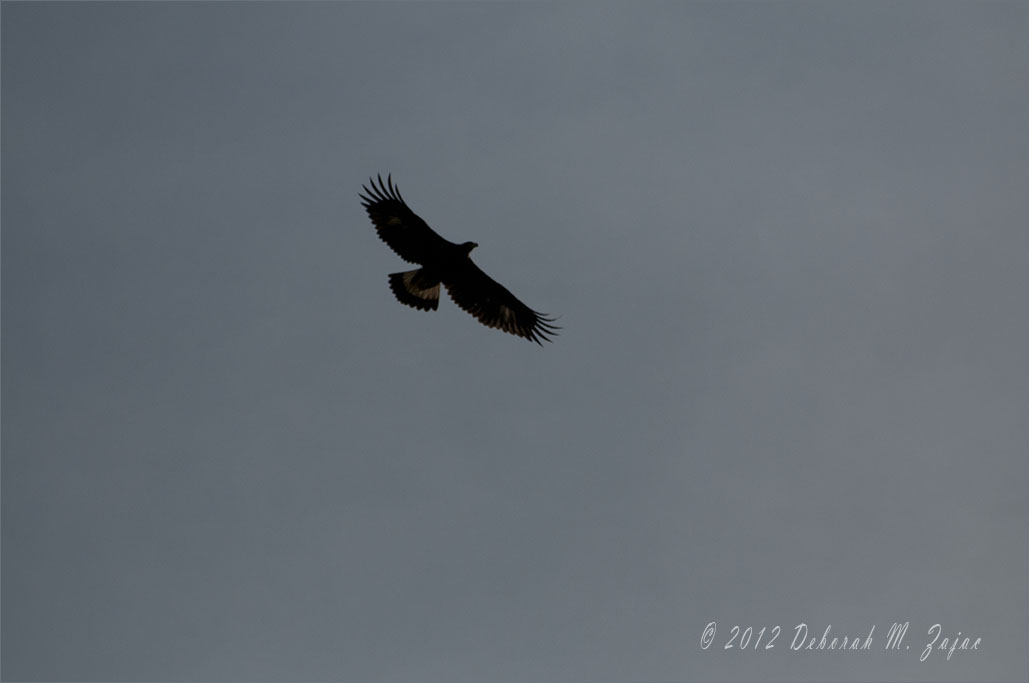
It was pretty, but I thought it lacked something to make the composition balanced, and a bit more interesting so I added a Golden Eagle.
A photo I had taken back in January of this year. I cloned out the sun flare spot, and added my copyright signature et Voila! Fini!
My companions that morning have published their photos from the morning which
you can see by following the links here, here, here,and here,