Copyright ©2023 Deborah M. Zajac. ALL RIGHTS RESERVED.
PLEASE DO NOT USE MY IMAGES WITHOUT EXPRESSED WRITTEN PERMISSION.
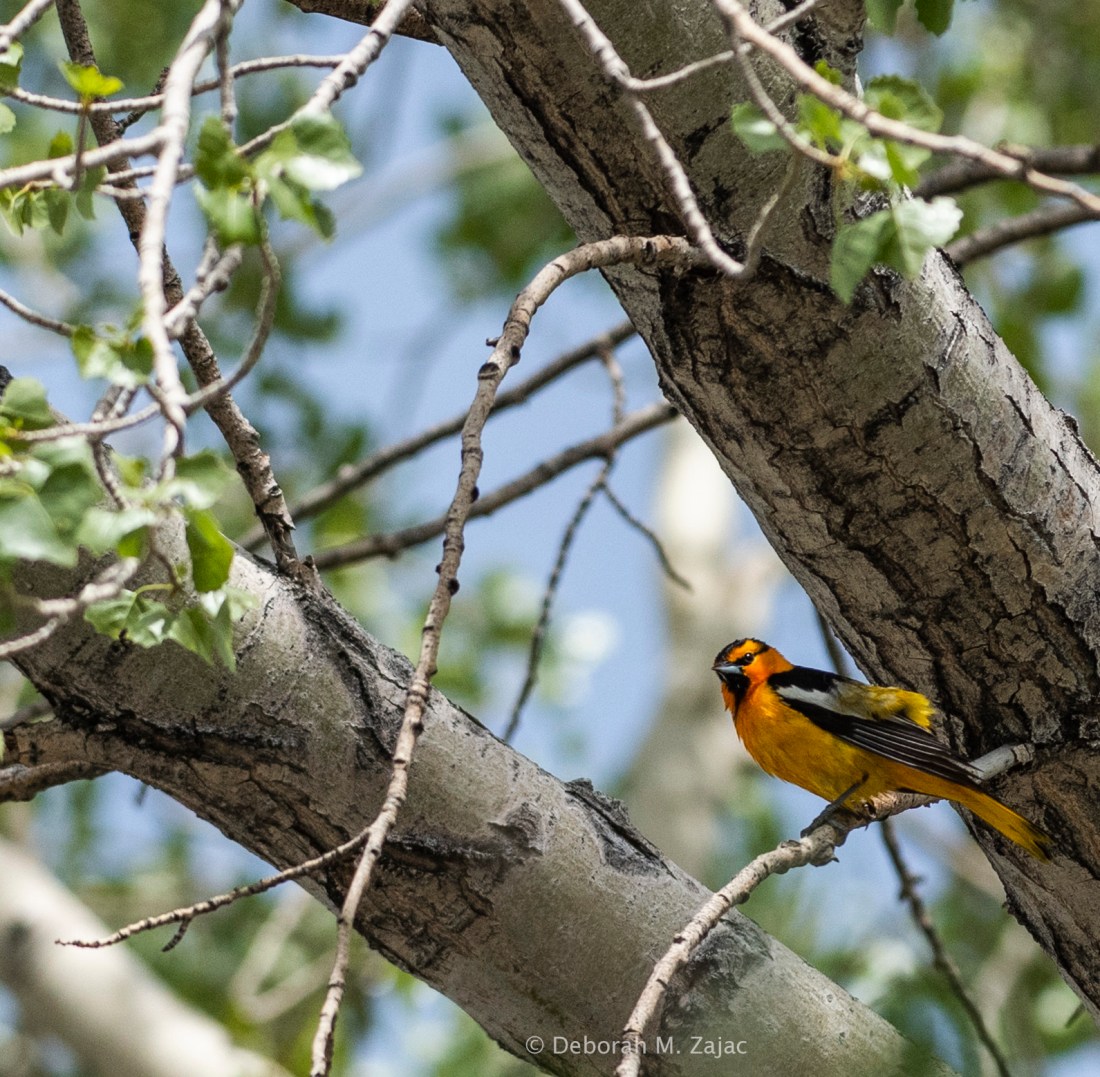
We had friends from out of state come for a visit last week so I’m a bit behind with your posts, but I am beginning to get caught up. While showing our friends around the area we did a little birding and I spotted a pair of Bullock Orioles.
Here’s the Male.
Here’s his mate. I spied her first.
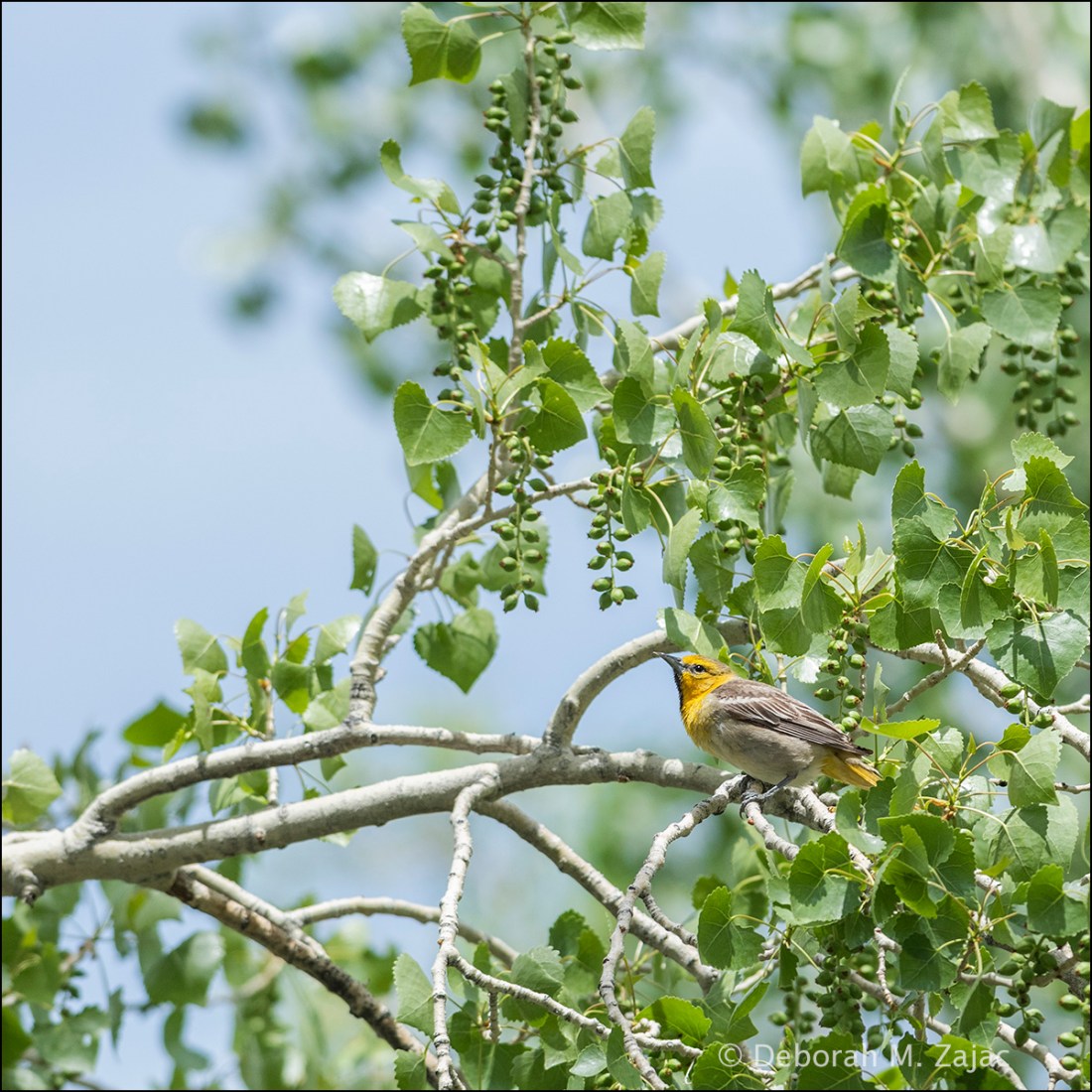
They love the new seeds on/in Cottonwood trees. They’re here for the breeding season. Below are some fun facts gleans as always from allaboutbirds.org.
- Bullock’s Orioles often take nectar from flowers, and they will sometimes raid hummingbird feeders for their sugar water.
- Both male and female Bullock’s Orioles sing—the male more sweetly, the female often more prolifically.
- In the Great Plains, where their ranges overlap, Bullock’s and Baltimore Orioles frequently hybridize. The two species were lumped together for a while as the Northern Oriole. Genetic research has since determined, however, that they are not very closely related.
- The Bullock’s Oriole was described and named by William Swainson in 1827, drawing on material collected by English father-and-son naturalists William and William Bullock in Mexico.
- Bullock’s Oriole pairs may nest outside the territory where the male advertises.
- The oldest recorded Bullock’s Oriole was a male, and at least 8 years, 11 months old when he was recaptured and rereleased during banding operations in Colorado in May 2007.
I hope you all have a lovely week-end, and June has started off on the right note for you.
Nikon D810| Nikkor 300mm f/4 AF-S| PS CC 24.5.0
more to come…







 Circadianreflections Blog
You must be logged in to post a comment.