PLEASE DO NOT USE MY IMAGES WITHOUT EXPRESSED WRITTEN PERMISSION.
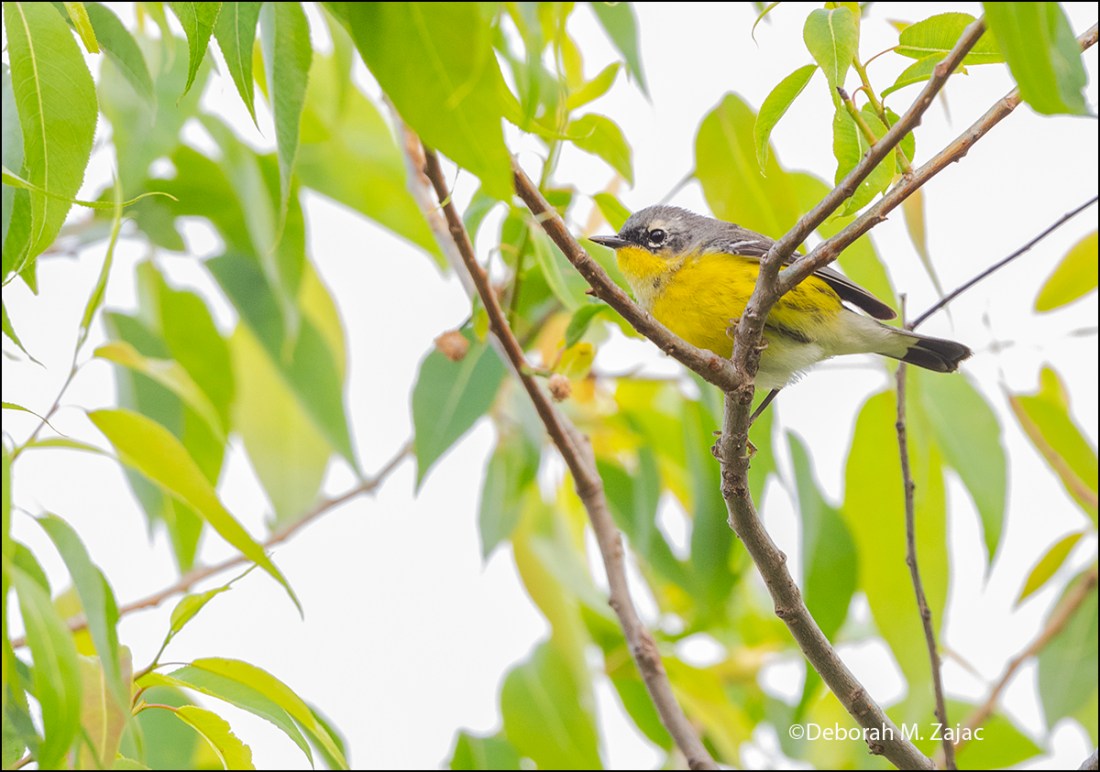
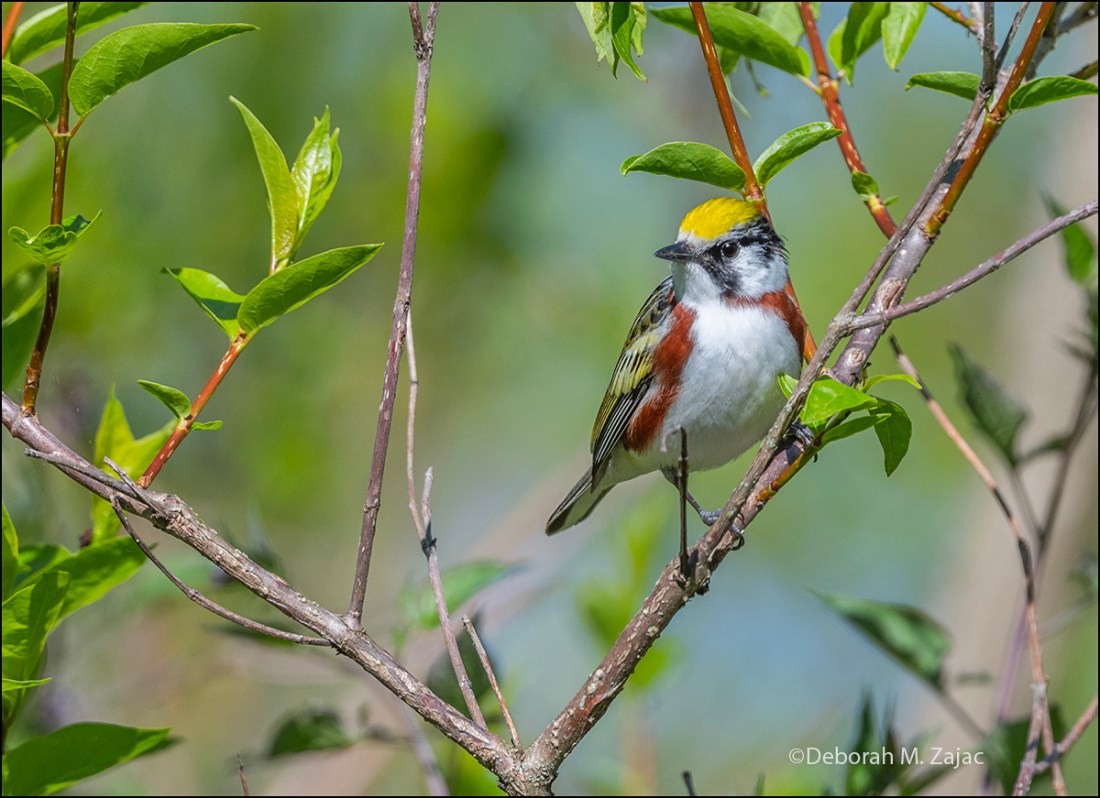
For Mother’s Day and my birthday He-Man and I went to Ohio for several days of birding the Spring migration of Eastern birds. It was fantastic. I added 27 new birds to my life list most of which were Warblers.
PLEASE DO NOT USE MY IMAGES WITHOUT EXPRESSED WRITTEN PERMISSION.
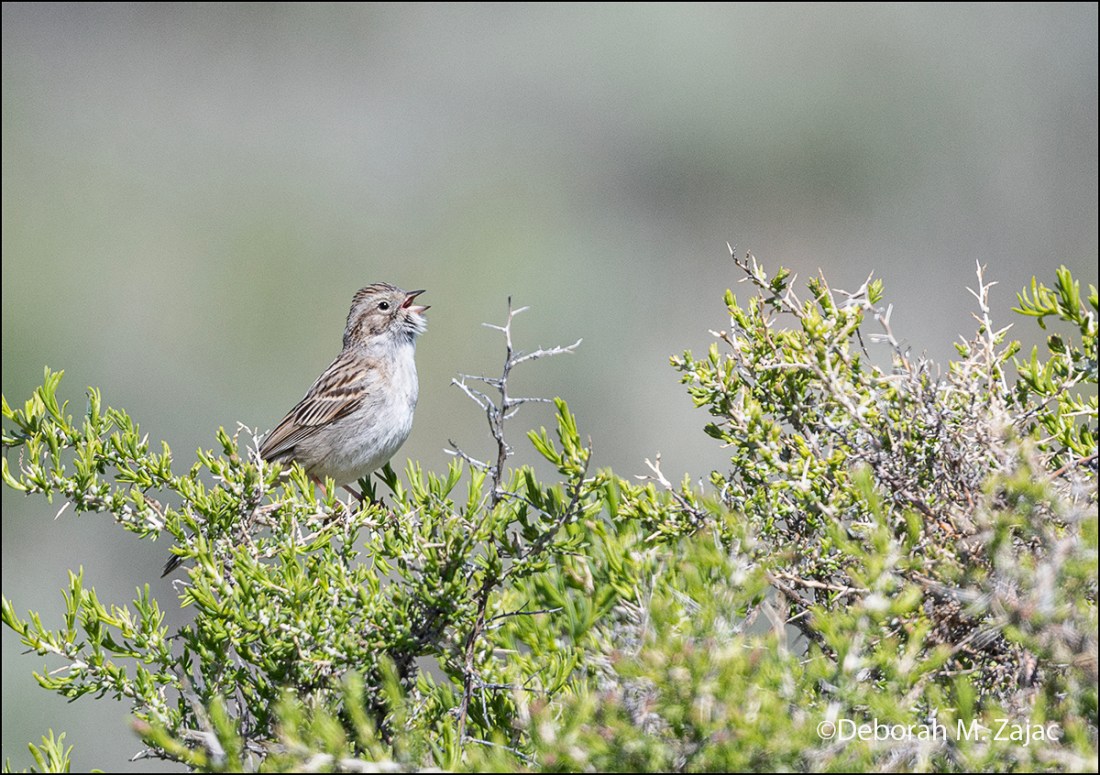
Last week I was birding with a group I belong to. We had a very exciting birding day with 66 species sighted. There were lots of great sightings, one was while in a big field in a Washoe Co. in the sagebrush, we saw a Brewer’s Sparrow and I got a few good images. It’s a “lifer” for me. A “lifer” is the first time you’ve ever seen a bird species.
Brewer’s Sparrow Singing its Morning Song
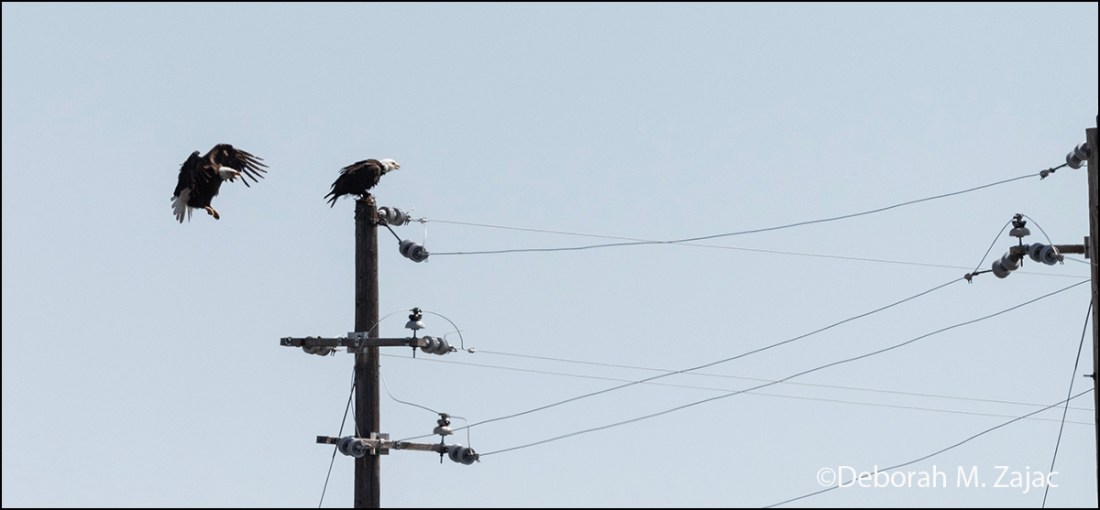
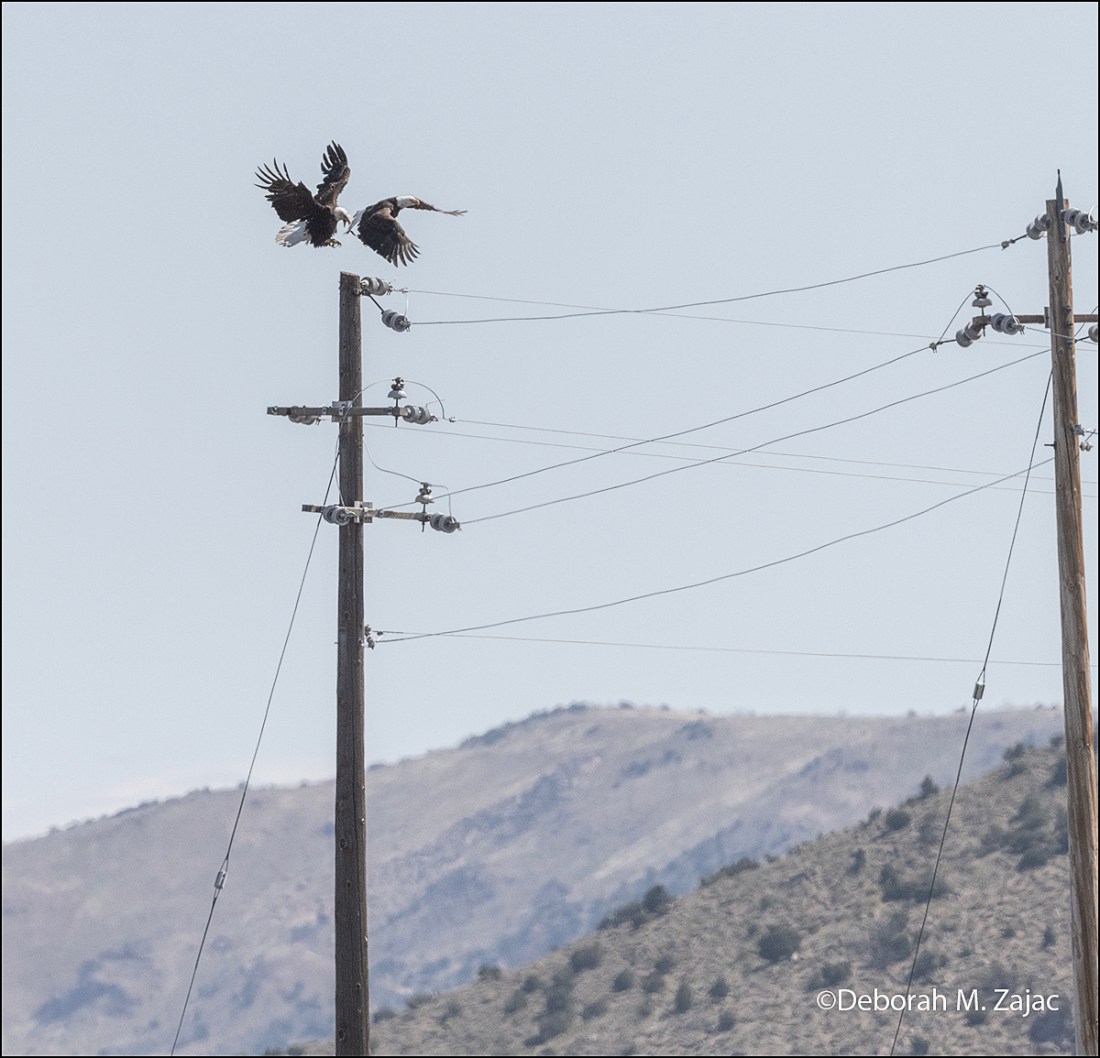
We saw two adult Bald Eagles which was exciting because one flew onto a telephone pole carrying food of some sort and started eating. Then we heard another Eagle call out and fly into the scene ready to attack from behind!
It tried to steal the food of the BE on the pole. The BE with the food took its prey and flew over to a nearby telephone pole and carried on eating while the would-be thief sat on top of the pole trying to figure out what went wrong and why he now had control of the pole but no food. 😂
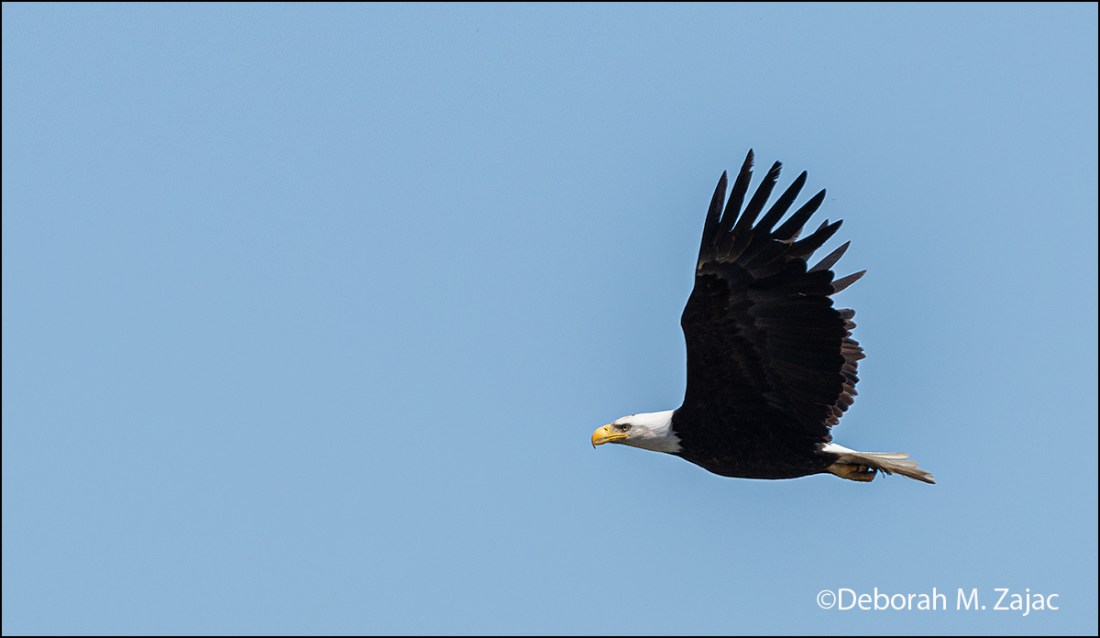
In three images: The approach, The Attack, and the would-be thief flying off several minutes later very disappointed. I was too far away from the poles to get good images, but they’re keepers and good enough to tell the story with.
Incoming attack from behindThe Attack, and Get-away.
The Would-be thief flyby was better as I had moved closer by then.
American Bald Eagle in Flight
Some other cool birds I saw and photographed were:
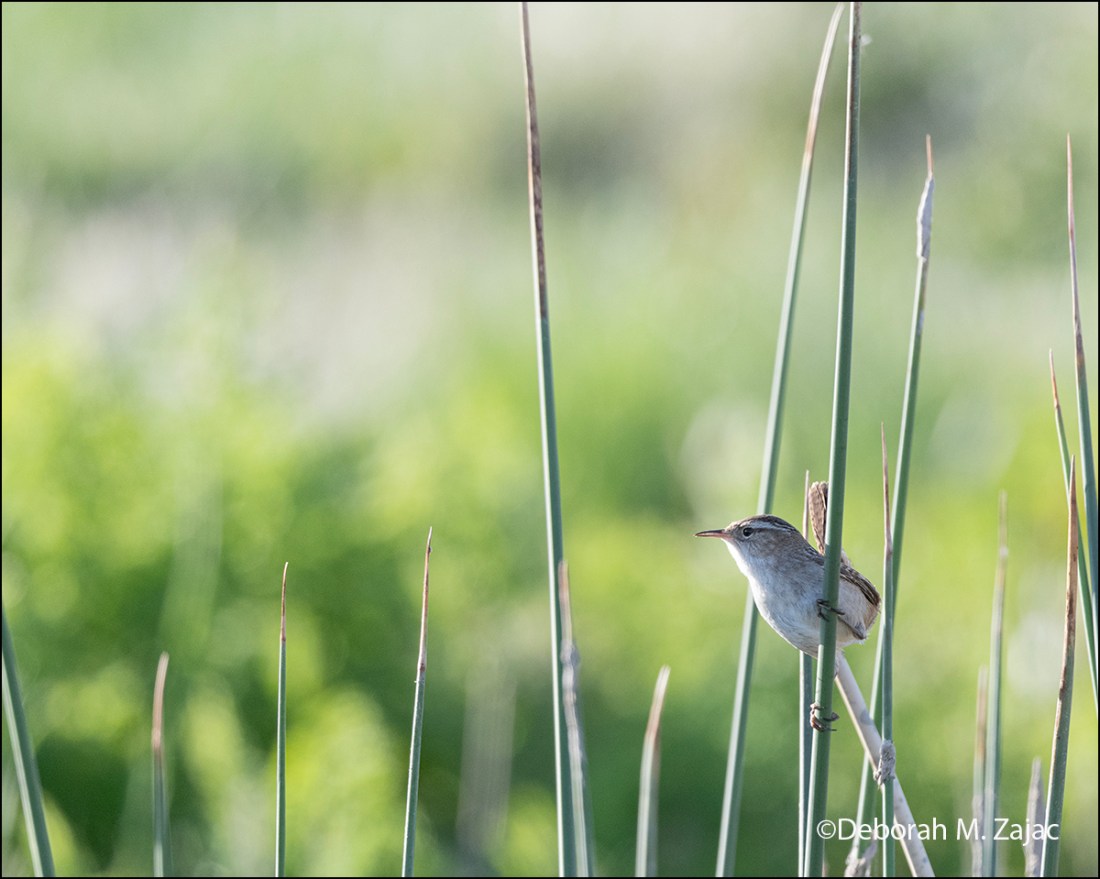
Lark Sparrow in FlightSage Thrasher PerchedBlack-billed Magpie with Blue reflected in its eyeMarsh Wren-The Poser
I don’t have any cool bird fun facts for you today as the post would be too long. It’s already longer than my usual post.
FYI, I will be late getting back to you on the comments but, I will get to them.
PLEASE DO NOT USE MY IMAGES WITHOUT EXPRESSED WRITTEN PERMISSION.
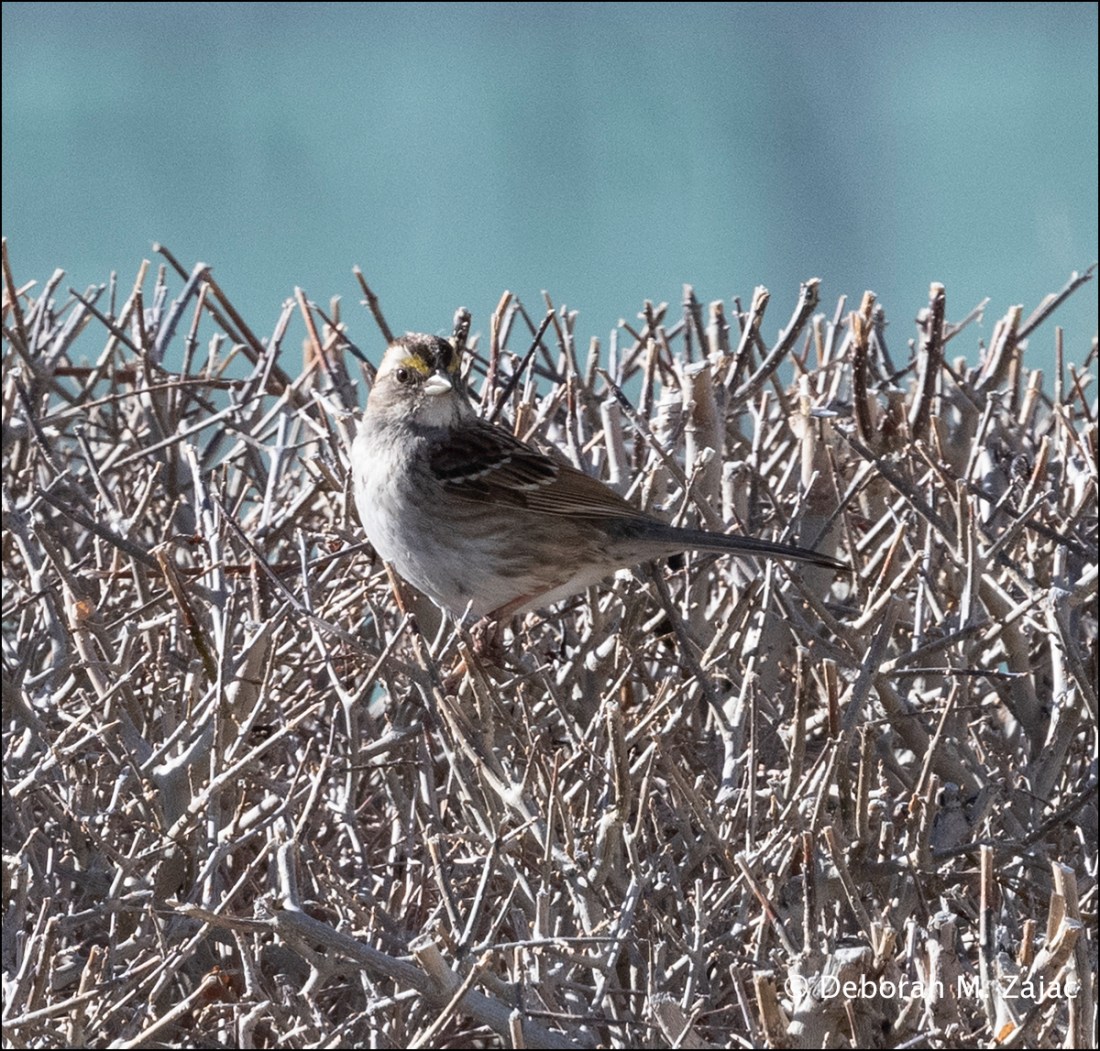
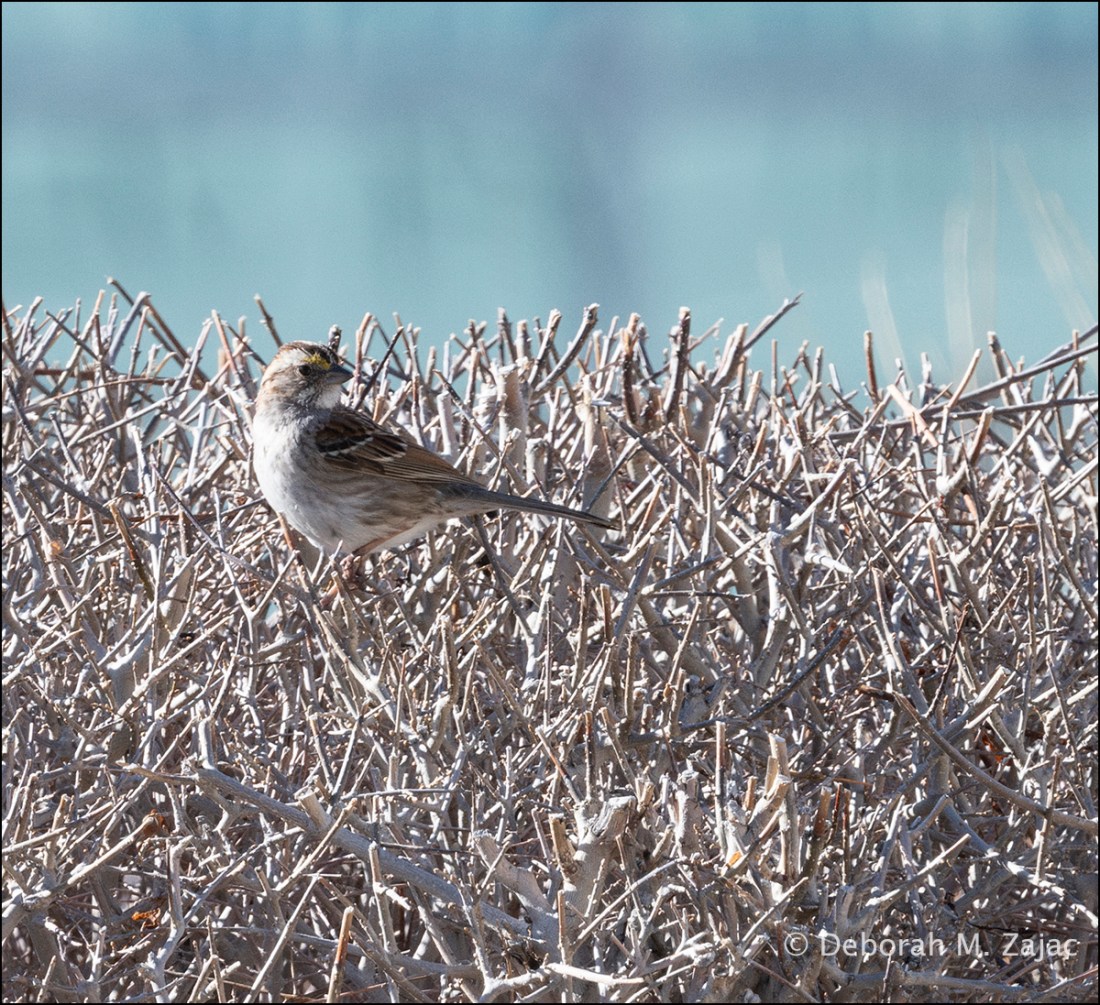
Back in late January or early February I heard there was a White-throated Sparrow up in Carson City. This is a rare bird for Nevada. The map doesn’t show it ever being here rare.
I’d never seen one before so I began the hunt for it. I only had a general location of where it was so I was covering a very large area and staying for hours photographing every sparrow and bird I saw.
I was unsuccessful 6 times over the course of about 6 weeks.
All the while this bird was being seen and reported by one guy almost every day while myself, and my neighbor were not seeing it! I can tell you it was frustrating! During this period there was another one seen, photographed, and reported on the birding site ebird.org up in Reno!
So, my neighbor and I went up and spent hours looking for it but, no joy there either. Sigh.
Then on a tip from a fellow birder who had seen it a week before in Carson City told me the which area I should try looking. I went back last week and hung around the area he suggested and got lucky! 💃💃😀The 7th times the charm!
The White-throated Sparrow comes in two color forms: white-crowned and tan-crowned. The two forms are genetically determined, and they persist because individuals almost always mate with a bird of the opposite morph. Males of both color types prefer females with white stripes, but both kinds of females prefer tan-striped males. White-striped birds are more aggressive than tan-striped ones, and white-striped females may be able to outcompete their tan-striped sisters for tan-striped males.
Although they look nothing alike and aren’t particularly closely related, the White-throated Sparrow and the Dark-eyed Junco occasionally mate and produce hybrids. The resulting offspring look like grayish, dully marked White-throated Sparrows with white outer tail feathers.
White-throated Sparrows typically nest on or near the ground. Occasional nests are built up to 15 feet off the ground in conifers. Usually, these nests are second attempts after a pair has had a ground nest robbed by a predator.
The oldest recorded White-throated Sparrow was at least 14 years, 11 months old, when it was recaptured and rereleased during banding operations in Alberta.
I have been birding a lot so have lots of birds to share in the coming weeks.
PLEASE DO NOT USE MY IMAGES WITHOUT EXPRESSED WRITTEN PERMISSION.
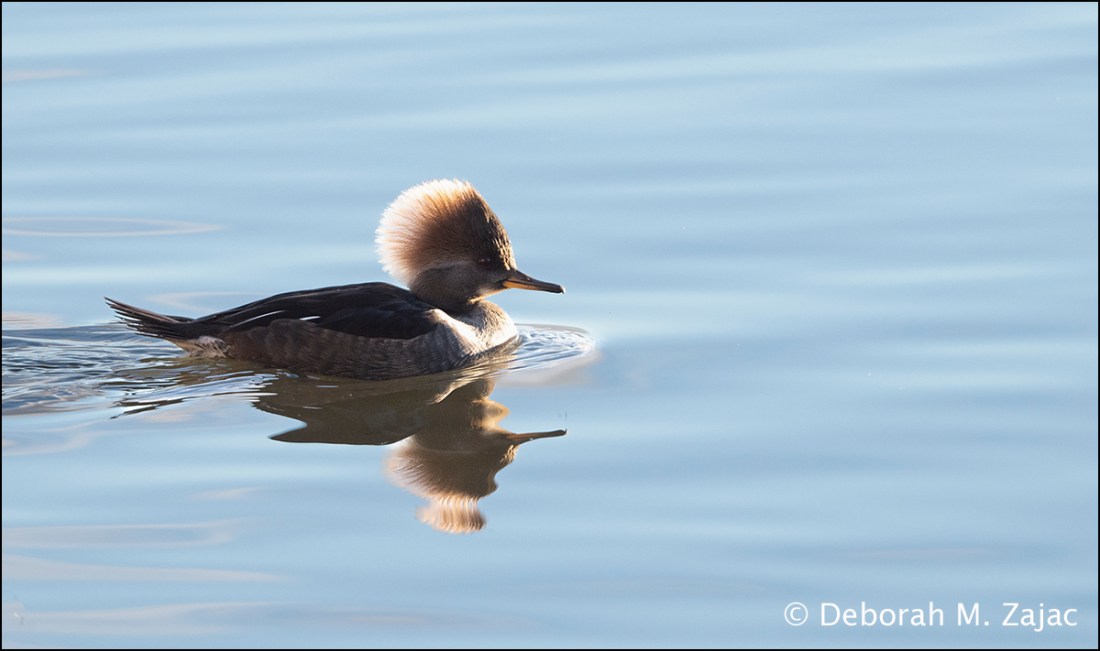
I saw these in early January and since we’re on the very edge of their migration path I feel very lucky to have seen them.
The male has lovely dark coloring and a wonderful hood. During the courting season he continuously tilts his head all the way to his back and up again and back again with his hood raised as it is in this image while he swims very near the female trying to capture her as a mate. It’s called Head Throwing. He also gives her a hoarse croak. It’s pretty neat to see them courting.
Hooded Merganser Male
The female looks rather dull compared to the male but, her crown or hood is lovely too. I liked the way the sunlight lit up her hood.
Hooded Merganser Female They were swimming somewhat far apart from each other on this morning and not interested in courting, but luckily their hoods were up.
Fun Facts:
Similar to other cavity-nesting ducks such as Wood Ducks, Common Mergansers, and Common Goldeneyes, Hooded Mergansers often lay eggs in nests of other ducks, both their own species and others. This is called “brood parasitism” and is similar to the practice of Brown-headed Cowbirds. In turn, other cavity-nesting duck species will parasitize Hooded Merganser nests. Female Hooded Mergansers can lay up to about 13 eggs in a clutch, but nests have been found with up to 44 eggs in them.
Hooded Mergansers find their prey underwater by sight. They can actually change the refractive properties of their eyes to improve their underwater vision. In addition, they have an extra eyelid, called a “nictitating membrane,” which is transparent and helps protect the eye during swimming, like a pair of goggles.
Hooded Merganser ducklings leave their nest cavity within 24 hours of hatching. First, their mother checks the area around the nest and calls to the nestlings from ground level. From inside the nest, the little fluffballs scramble up to the entrance hole and then flutter to the ground, which may be 50 feet or more below them. In some cases they have to walk half a mile or more with their mother to the nearest body of water.
On the bird family tree, Hooded Mergansers (genus Lophodytes) lie between goldeneyes (Bucephala) and the other North American mergansers (Mergus). They share many courtship behaviors and calls with both of those groups.
The Hooded Merganser is the second-smallest of the six living species of mergansers (only the Smew of Eurasia is smaller) and is the only one restricted to North America.
The oldest recorded Hooded Merganser was a male and at least 14 years, 6 months old when he was shot in Mississippi in 2009. He was originally banded in Minnesota in 1995.
I hope you all have a great week-end. If the weather permits I’ll be birding this morning and will respond when I get home. If the weather is poor I’ll be here!😀
For several weeks we’ve had a Cooper’s Hawk perching on a neighbor’s tree out back. With all the White-crown Sparrows, and Quail about I’m sure it’s hoping for a meal.
I’ve been enjoying seeing it perched there.
Cooper’s Hawk
Fun Facts-
Dashing through vegetation to catch birds is a dangerous lifestyle. In a study of more than 300 Cooper’s Hawk skeletons, 23 percent showed old, healed-over fractures in the bones of the chest, especially of the furcula, or wishbone.
A Cooper’s Hawk captures a bird with its feet and kills it by repeated squeezing. Falcons tend to kill their prey by biting it, but Cooper’s Hawks hold their catch away from the body until it dies. They’ve even been known to drown their prey, holding a bird underwater until it stopped moving.
Once thought averse to towns and cities, Cooper’s Hawks are now fairly common urban and suburban birds. Some studies show their numbers are actually higher in towns than in their natural habitat, forests. Cities provide plenty of Rock Pigeon and Mourning Dove prey. Though one study in Arizona found a downside to the high-dove diet: Cooper’s Hawk nestlings suffered from a parasitic disease they acquired from eating dove meat.
Life is tricky for male Cooper’s Hawks. As in most hawks, males are significantly smaller than their mates. The danger is that female Cooper’s Hawks specialize in eating medium-sized birds. Males tend to be submissive to females and to listen out for reassuring call notes the females make when they’re willing to be approached. Males build the nest, then provide nearly all the food to females and young over the next 90 days before the young fledge.
The oldest recorded Cooper’s Hawk was a male and at least 20 years, 4 months old. He was banded in California in 1986, and found in Washington in 2006.
The Red-Tail Hawk is back using the same nest as last year for this year’s breeding season. Yipee!
On the 15th while on my walk I think I spied a little head so when I got home I grabbed my camera and went back out to take photos of the nest and sure enough there was a chick in the nest and Mom too.
Red-Tail Hawk and sleepy chick
It wasn’t long before Mom took flight to stretch her wings. She flew into a tree across the way a bit to keep watch and once in awhile she called out letting the chick know she was near…I think. I kept waiting hoping the chick would sit up and it paid off.
Red-tail Hawk Chick
Look how fuzzy and soft it looks! 2 weeks later look how big it is and there’s less fuzz and more brown.
Red-tail Hawk Chick
The tree has leafed out quite a bit too making it a bit more difficult to see the chick. This is heavily cropped as well.
I’ll keep checking in on it and hopefully, I won’t miss the fledging like I did last year.
The Red-tailed Hawk has a thrilling, raspy scream that sounds exactly like a raptor should sound. At least, that’s what Hollywood directors seem to think. Whenever a hawk or eagle appears onscreen, no matter what species, the shrill cry on the soundtrack is almost always a Red-tailed Hawk.
Birds are amazingly adapted for life in the air. The Red-tailed Hawk is one of the largest birds you’ll see in North America, yet even the biggest females weigh in at only about 3 pounds. A similar-sized small dog might weigh 10 times that.
The “Harlan’s Hawk” breeds in Alaska and northwestern Canada, and winters on the southern Great Plains. This very dark form of the Red-tailed Hawk has a marbled white, brown, and gray tail instead of a red one. It’s so distinctive that it was once considered a separate species, until ornithologists discovered many individuals that were intermediate between Harlan’s and more typical Red-tailed Hawks.
Courting Red-tailed Hawks put on a display in which they soar in wide circles at a great height. The male dives steeply, then shoots up again at an angle nearly as steep. After several of these swoops he approaches the female from above, extends his legs, and touches her briefly. Sometimes, the pair grab onto one other, clasp talons, and plummet in spirals toward the ground before pulling away.
Red-tailed Hawks have been seen hunting as a pair, guarding opposite sides of the same tree to catch tree squirrels.
The oldest known wild Red-tailed Hawk was at least 30 years, 8 months old when it was found in Michigan in 2011, the same state where it had been banded in 1981.
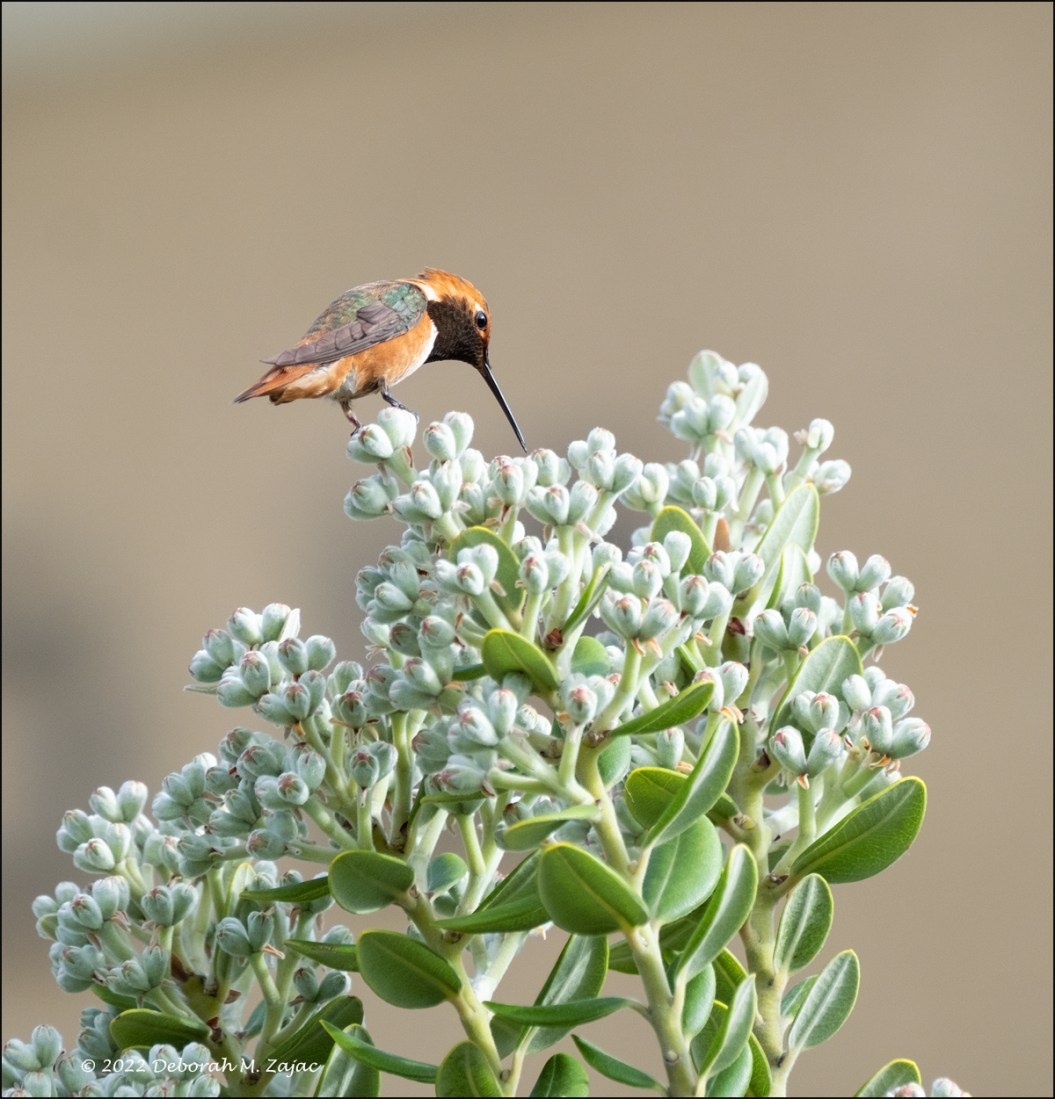
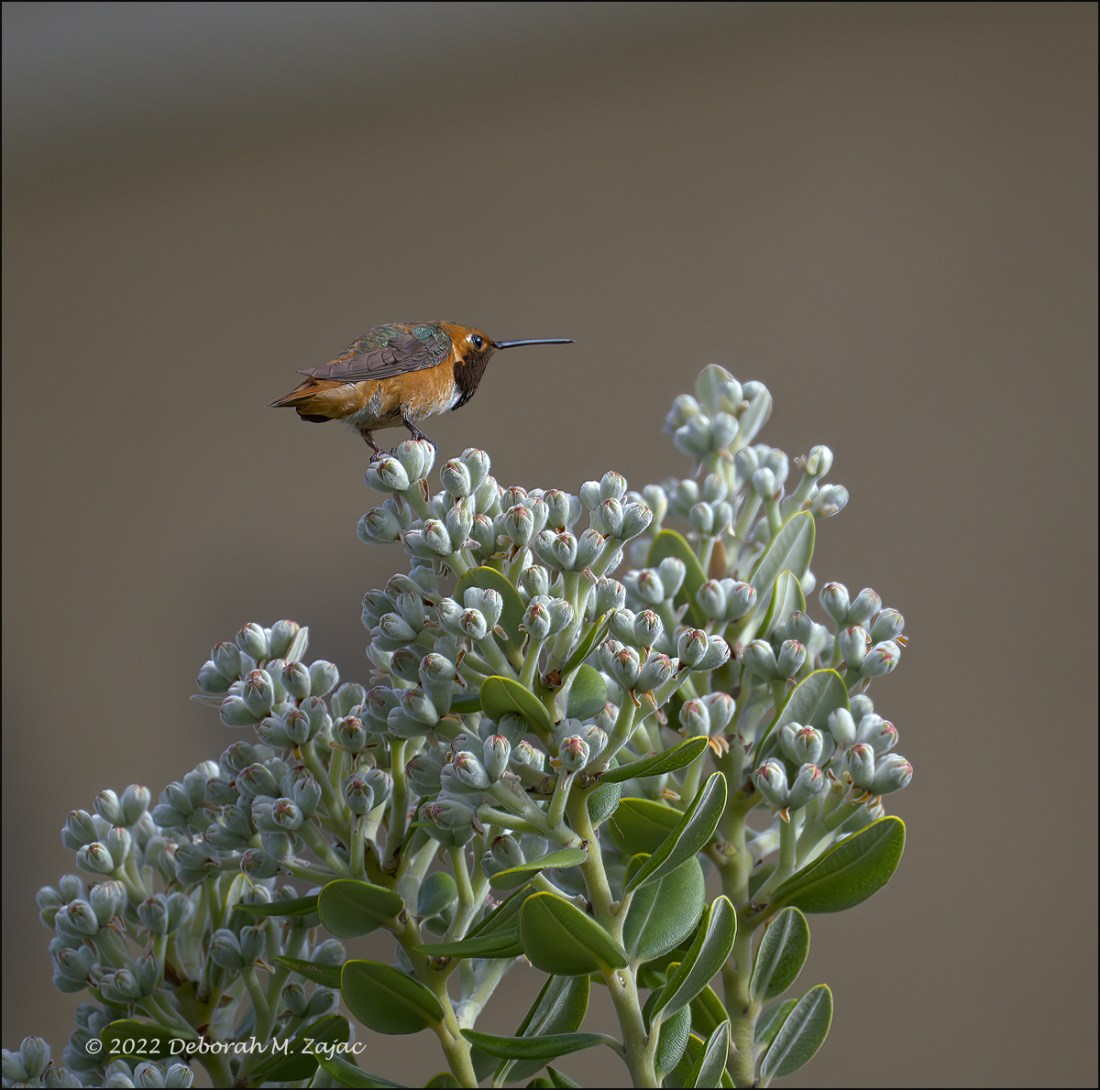
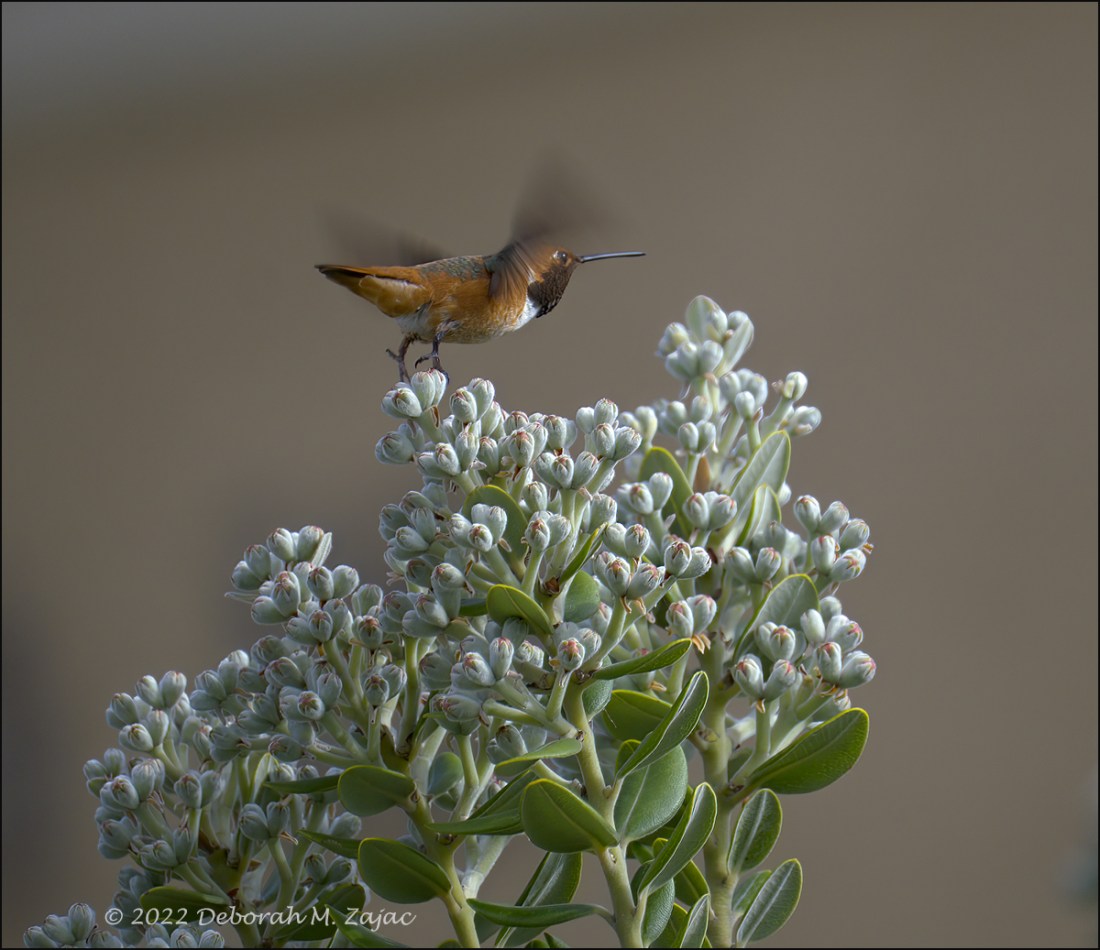
While visiting Big Baby Boy and The Dark Haired Beauty earlier this month I went out early one morning to photograph the flowers that were in bloom and saw to my delight an Allen’s Hummingbird male flitting around and landing on a Bottlebrush Bush.
Going for a sipA bit miffed and ready to flyBye–Bye!
I haven’t seen these or hardly any Hummers where I live now so this really was a treat seeing this one. Aren’t his colors wonderful.
Male and female Allen’s Hummingbirds use different habitats during the breeding season. The male sets up a territory overseeing open areas of coastal scrub or chaparral, where he perches conspicuously on exposed branches. The female visits these areas, but after mating she heads into thickets or forests to build a nest and raise the young.
Allen’s Hummingbirds breed in a narrow strip of habitat along coastal Oregon and California. But within their tiny range two subspecies occur. One (Selasphorus sasin sasin) migrates to a small area in Mexico for the winter while the other (S. s. sedentarius) stays put in southern California year-round.
The Allen’s Hummingbird is a remarkably early migrant compared with most North American birds. Northbound birds may depart their wintering grounds as early as December, arriving on their breeding grounds as early as January when winter rains produce an abundance of flowers.
Like other birds, Allen’s Hummingbirds use their feet to help control their body temperature. When it’s cold outside they tuck their feet up against their bellies while flying, but when temperatures soar, they let their feet dangle to cool down.
The oldest recorded Allen’s Hummingbird was at least 5 years 11 months old when she was captured and rereleased in California during banding operations in 2009. She was banded in the same state in 2004.~allaboutbirds.org
It’s going to be blustery and chilly here this week-end with maybe some snow and rain in the mountains so, I’ll be near home this week-end. I hope you have something fun planned!






 Circadianreflections Blog
You must be logged in to post a comment.