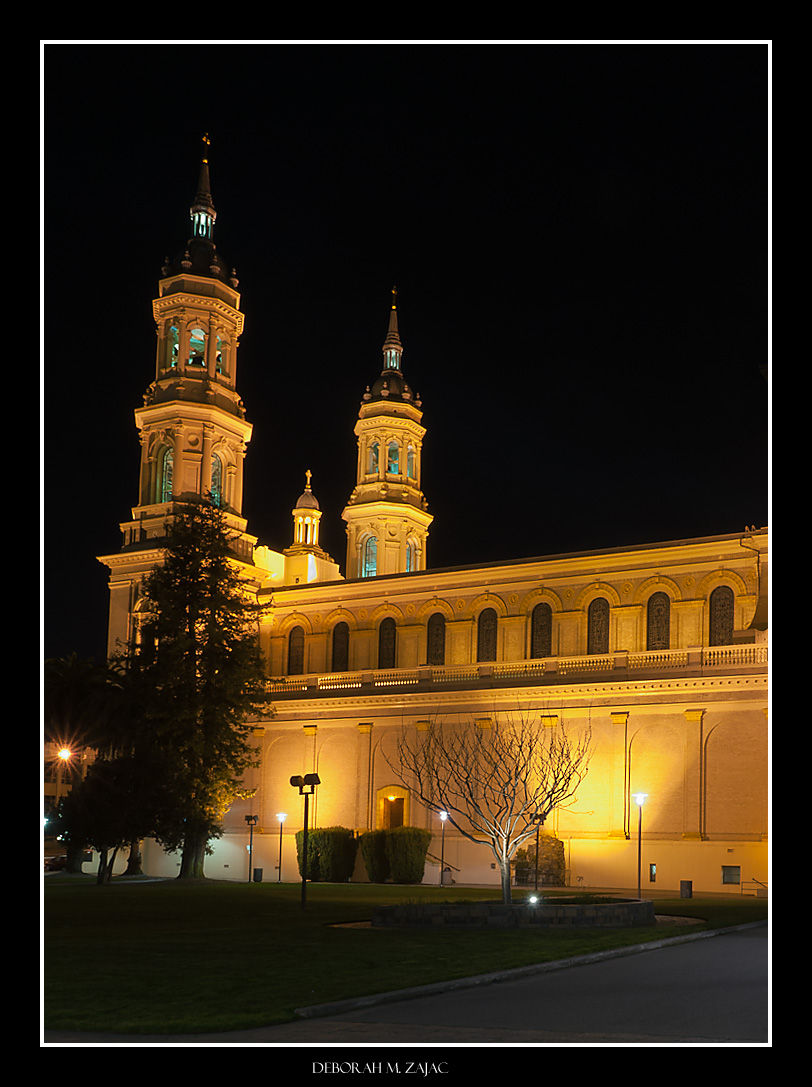
During my visit to San Francisco last week with my friend Dali we were fortunate enough to visit St. Dominics Catholic Church. I think of it as a Cathedral. It reminds me of the great Gothic cathedrals of France that I’ve visited.
History:
In 1863, the Dominican order paid $6,000 for the city block bounded by Steiner, Bush, Pierce and Pine Streets. During 1872 and 1873, Fr. Vilarrasa and the Provincial Council approved the expenditure of $25,000 to build a priory and a church. The first Saint Dominic’s, a small church at the corner of Bush and Steiner Streets, was blessed on June 29, 1873. The Priory of Saint Dominic was formally established in 1876.
By 1880, it was apparent that the church was too small for its rapidly growing congregation. Plans were drawn for a much larger church to be built of brick on the same site. The first church was moved to a location on Pine Street where it served as a parish hall. Although the cornerstone of the second church was laid in 1883, years of financial hardship followed and the church did not open until 1887 and was not completed for several years after. It served the parish until April 18, 1906.
During the months following the great earthquake, parishioners gathered for Mass outdoors until, in October 1906, a wooden church opened on the Pierce Street side of the block. This “temporary” Saint Dominic’s was to remain in use as a church until 1928 and as a parish hall until the 1960’s when it was finally torn down.
Work did not begin on the fourth Saint Dominic’s until 1923. Archbishop Hanna blessed the new church after construction was finished in 1928. Even then, work continued for many years as the building we know now was brought to completion at the time of Saint Dominic’s centennial celebration in 1973.
The Loma Prieta earthquake of 1989 destroyed the beautiful “lantern” of Saint Dominic’s tower. The tower itself was severely damaged, but was repaired and strengthened during the two months the church was closed. Much of the decorative work on the ceiling beams of the church fell during the quake and the remainder was removed for the safety of the parishioners.~ St Dominics Catholic Church
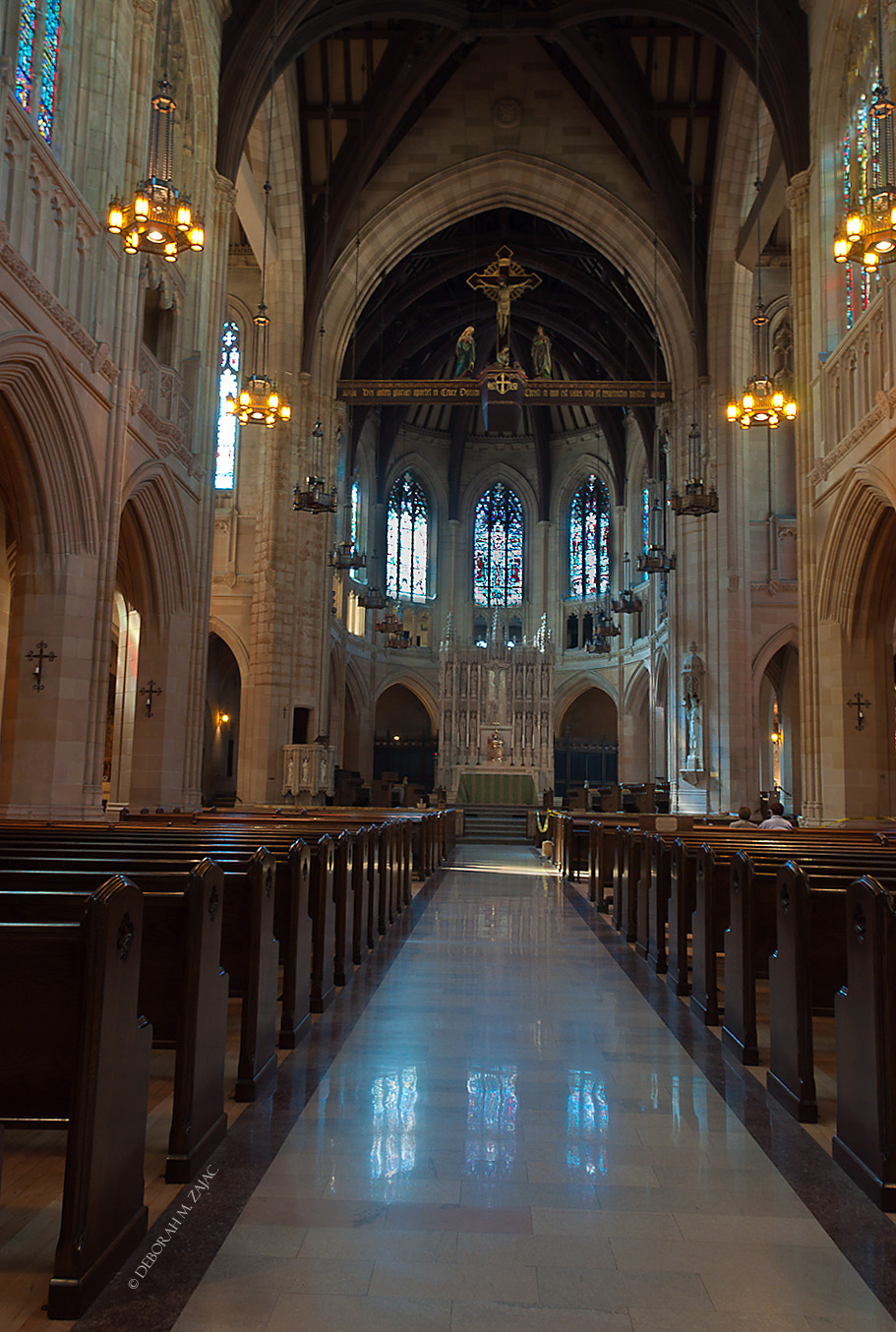
The Nave and Main Altar:
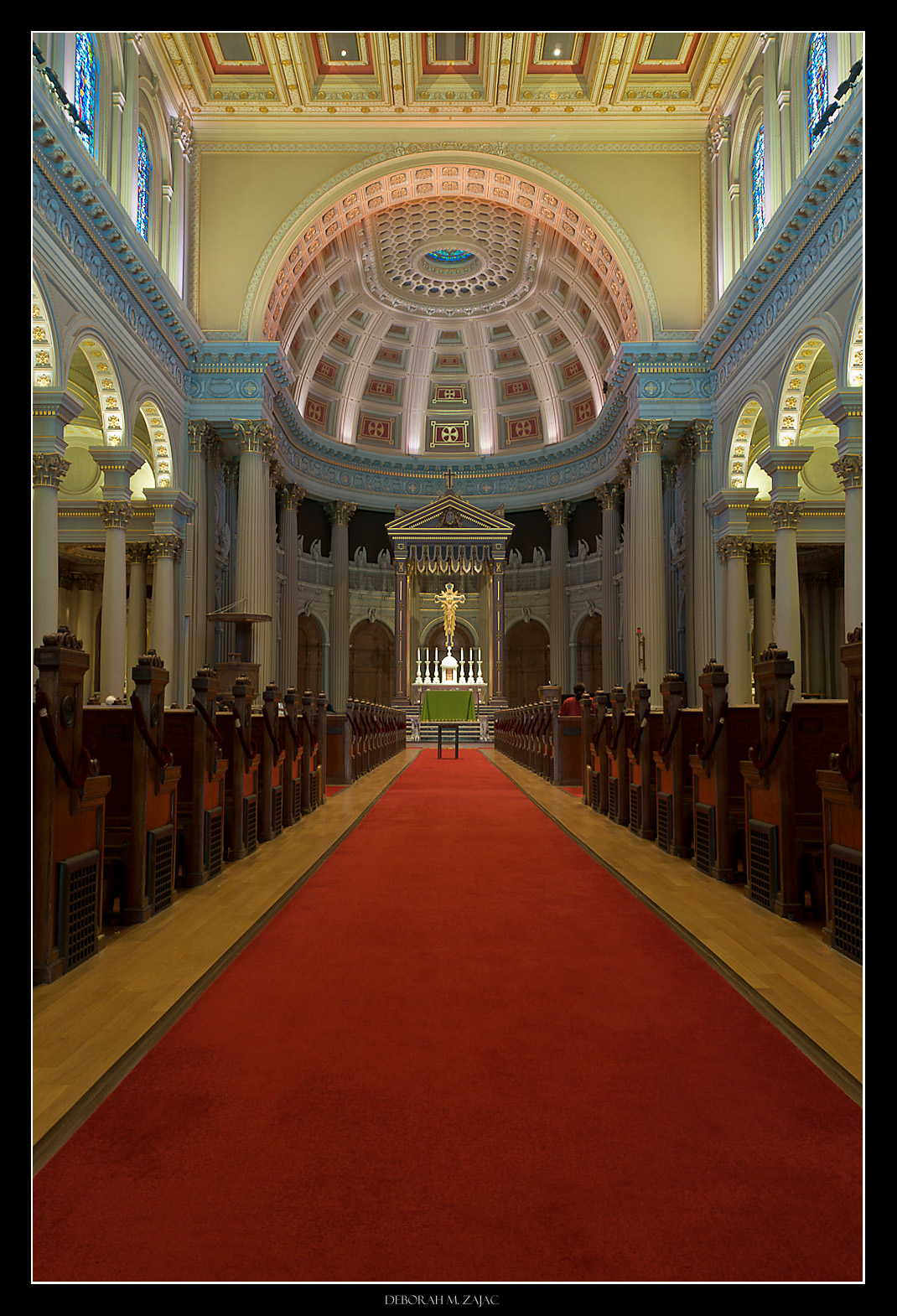
I like the light reflecting on the floor, and warm woods, and stone walls with their creamy colors of white and blush so soft and soothing. The crucifix group running across the Nave is really quite beautiful, it survived the 1906 Earthquake, and was placed in this chapel in 1928.
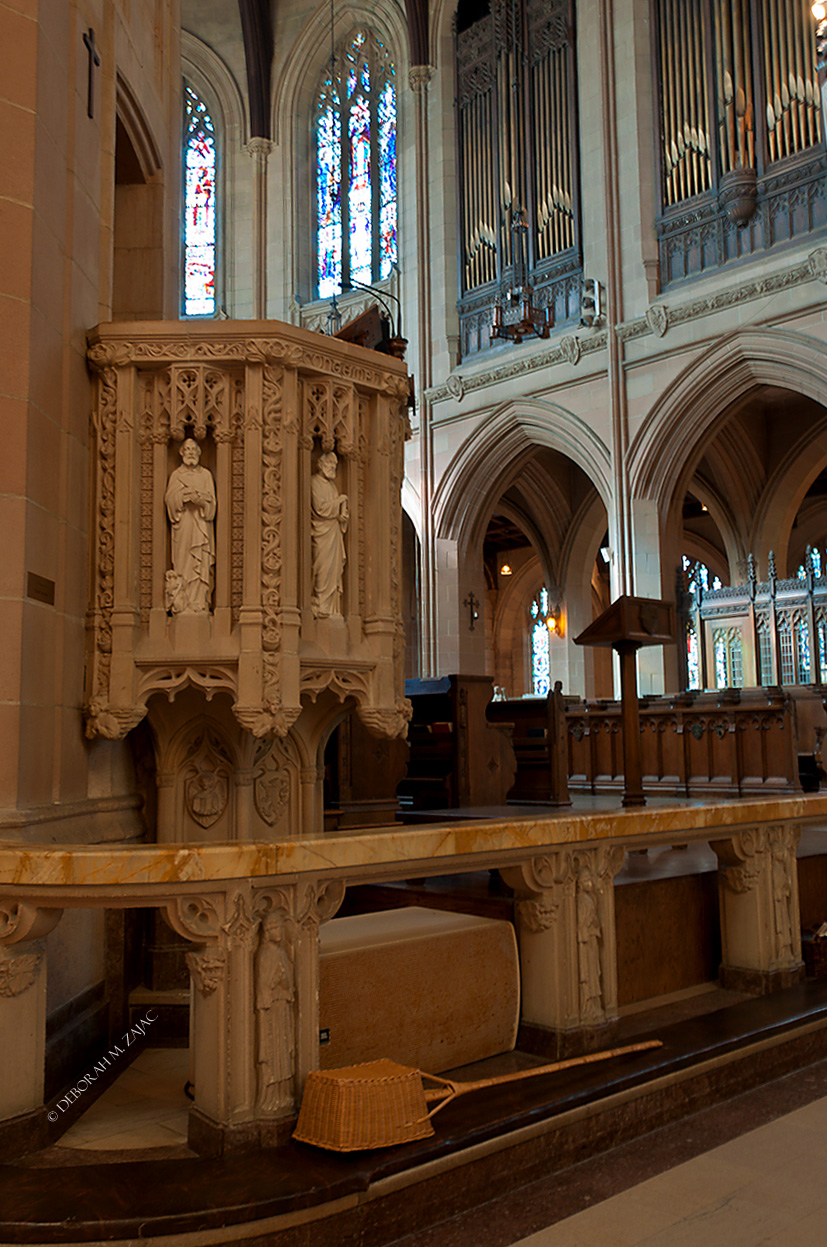
The Pulpit and Organ Pipes:
The Pulpit Carvings- Left to Right: St. Matthew, St. Mark, (not shown Christ, St. Luke, St. John)
“The pipe organ was built in Boston, Massachusetts in 1909 and was housed in the temporary church on Pierce Street before being moved into the current structure. The organ is registered with the Organ Historical Society as one of the most important, historical instruments in the country.”~ St. Dominic Catholic Church
Some of the Altars:
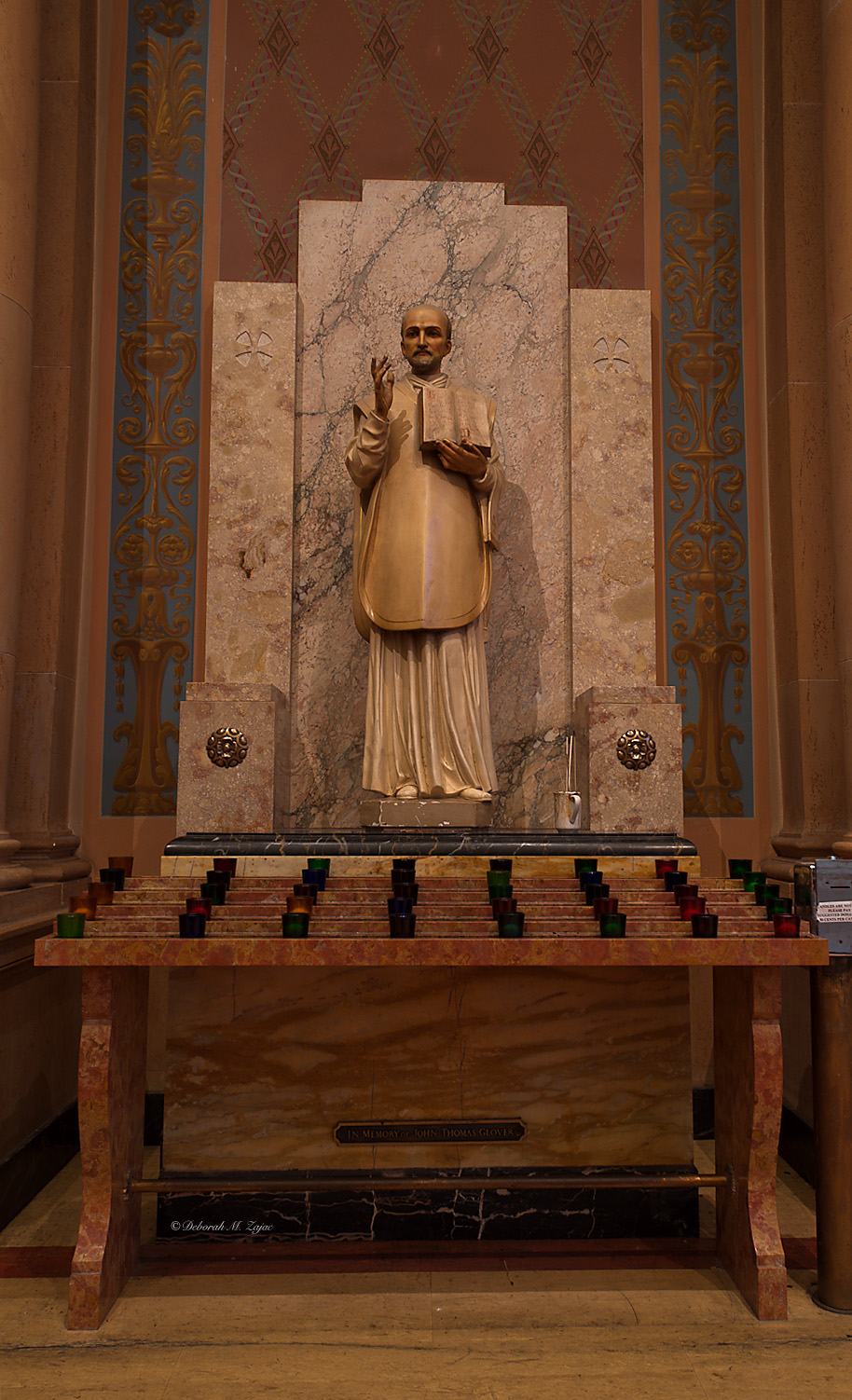
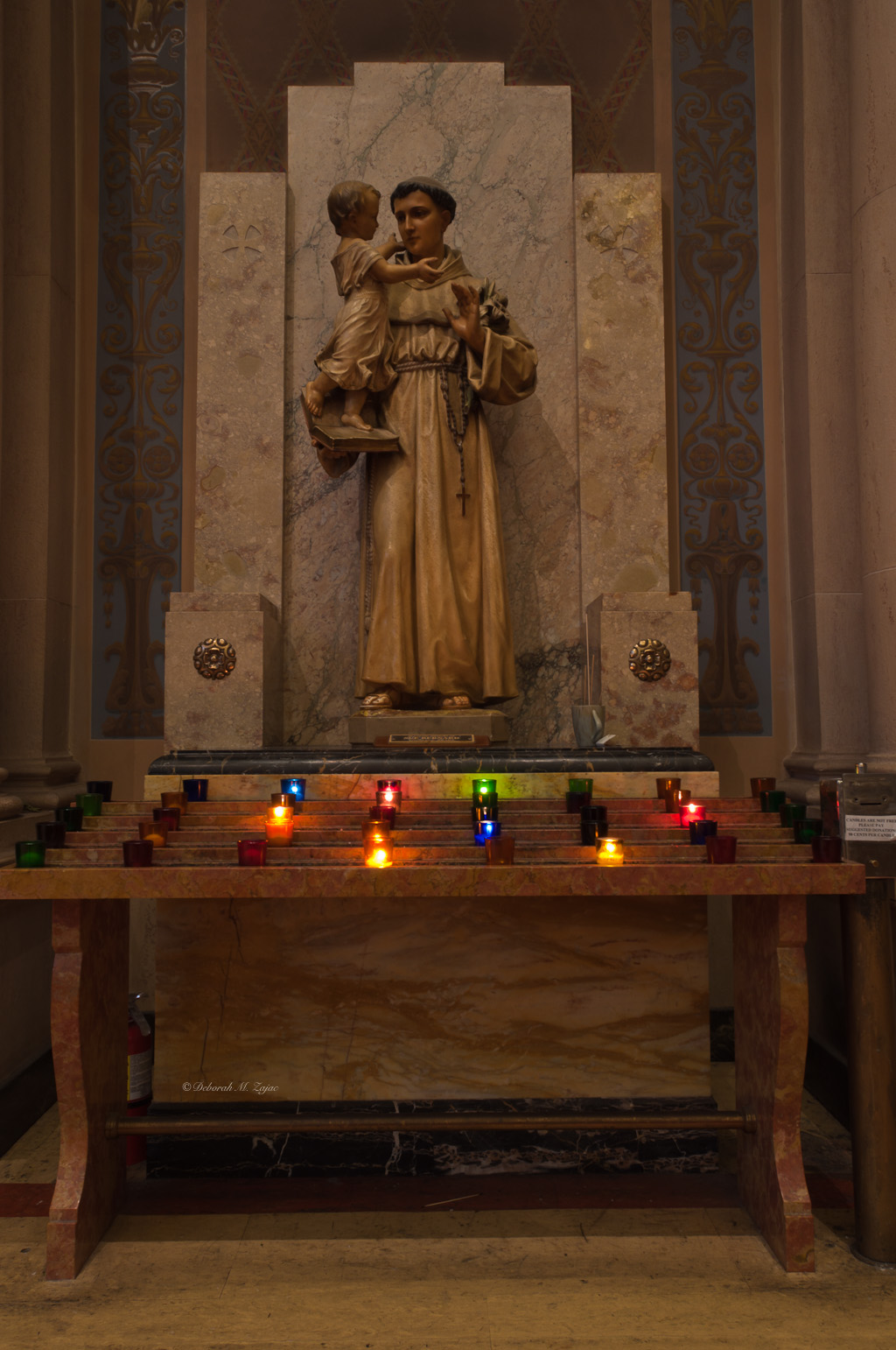
“The Edmund Schmid Woodcarving Studio of Oberammergau, Germany, carved the oak altars and shrines and the confessionals.”~ St. Dominic Catholic Church
Pieta
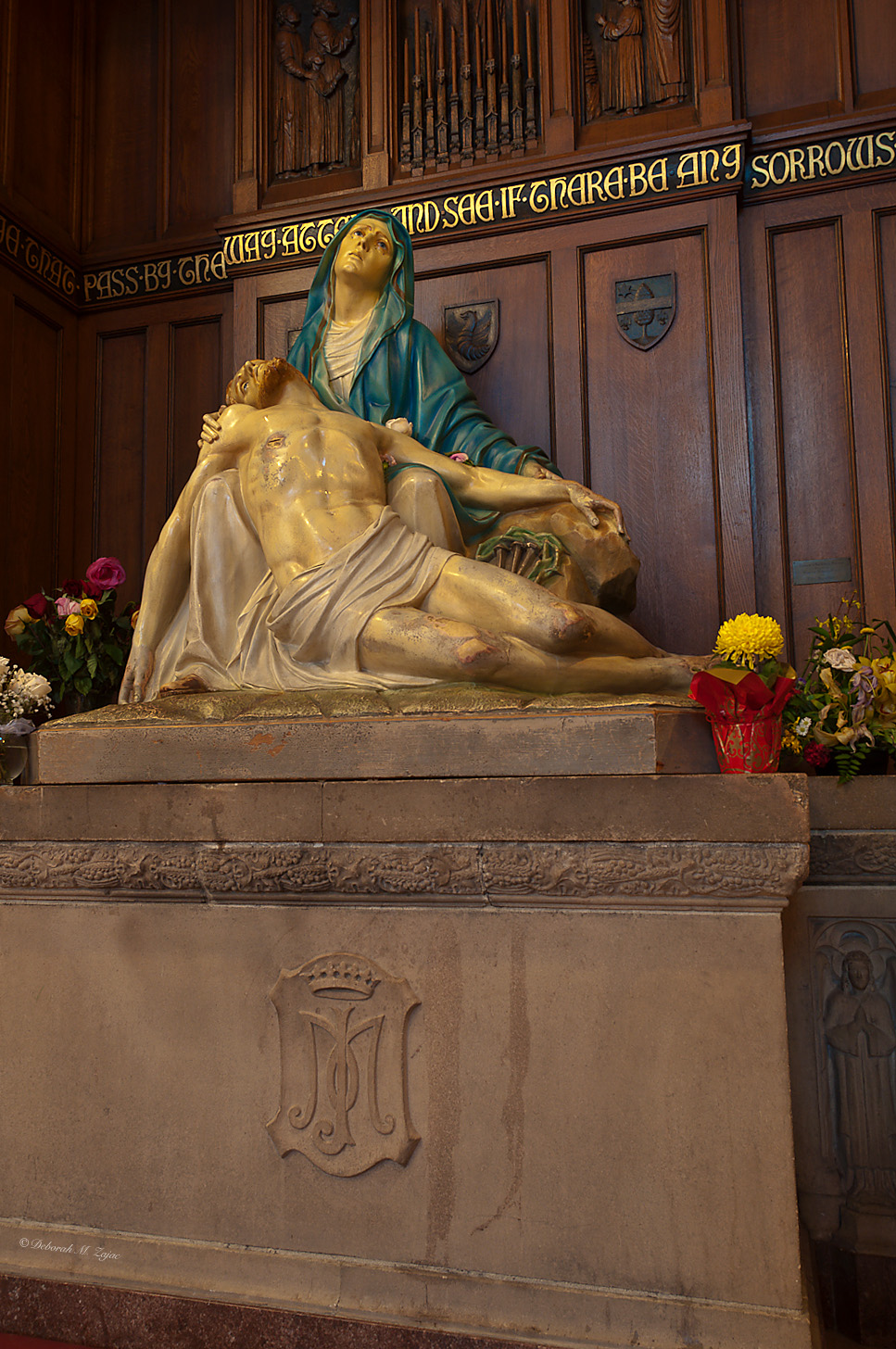
Our Lady of Purgatory
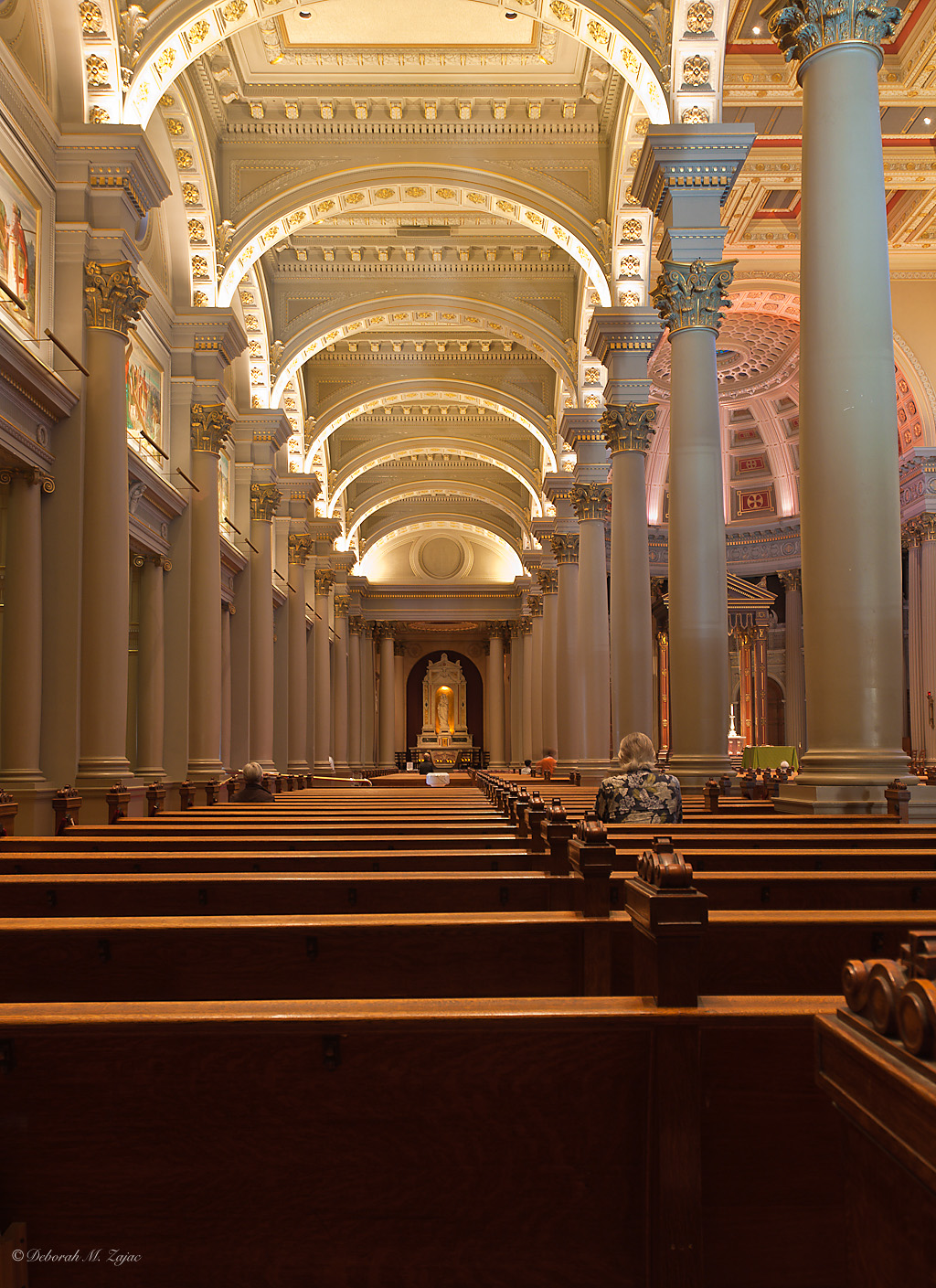
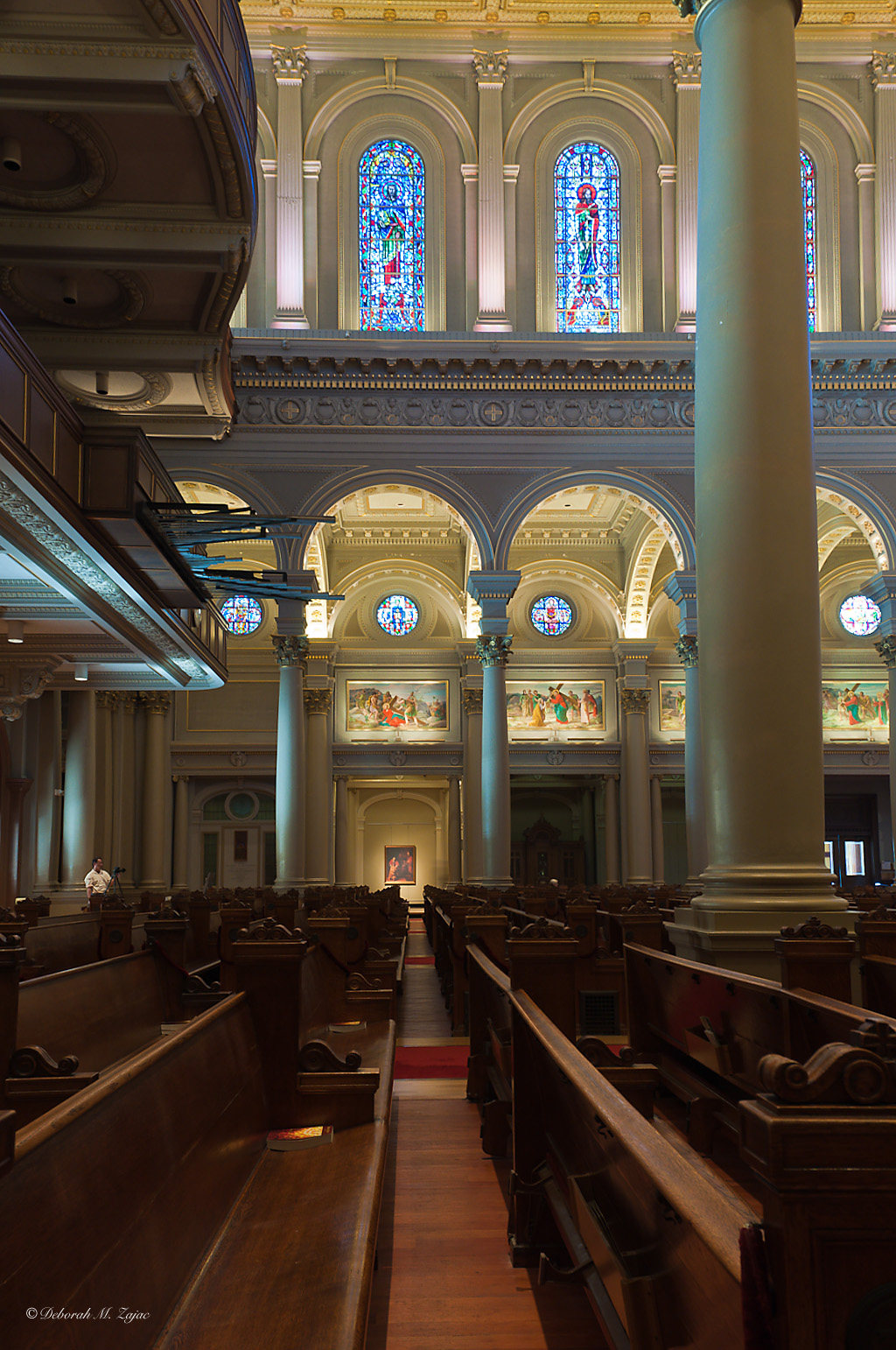
This view shows the lovely warm wood of the pews, and the beautiful color of the stone walls. With sun streaming down on the pews from above there are some nice shadows, and I got a little flare too.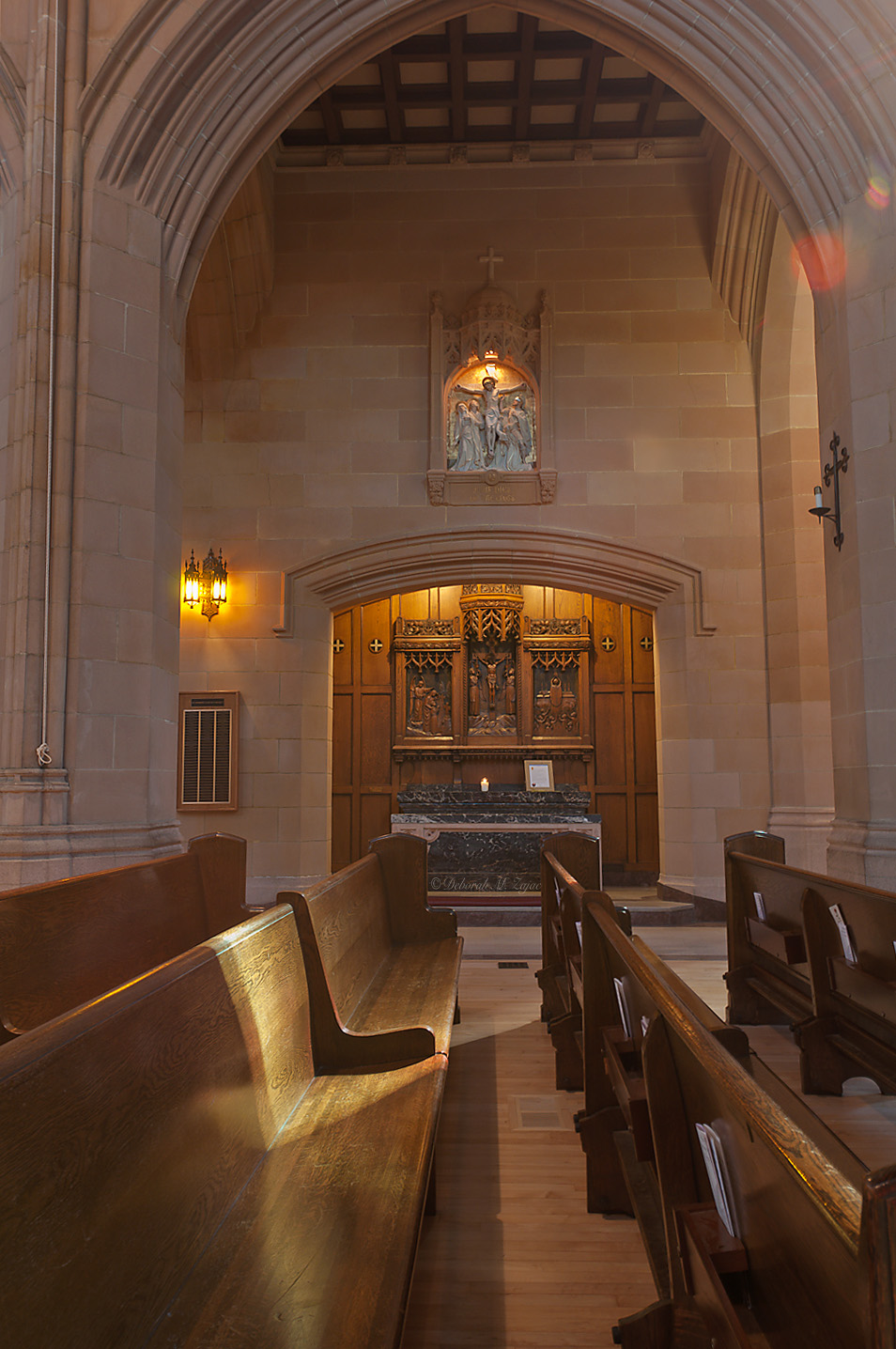
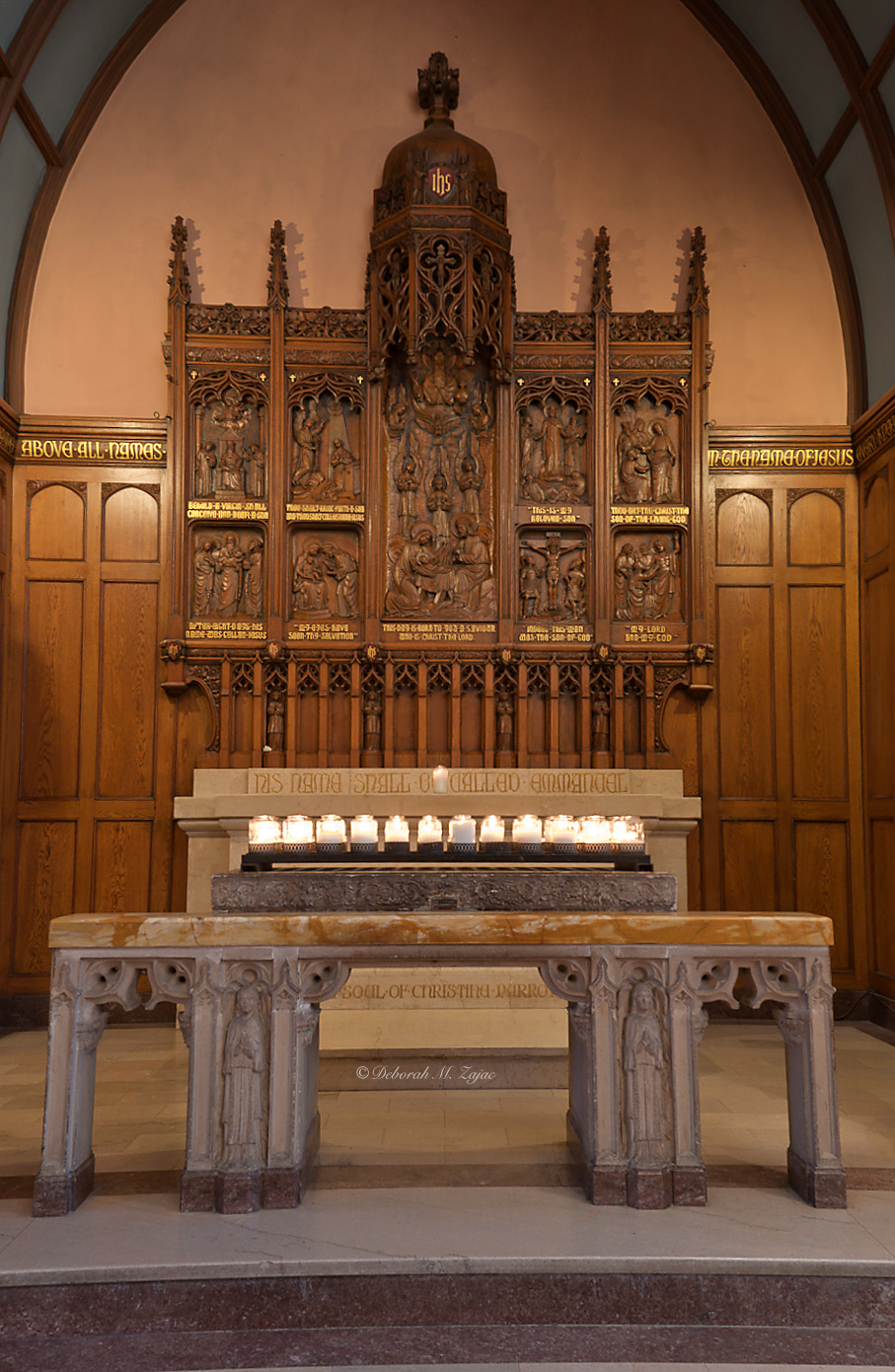
Altar of the Holy Name
When the church was first established they were part of the Society of the Holy Name, but I’m told by the staff they aren’t anymore.
Correction: From Maria Vickroy-Peralta the Development Director at St. Dominic’s emails- “Actually, the Dominicans who established and continue to staff St. Dominic’s belong to the Province of the Most Holy Name of Jesus (more commonly known as the Western Dominican Province ). Thus, the Holy Name Altar reflects their Provincial affiliation, which continues to this day.”
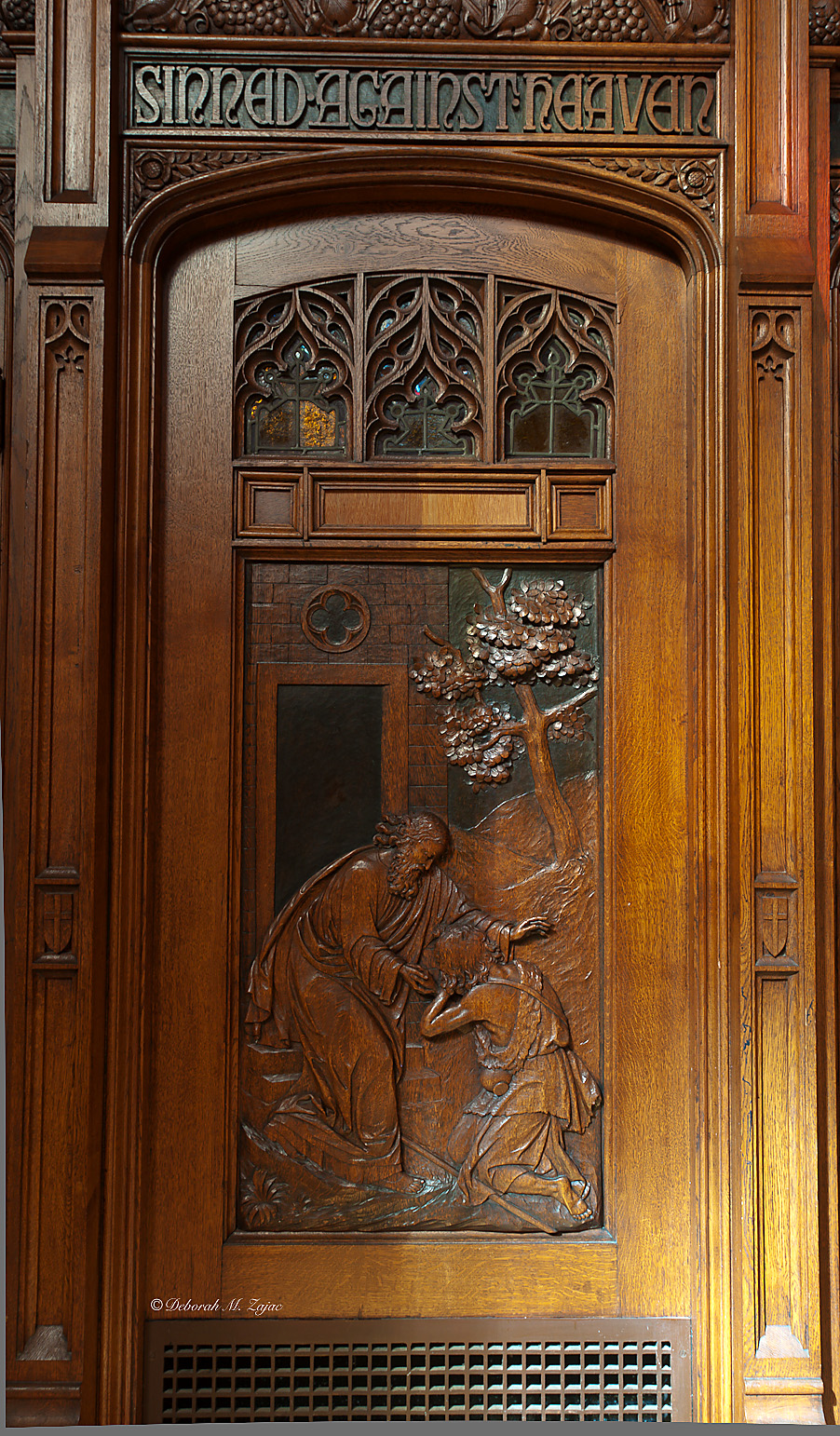
 The Confessionals line both outer walls of the chapel. Their doors are intricately carved in oak and depict scenes of Christ’s mercy and humankind’s war for reconciliation from the parables of the New Testament.
Lady Chapel:
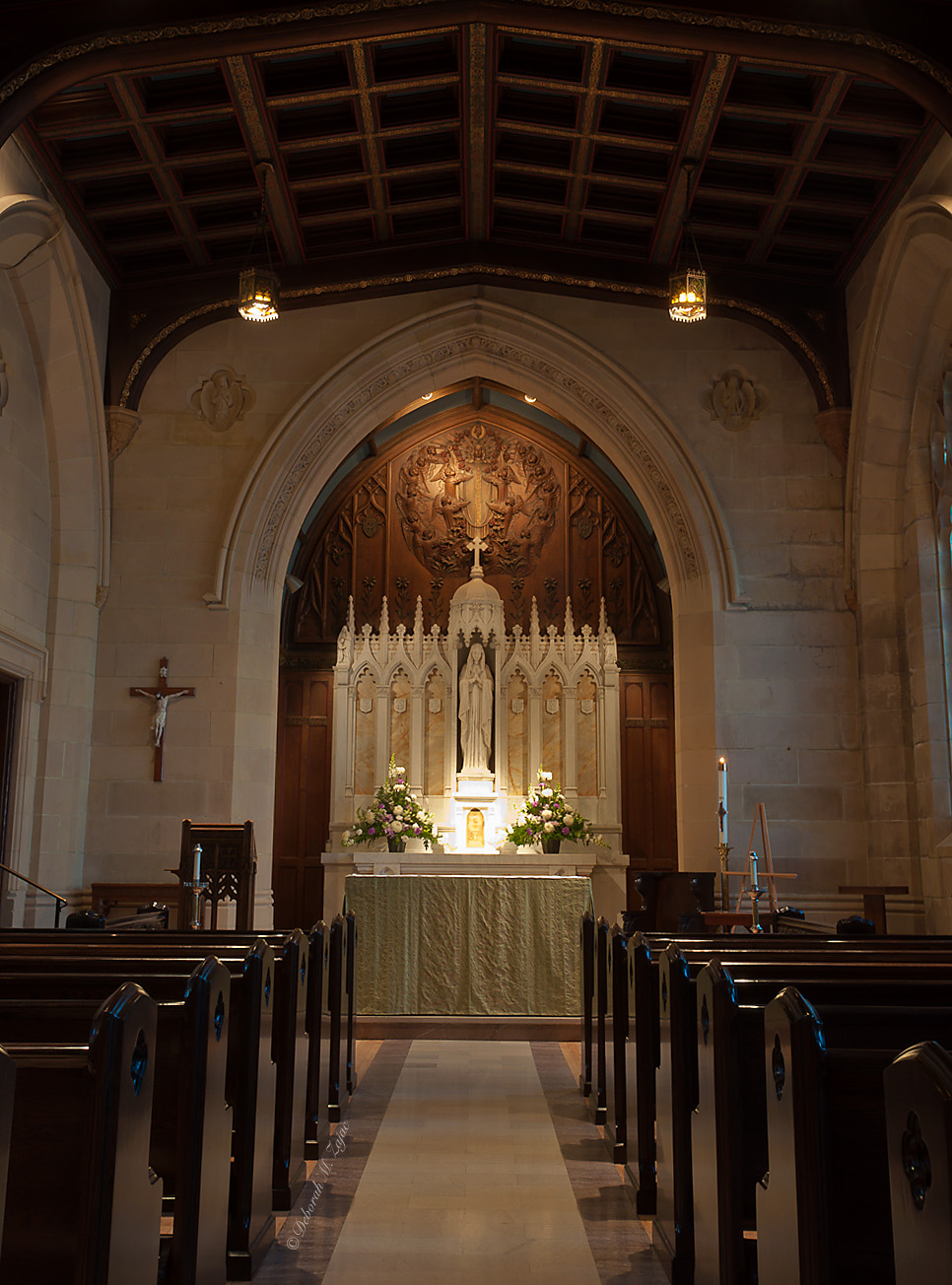
The Lady Chapel in St. Dominic’s Catholic Cathedral . I felt very comfortable in here. The warm woods with the soft white stone walls, and the white altar are just lovely. This would be a wonderful little chapel for a wedding.
The carving over the altar is Mary, but I’ve not found any information about it. The carvings in the stone on either side of the altar are left- St. Anne, and right- St. Joachim.
Addendum: Maria from the Development and restoration department of the church returned my call the other day. She told me after they did the power-wash in this chapel they discovered this never seen before gilding on the ceiling beams and around the alter. It was a thrilling and beautiful surprise to them all. Thank you so much Maria for your time and for answering my questions. I appreciate it immensely!
The balcony and stained glass windows:
Over the balcony the stained glass window depicts Christ triumphant over death.
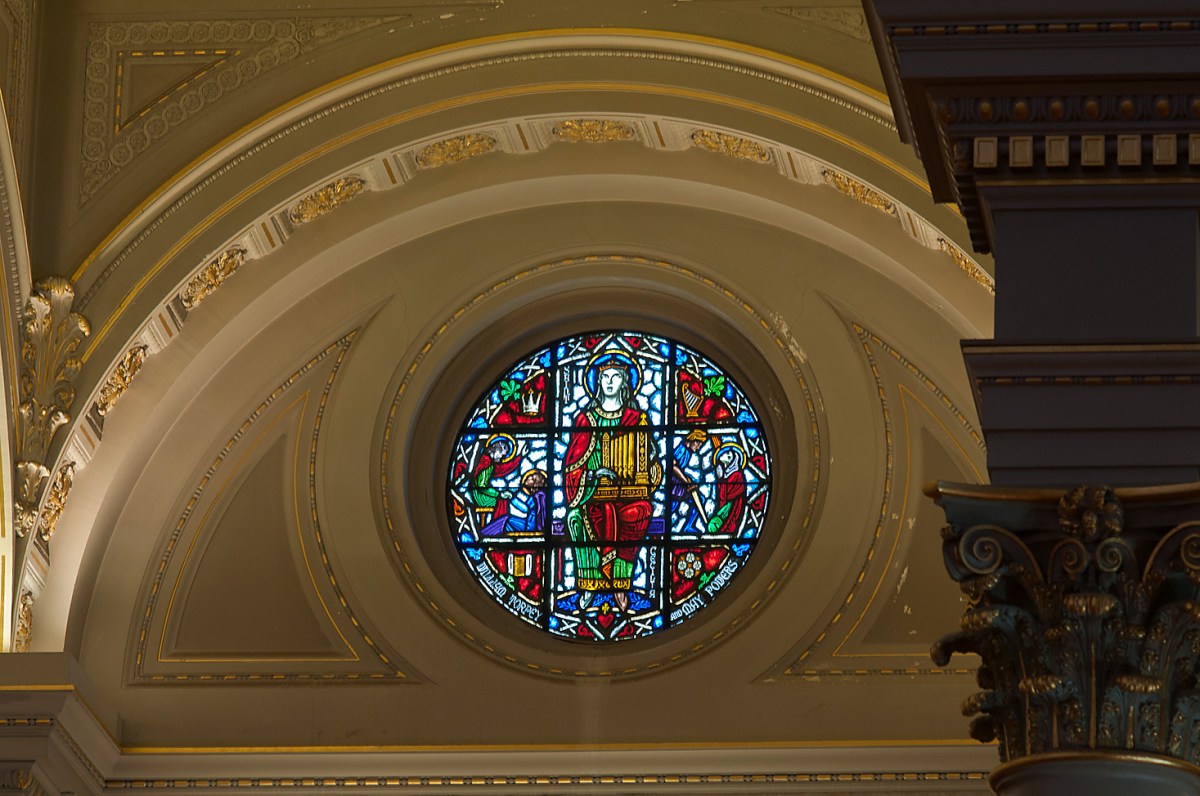
“The stained glass windows in the apse, the Lady Chapel, the sides of the transepts and most of the small windows in St. Dominic’s are by Charles J. Connick of Boston, whose signature appears on several. The last of these windows was installed in 1936 by the Cummings Studios of San Francisco, who also made at least one of the windows. Max Ingrand of Paris created the windows that line the nave as well as the large west window and those on the north and south sides of the transepts and the suite of small windows in the sacristy. These were installed between 1964 and 1973.”~ St. Dominic’s Catholic Church
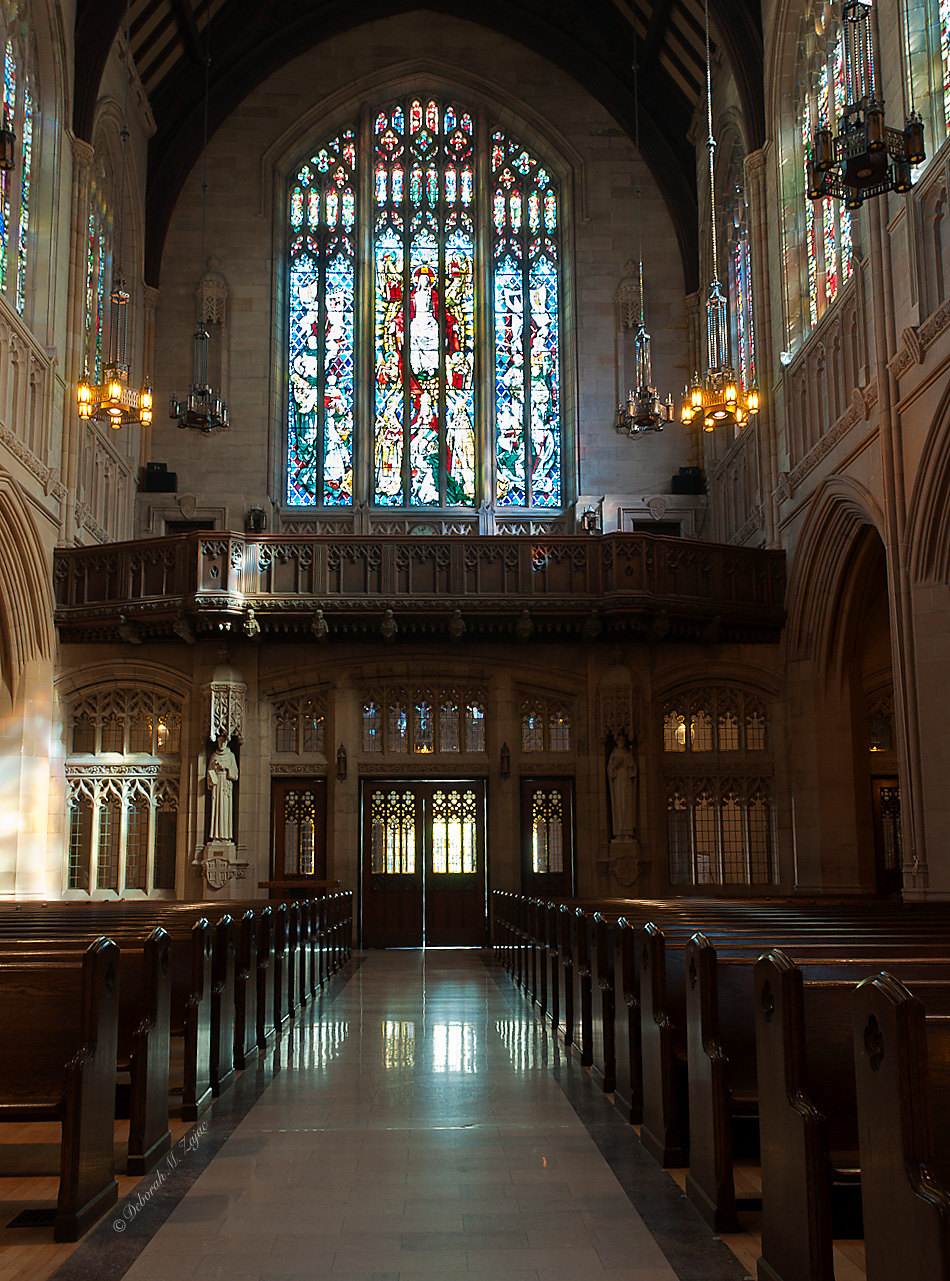 There is a lot construction going on in both the interior and exterior of the church. The stained glass is getting new lead, the floors are being refinished, and they are installing a new heating system, and there is much going on with scaffolding around the buttresses on the exterior. The next time I come I hope to photograph more of the interior that I missed today, and much of the exterior as well. I wonder what it would take to get up on the balcony to take a photo of the Nave and Main altar? That would be something!
Well time to go… there’s time to visit another Cathedral!
Thank you Dottie of St. Dominic’s who was so gracious, and generously answered so many of my questions regarding the altars, and repairs that are going on.
All photos taken with a Nikon D90 & Nikkor 17-35mm f2.8lens
© Copyright Deborah M. Zajac. All Rights Reserved
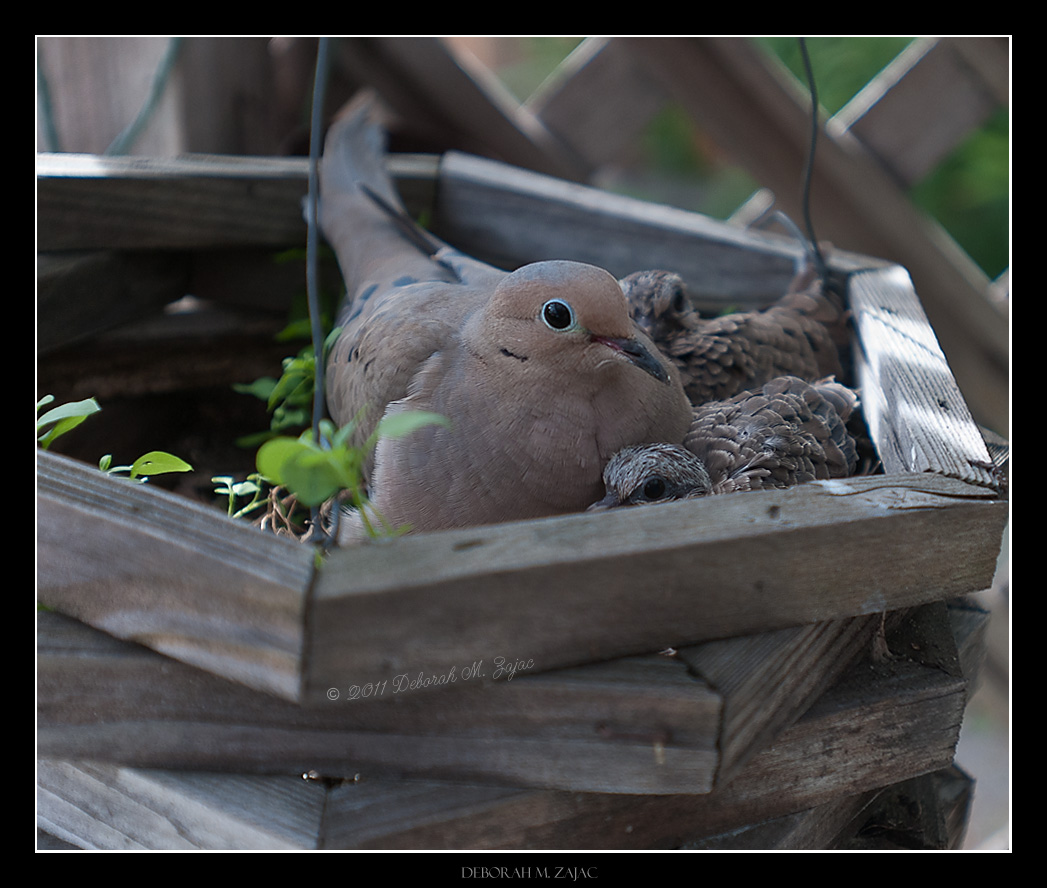
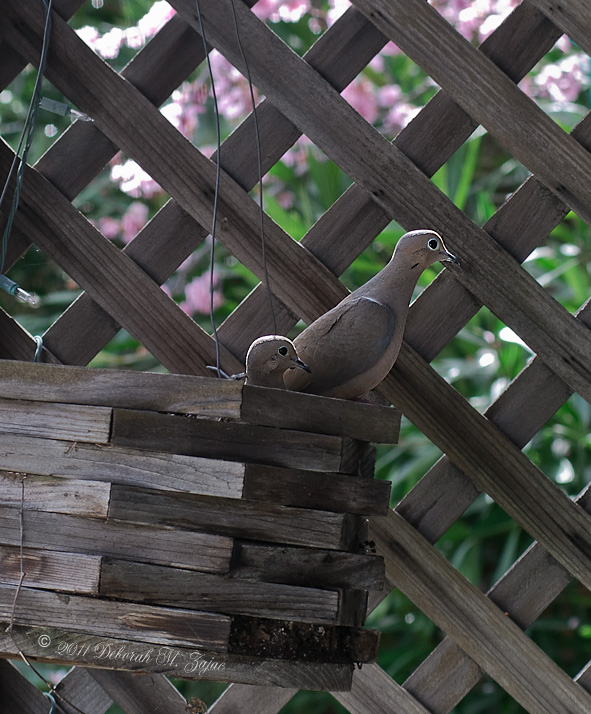
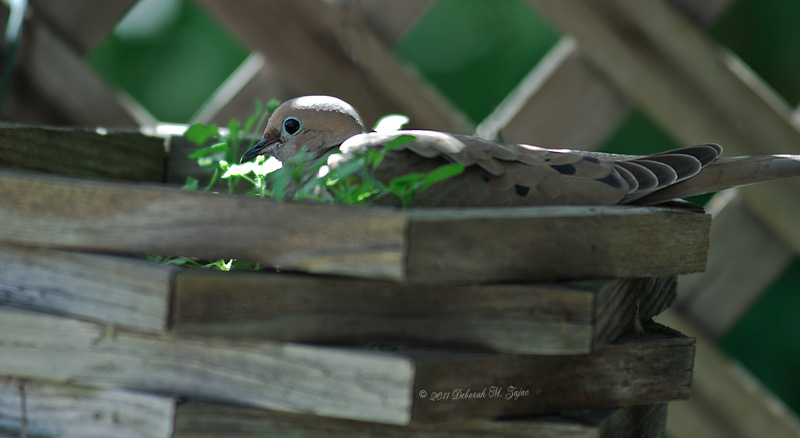
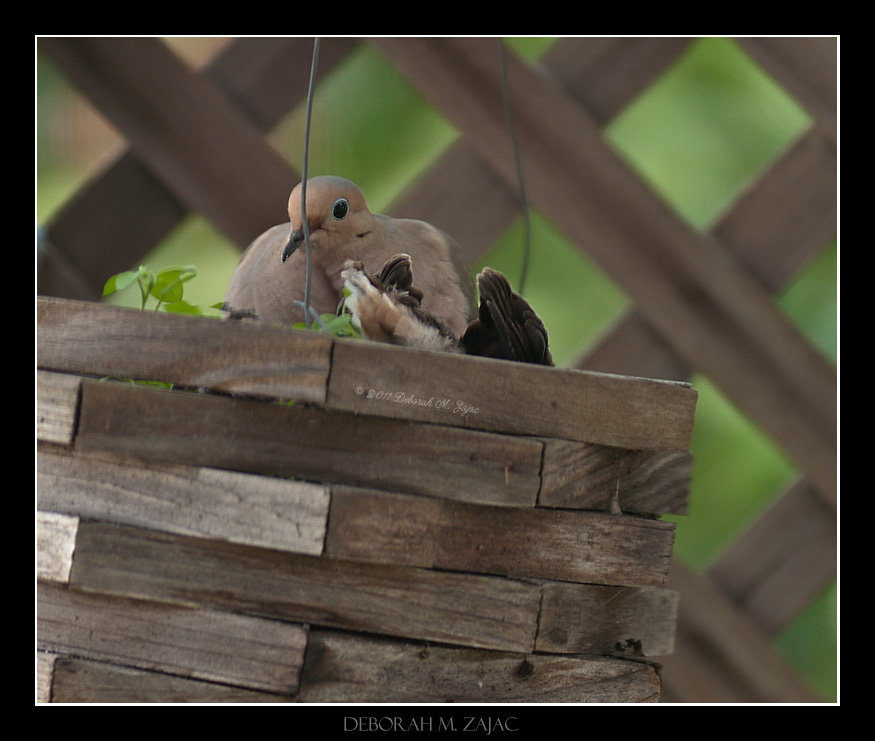 Compound this far vantage point with them being under the cover of the patio and it was windy and rainy. The basket was moving quite a bit. Notice the motion blur on the tail. I raised the ISO to get my shutter speed up, not enough I’m afraid. I didn’t want to introduce too much noise. Between the family moving the basket, and the wind moving it has been a challenge photographing them.
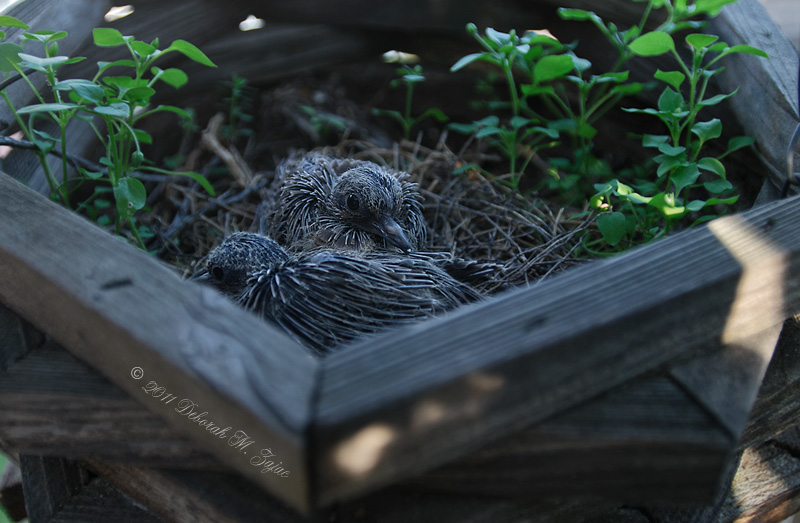
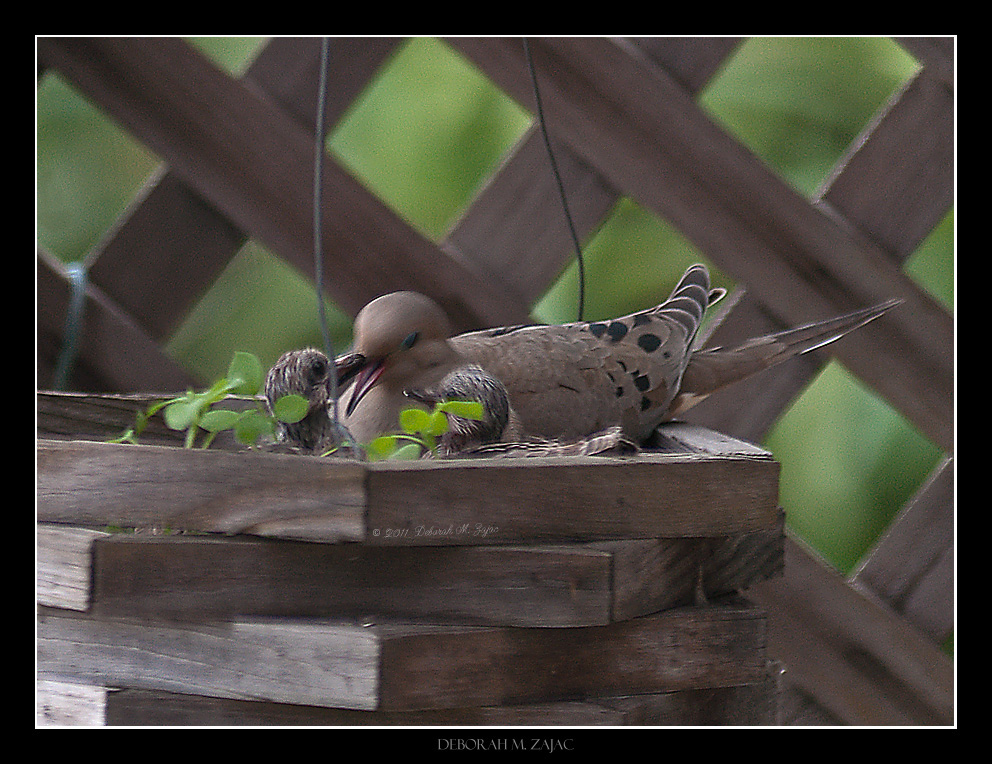 I’ve done a bit of research since these have come into my life about what to expect until they leave the nest. Mourning Doves don’t regurgitate worms to feed their young. They are vegetarian and have a special pouch that their food goes into where it is turned into a very rich, nutritious milk. It contains more protein than cows milk. The chicks stick their head/beaks into the parents mouth and drink the milk. Another interesting fact both the male and female have this extra large crop and produce the milk. The chicks grow very quickly due to this rich milk.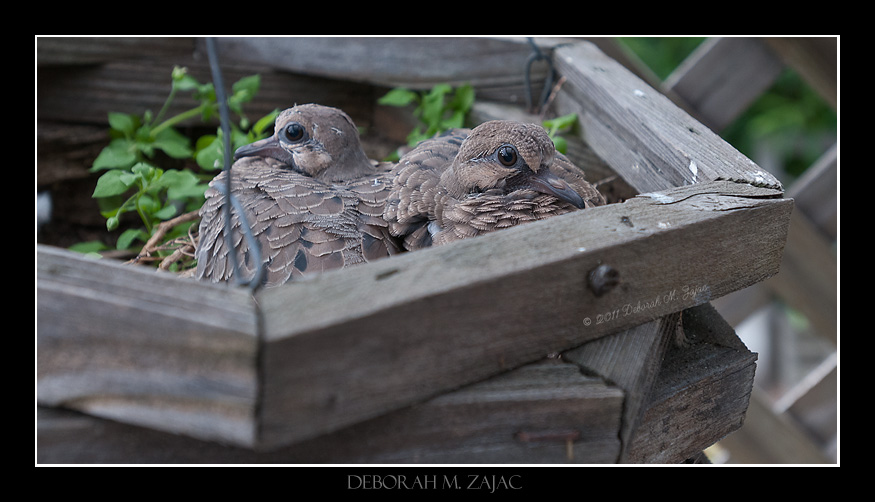


 Circadianreflections Blog
You must be logged in to post a comment.