Alpine Glow on Cathedral Peaks and Echo Peaks

Copyright © 2012 Deborah M. Zajac. All Rights Reserved.
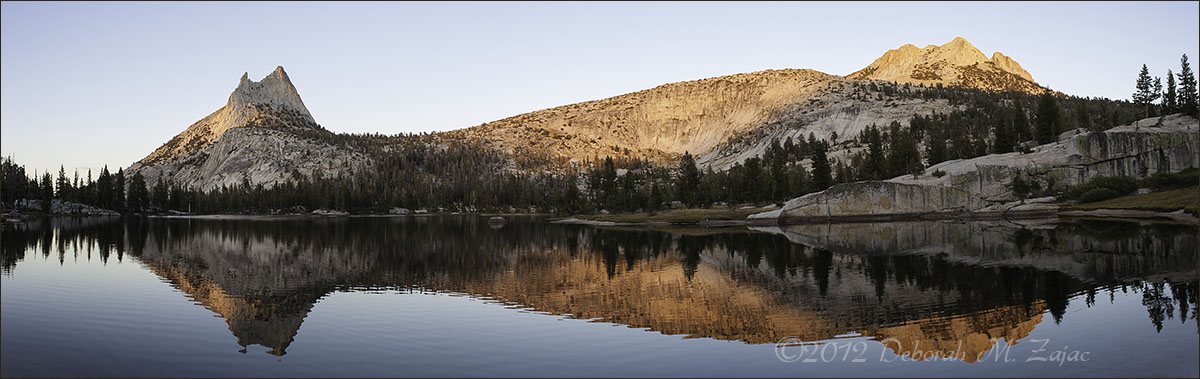

Myself and 7 other members of a Meet-up group I’m in backpacked to Upper Cathedral Lake in Yosemite Wilderness. for an overnight photography adventure.  It’s a 3.5 mile hike starting at 8500 ft, and topping out at 9500ft. I took my Garmin for the stats, but haven’t uploaded it yet.
My legs are dead tired after hauling my body plus 20+ pound pack up there, but it was so worth it!
It’s gorgeous up here. We lucked out it was too cool for mosquitoes. I didn’t get eaten alive at all. There were only a few other campers up here making it really enjoyable considering it was a major holiday week-end in the United States, and the valley was packed with people.


After picking a site to set up our base camp we set up our tents then grabbed our camera equipment  and trekked over to the south side of the lake to shoot the sunset. We didn’t get any color in the sky as it stayed flat all afternoon and evening, but the Alpine Glow on the mountain peaks was lovely.

Nikon D700| Nikkor 24mm @f9| 1/20s| ISO 200| Manual Priority| Tripod| 5 frame panorama
Crater Lake in early May


Crater Lake in early May, originally uploaded by dmzajac2004-.

Via Flickr:
Copyright © 2012 Deborah M. Zajac. All Rights Reserved.

While in OR this past May we were only an 1.5 hours drive from Crater Lake so we spent our last afternoon and evening here. The weather and scenery didn’t disappoint.

Nikon D700| Nikkor 24mm @f16| 1/125second| ISO 200| Manual Priority| Tripod| 4 frame Pano stitched in CS6

For the historians:
The lake was formed after the collapse of an ancient volcano, posthumously named Mount Mazama. This volcano violently erupted approximately 7,700 years ago. That eruption was 42 times as powerful as the 1980 eruption of Mt. St. Helens. The basin or caldera was formed after the top 5,000 feet of the volcano collapsed. Subsequent lava flows sealed the bottom, allowing the caldera to fill with approximately 4.6 trillion gallons of water from rainfall and snow melt, to create the seventh deepest lake in the world at 1,932 feet.

Rolling mountains, volcanic peaks, and evergreen forests surround this enormous, high Cascade Range lake, recognized worldwide as a scenic wonder. On summer days, neither words or photographs can capture Crater Lake’s remarkable blueness. For much of the year, usually October to July at higher elevations, a thick blanket of snow encircles the lake. Snowfall provides most of the park’s annual 66 inches of precipitation.

Crater Lake rarely freezes over completely; it last did in 1949. Heat from the summer sun stored in the immense body of water retards ice formation throughout the winter. On the earth clock, natural forces only recently constructed this landscape. Lava flows first formed a high plateau base on which explosive eruptions then built the Cascade volcanoes. Humans probably witnessed the cataclysmic eruption of Mount Mazama about 7,700 years ago.
~Crater Lake National Park Service


Misty Valley


Copyright © 2012 Deborah M. Zajac. All Rights Reserved

This poem Mist Valley
by James Longenbach came to my mind when I came across this old photo of mine a few days ago.

At the end of August, when all
The letters of the alphabet are waiting,
You drop a teabag in a cup.
The same few letters making many different words,
The same words meaning different things.

Often you’ve rearranged them on the surface of the fridge.
Without the surface
They’re repulsed by one another.

Here are the letters.
The tea is in your cup.

At the end of August, the mind
Is neither the pokeweed piercing the grass
Nor the grass itself.
As Tony Cook says in The Biology of Terrestrial Mollusks

The right thing to do is nothing, the place
A place of concealment,
And the time as often as possible.

Nikon D700| Nikkor 17-35@26mm| f11| 1/60sec| ISO 200| Manual Priority| Tripod


“I’m waiting for you Morning Star…herald of the dawn.” ~ Deborah M. Zajac

Copyright © 2012 Deborah M. Zajac. All Rights Reserved.

“Rise quickly for I am numb with Winter’s morning chill.
My fingers ache for your warm embrace.”~

That’s my plea every sunrise shoot, and to be honest most nights too! My fingers are the first to go numb, and I’ve not found a hand-warmer or pair of gloves to keep me warm enough to thwart the chill.

This is a shot from Convict Lake taken the third morning of 2012.  Seeing sunrises like the one my friends and I saw on this morning make the early rise, drive time, and standing in the cold worth it!

Nikon D700| Nikkor 17-35@17mm| f13| 10 seconds| ISO200| Manual Priority| Tripod

Moon-struck madness!

Copyright © Deborah M. Zajac. All Rights Reserved.

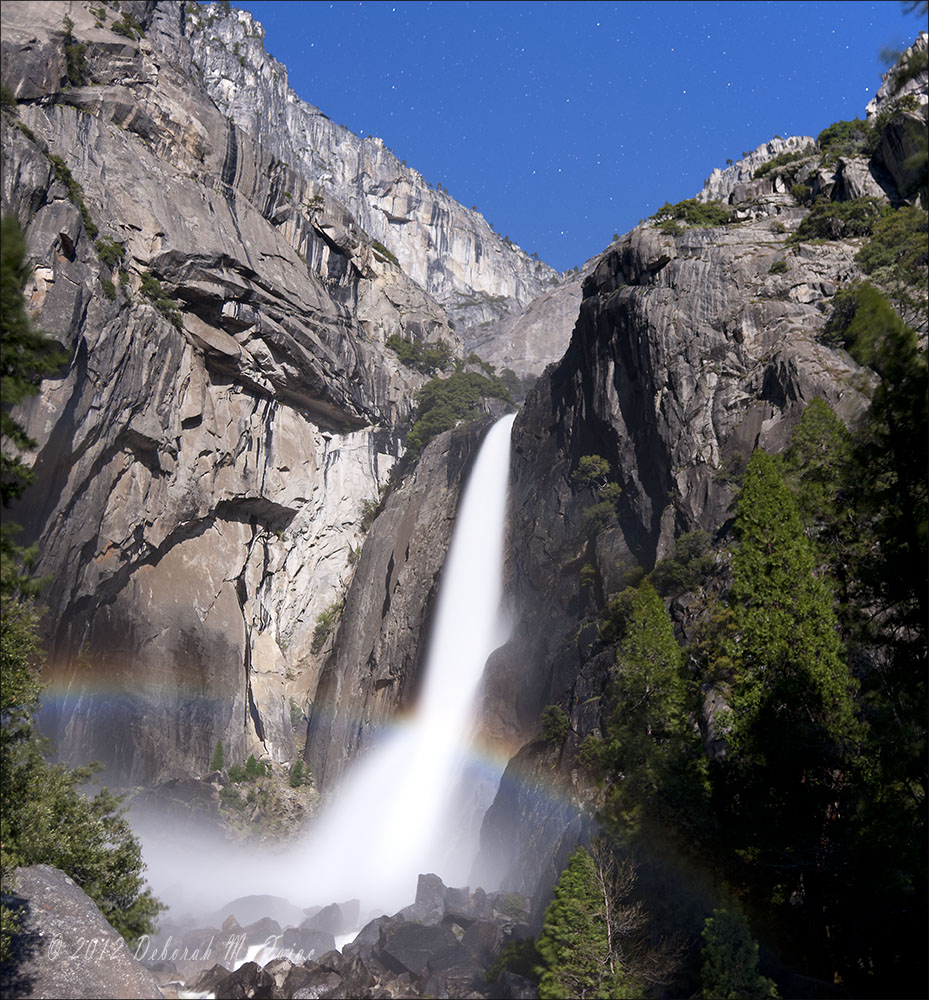
Yesterday myself and 3 friends went up to Yosemite National Park where we met more friends to photograph a Moonbow.
This is my first Moonbow, and my first Vertorama.

A moonbow can only happen when a full moon is shining reflected sunlight on the falls at an angle of 42º or lower, there must be water, or a mist, and it must be dark enough to see it.

There were nearly 200 people here on the little plaza and bridge to Lower Yosemite Fall last night by my quick head count in the dark. As the night wore on more people kept coming!

It was a lot of fun and I’m looking forward to capturing a Moonbow over Upper Yosemite Fall in the future.

I must say a word about the Vertorama. Paul Bruins a fellow Flickrite is the first person I knew of doing Vertoramas. He has generously written a tutorial for our use. You can read it here:
http://www.flickr.com/groups/vertoramas/discuss/72157602953001077/

I have to thank my freind Steven Christenson for “thinking out loud” last night and saying I think I’ll try a Vertorama too.” That was a reminder to me to finally try one.
I was a bit confused on how one moves the camera up, and Steven suggested the same thing Paul does and that is tilt the camera up without moving the tripod. So that is what I did. I’m going to try more of them now that I have the first one under my belt.
This is 2 frames stitched together in CS5. I’m looking forward to capturing a Moonbow on Upper Yosemite Fall in future.

Nikon D700| Nkkor 35mm f2 @ f2.8| 38 seconds| ISO 400| Manual Priority| Tripod

Working out the kinks

Working out the kinks by dmzajac2004 at Garmin Connect – Details.

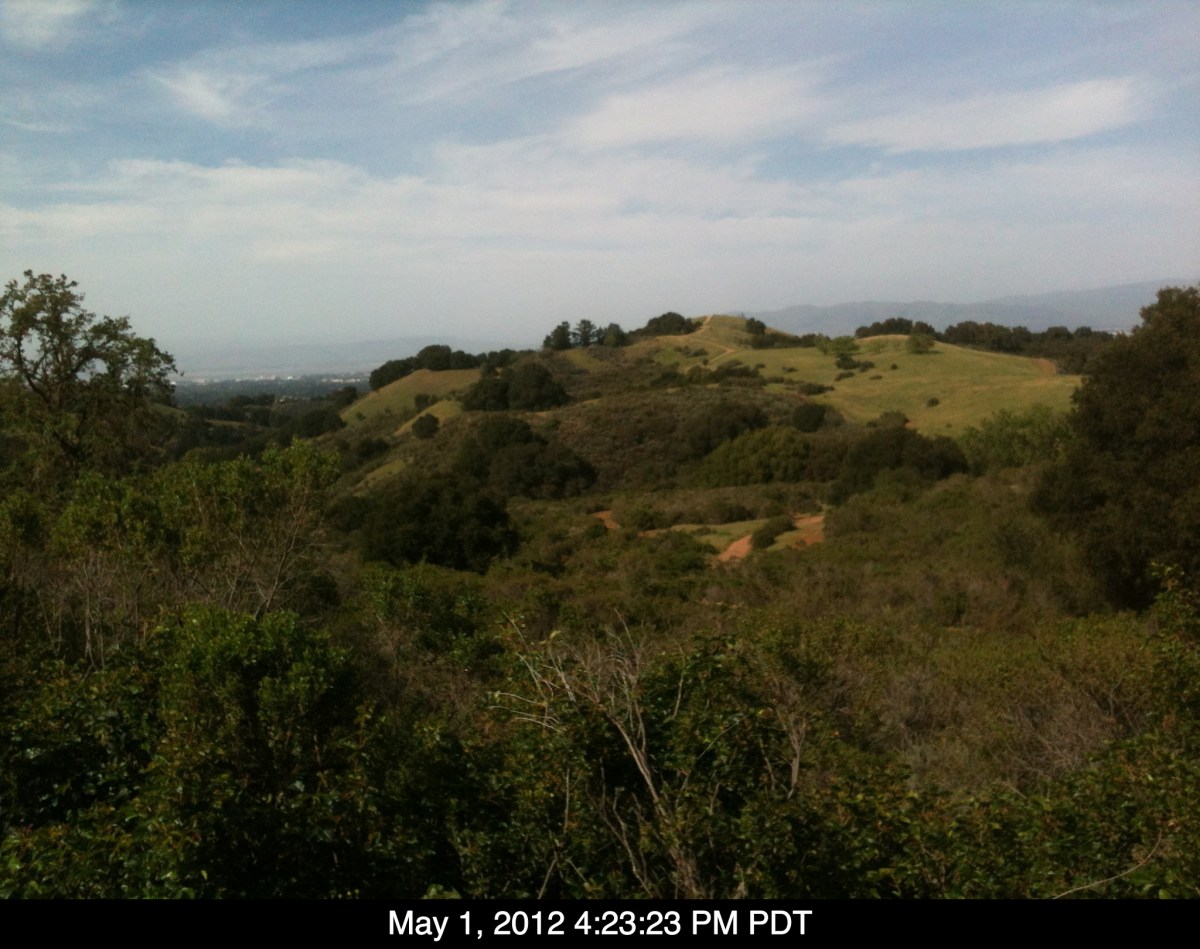
I needed to get up and move so went over  to the hills nearby and hiked all 3 Peaks today.

Click on the link above for my hiking stats and a map of my route.

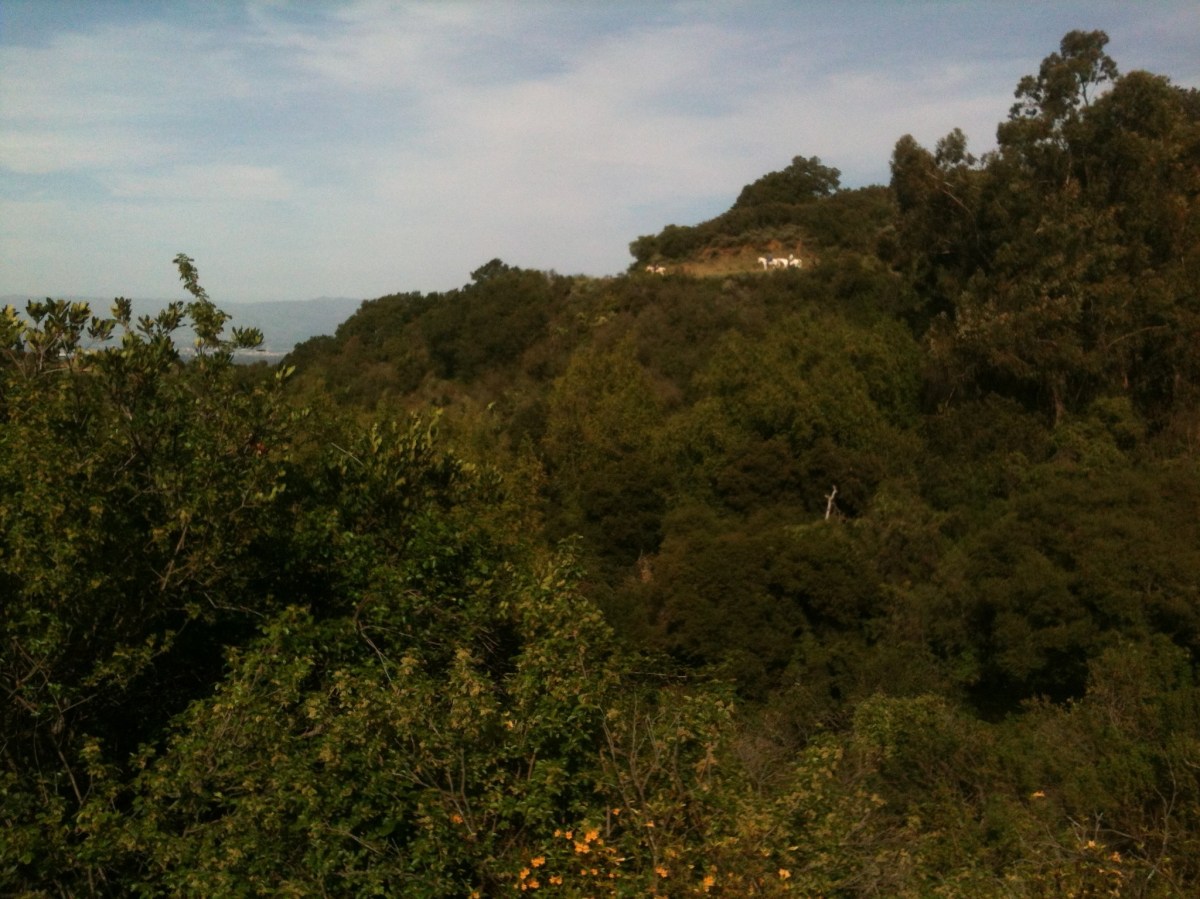
Here are a few photos I took along the route.  I didn’t take my big camera today. No, instead I went armed only with an iPhone. I did miss my big camera when a Hawk came soaring over my head.

The hike was lovely. The hills around my valley are still green and lush. The peak across the valley with the trail leading to the top is Hunter’s Point. I hiked up to it last today.

Copyright © 2012 Deborah M. Zajac. All Rights Reserved

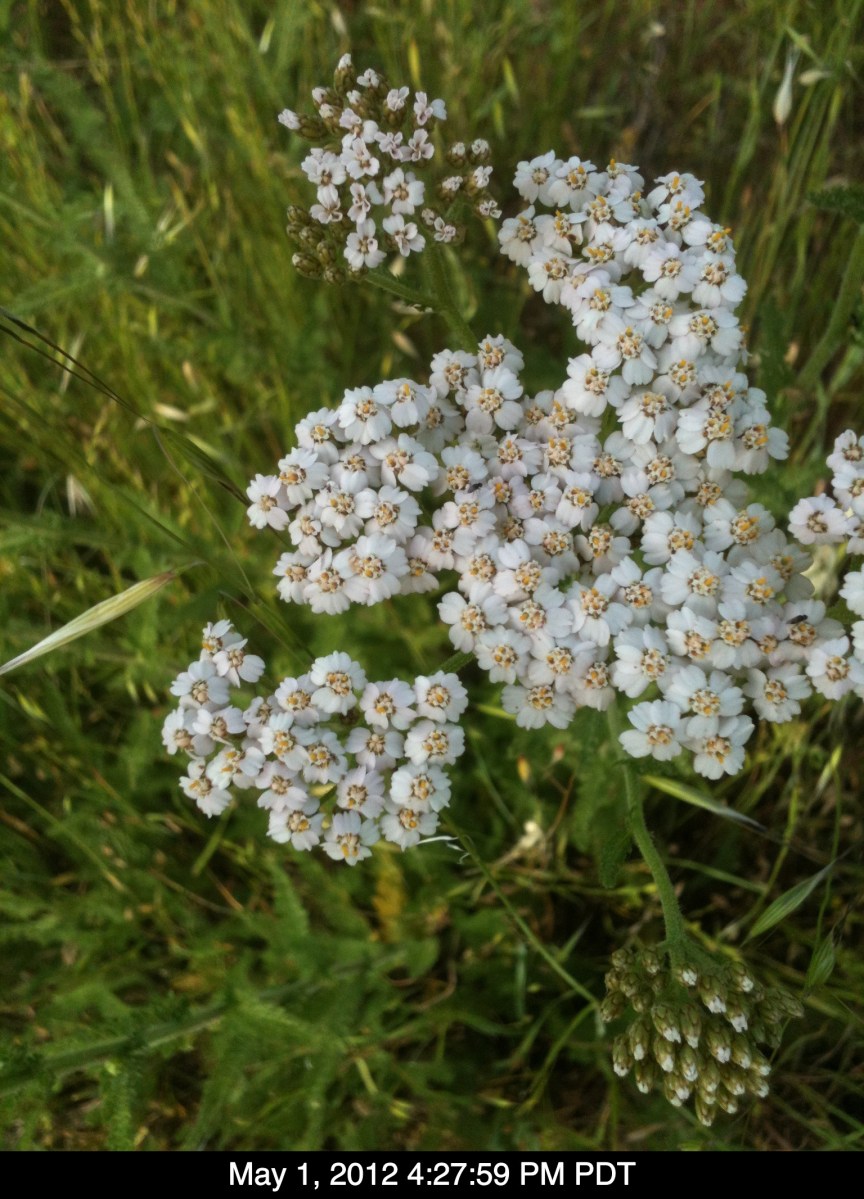
There were quite a few wildflowers in bloom throughout the park like this Yarrow. There were oodles of Monkey Flower,  and there was clover, Nightshade, Lupine, and oh so many Crimson Columbine! I’ve never seen so many before. I

took 3 photos and all came out blurry. It was breezy. I hope to get back again before it’s all faded. On the back slopes of Hunter’s Point there were a few Poppies, and lot’s of Spring Vetch. It’s a good time to go looking for wildflowers.

Copyright © 2012 Deborah M. Zajac. All Rights Reserved.

There were young girls on horseback talking with their trainer about upcoming competitions, and the sound of the horses hooves clip-clop was lovely. One horse even said “hello” to me.

Copyright © 2012 Deborah M. Zajac. All Rights Reserved

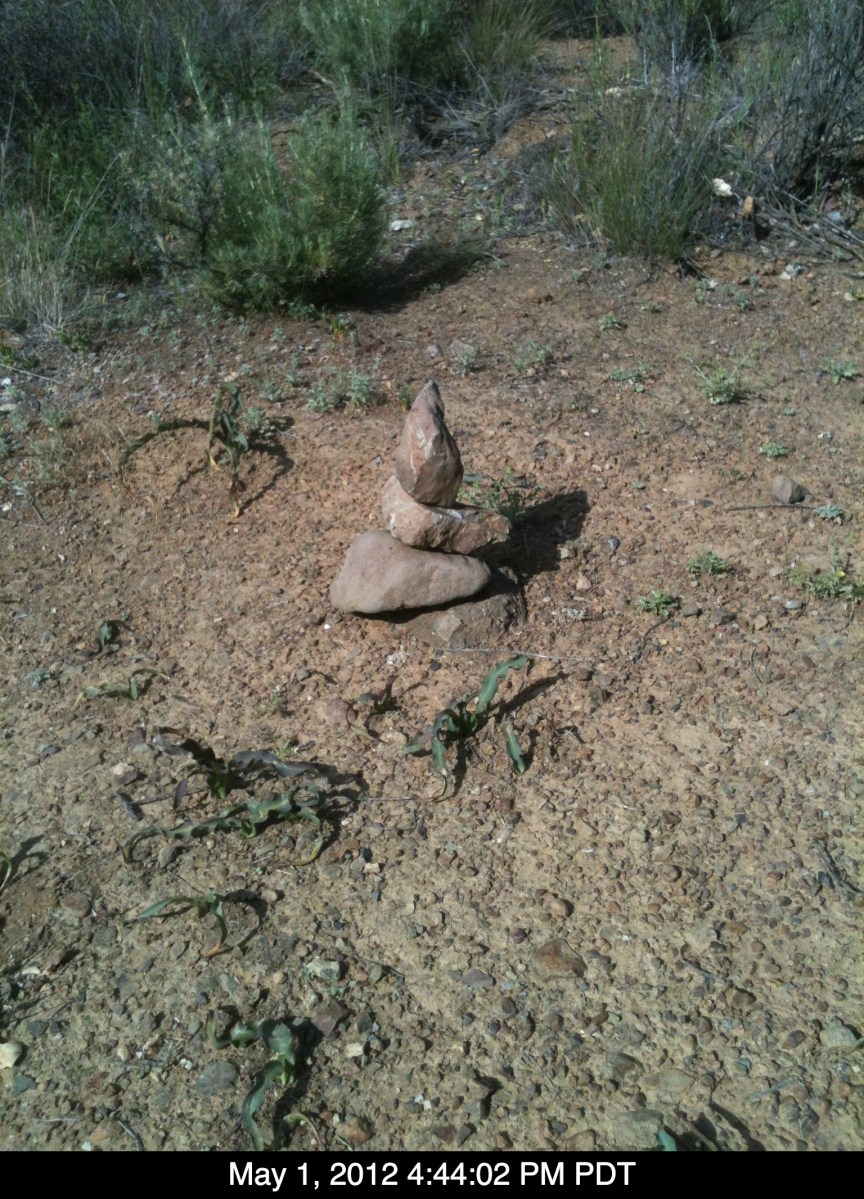
Little Cairns dotted the trails to let me know someone had been this way before…

Copyright © 2012 Deborah M. Zajac. All Rights Reserved.

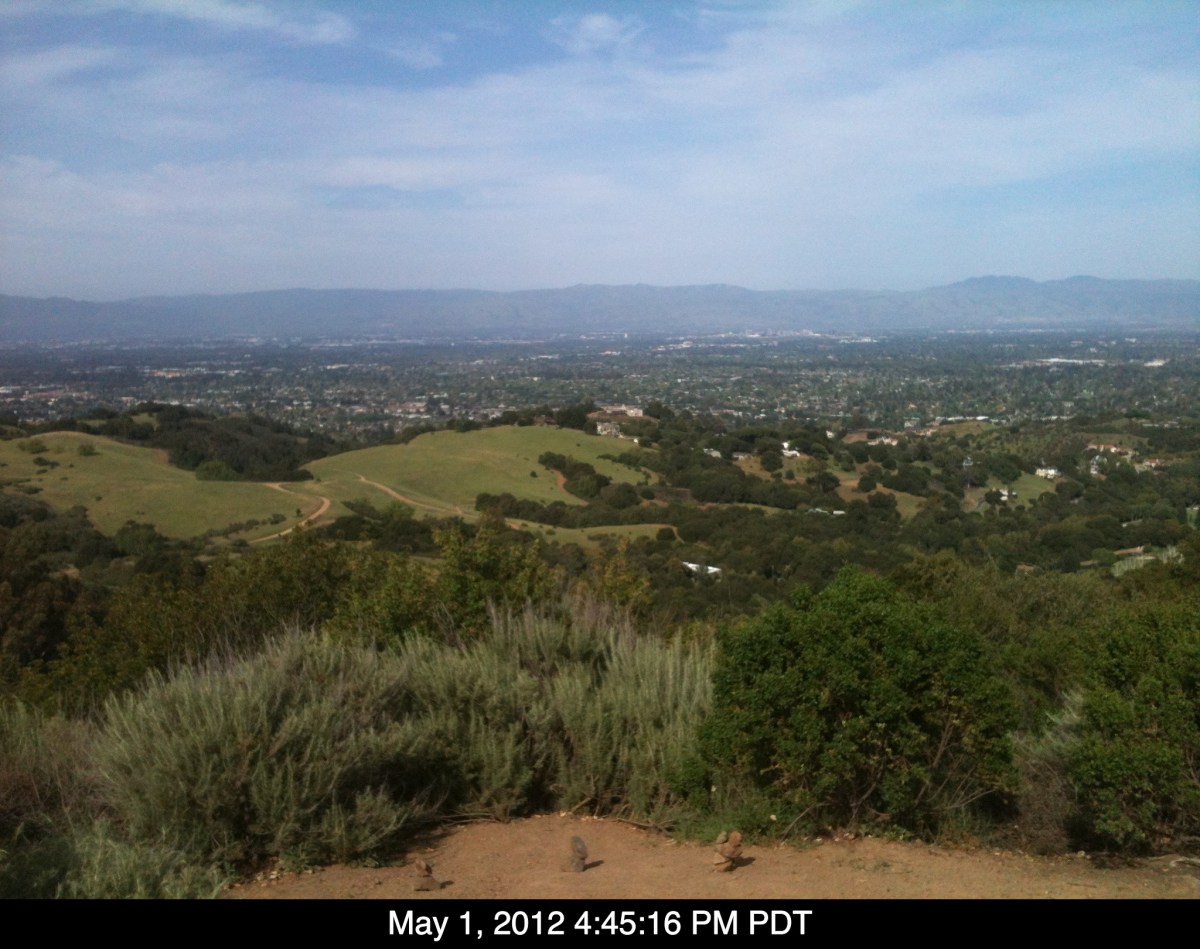
…and lastly the view from Maisie’s Peak looking east across Santa Clara Valley to the Diablo Range beyond it.

Copyright © 2012 Deborah M. Zajac. All Rights Reserved

A good 4.80 mile hike this afternoon.

No editing was done to these photos and they are all hand-held. I need to practice with more I think.