100 million yrs of erosion created this land…

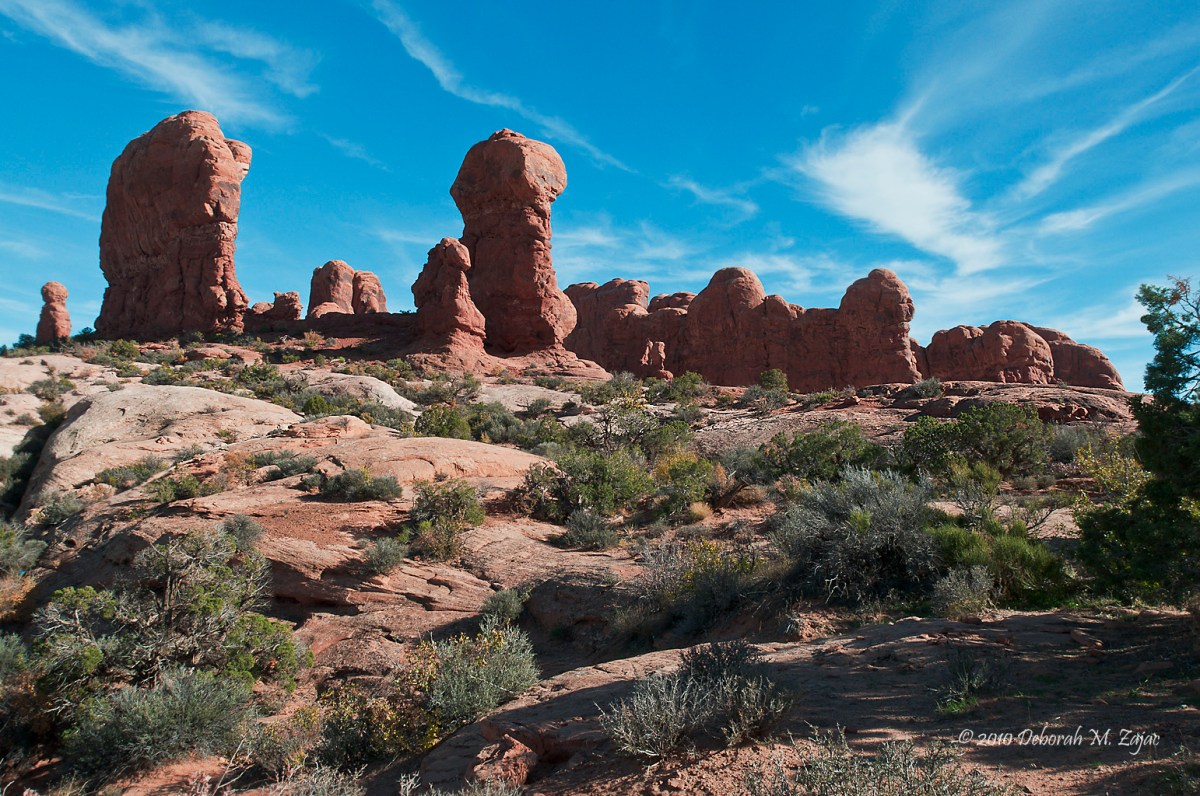
Continuing down the main road in Arches National Park my friend Theresa and I were in awe of this landscape with its huge rock formations, vast views, and the wonderful colors of the Southwest.

Here some of the Petrified Dunes covered in Sage brush that gently roll through this part of the park:
“Nature and Science
The forces of nature have acted in concert to create the landscape of Arches, which contains the greatest density of natural arches in the world. Throughout the park, rock layers reveal millions of years of deposition, erosion and other geologic events. These layers continue to shape life in Arches today, as their erosion influences elemental features like soil chemistry and where water flows when it rains.

Arches is located in a “high desert,” with elevations ranging from 4,085 to 5,653 feet above sea level. The climate is one of very hot summers, cold winters and very little rainfall. Even on a daily basis, temperatures may fluctuate as much as 50 degrees.

The plants and animals in Arches National Park have many adaptations that enable them to survive these conditions. Some species are found only in this area. The diversity of organisms reflects the variety of available habitat, which includes lush riparian areas, ephemeral pools, dry arroyos, mixed grasslands and large expanses of bare rock.”
~Moab Adventure Center


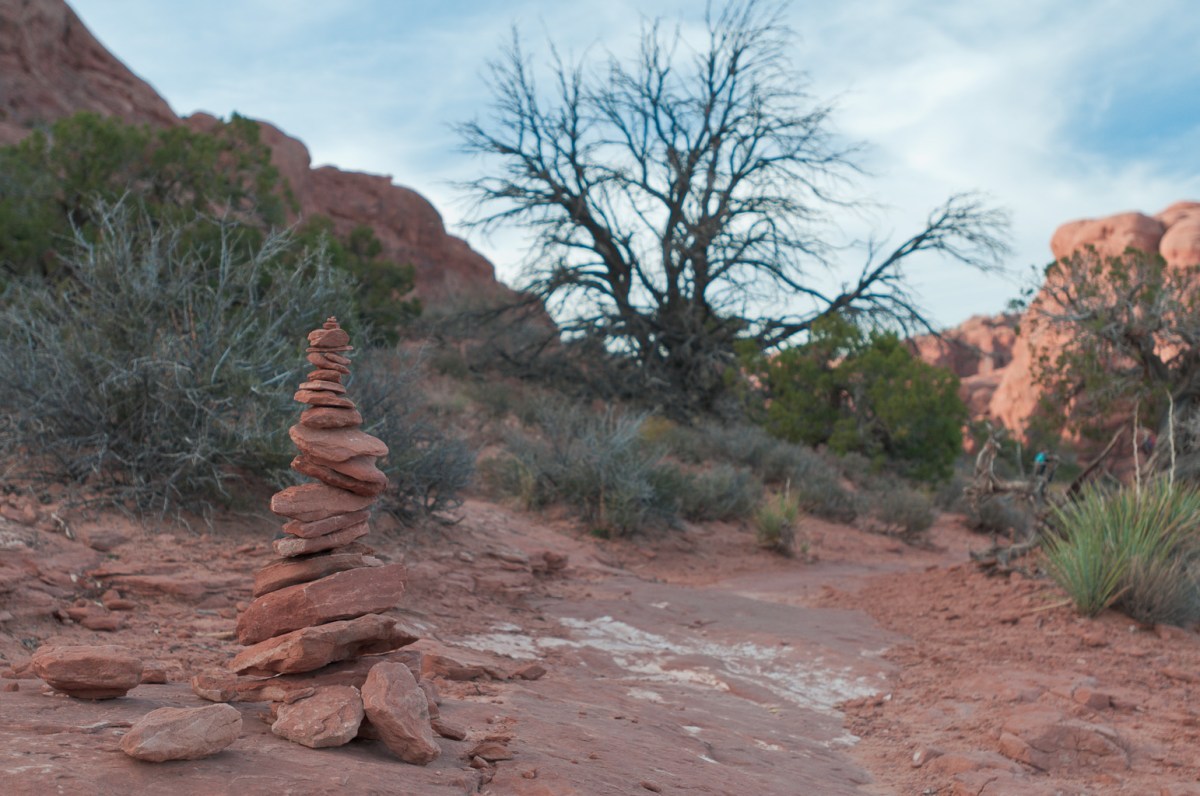
Marking the many trails both well trod, and those that are not are Cairns like this one . Theresa and I found these invaluable as we missed one on the Trail to Delicate Arch and NOT seeing one after a little while I knew we took a wrong turn.
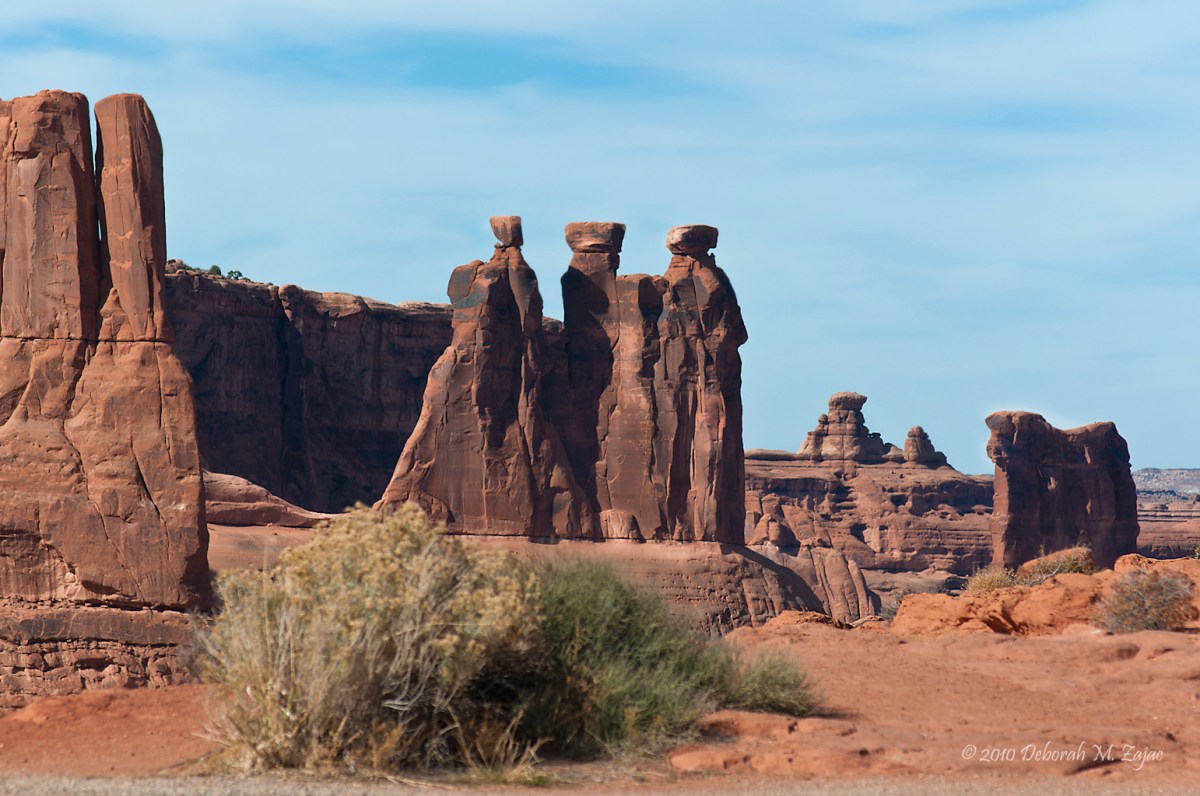
Here’s a closer look at The Three Gossips, and Sheep Rock. I zoomed in on this shot to try get more of the details. This view is from the La Sal Mountains Viewpoint.
In the next blog post we’ll continue down the road to The North and South Windows area where we hiked a little of the Primitive Trail and shot the sunset.
An Evening at Pigeon Point Light Station

Copyright © 2010 Deborah M. Zajac.  All Rights Reserved.

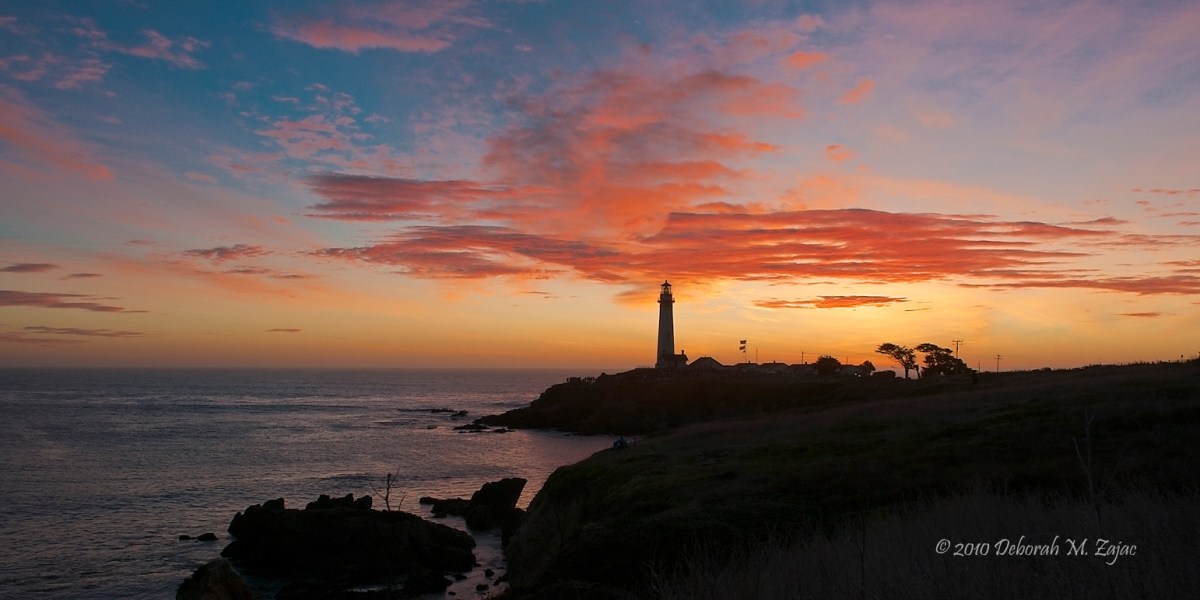
I spent yesterday afternoon and evening in Pescadero, California with several friends from my Night Meet-up group for the lighting of the Fresnel at Pigeon Point Light Station. It’s normally an annual event, but due to California’s budge woes they didn’t light it last year. We got here several hours early anticipating a huge crowd. We set up along the edge of the first field south of the lighthouse. There were already a lot of people set up down here. Fortunately Sunset was before the lighting of the Fresnel so it didn’t compete with the lighting.  This sunset was gorgeous! I haven’t seen clouds like this here ever before. I loved the texture, and colors. It was breath-taking!

I brought only one wide-angle lens with me for this shoot. My new/ Used Manual Focus Nikkor 18mm f/3.5 AIS prime lens. I do love how wide this shot is! I settled on this lens instead of the newer AF-D 20mm f/2.8 because it’s wider. I was afraid 20mm wouldn’t be wide enough all too often.
I’ve only had the lens since Monday this week, but so far I’m pleased.
The colors are good, it’s seems sharp, and I’m getting used to selecting my Aperture on the lens rather than with a wheel on my camera. Setting up the Non-CPU data in my camera was simple- thankfully.
The weight of it at just over 12 ounces is just what I was looking for.
This evening was a good outing to give this lens a good trial run.

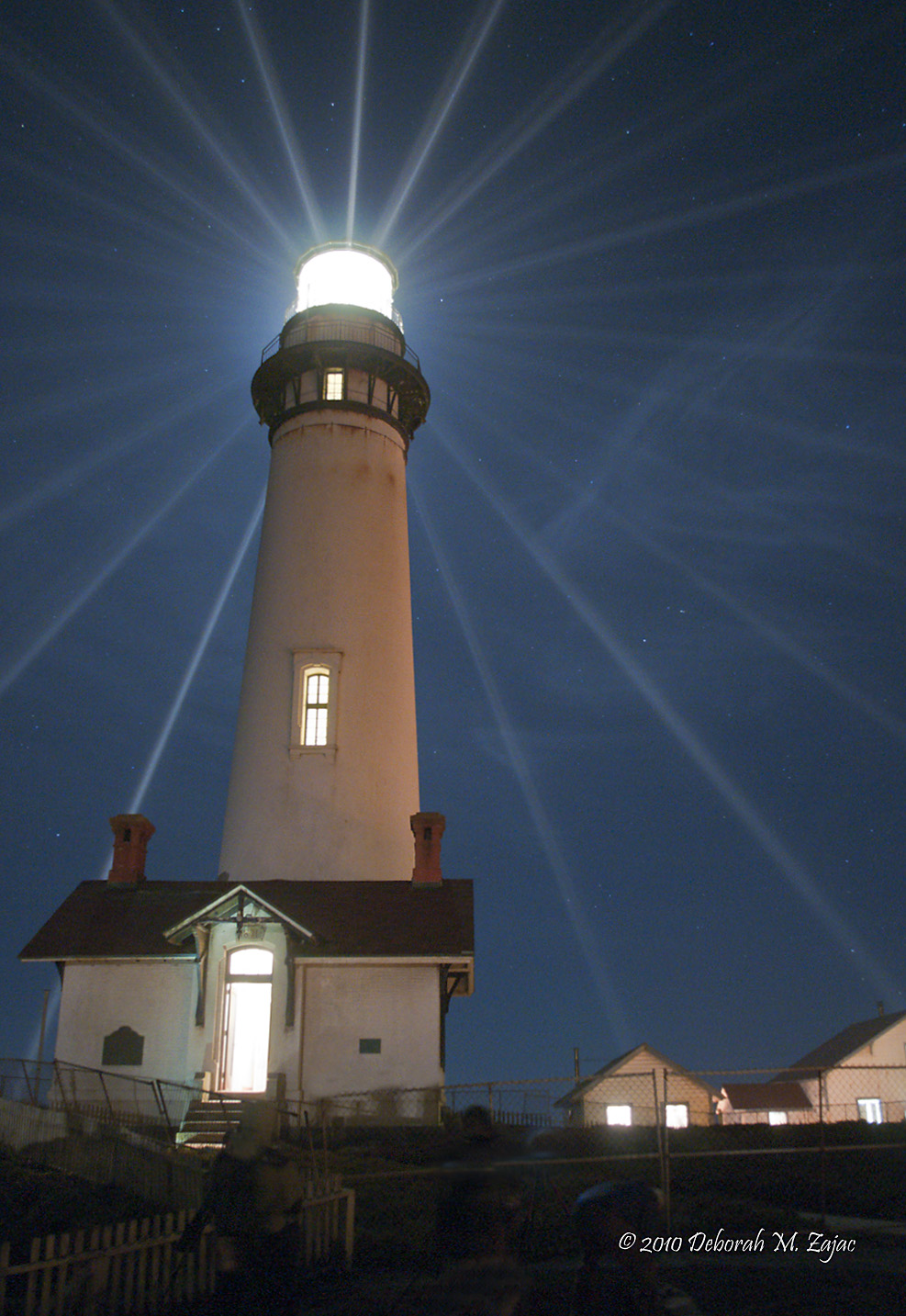
La Pièce de resistance

This was my second location of the evening. I started out in the south field, but struggled there with the light, and I wasn’t getting the points of light I wanted from the beams. After the crowd thinned out some we moved up here and I bumped up my ISO and finally got the shot I wanted.

Using this lens I will have to learn new things like Hyperfocal distances. I have found calibrated Infinity on this lens. What do you think- is this sharp? I think so. I hope in the end I become a better photographer, and have a better understanding of photography through this lens. It is a lot different from sliding the switch over to Manual on my AF lenses.

I had a wonderful evening with good friends. I hope the Park Service is able to get the funding to this again next year. Perhaps I’ll have better luck down in the south field then.


Autumn in the Eastern Sierras

Copyright © 2010 Deborah M. Zajac. All Rights Reserved.

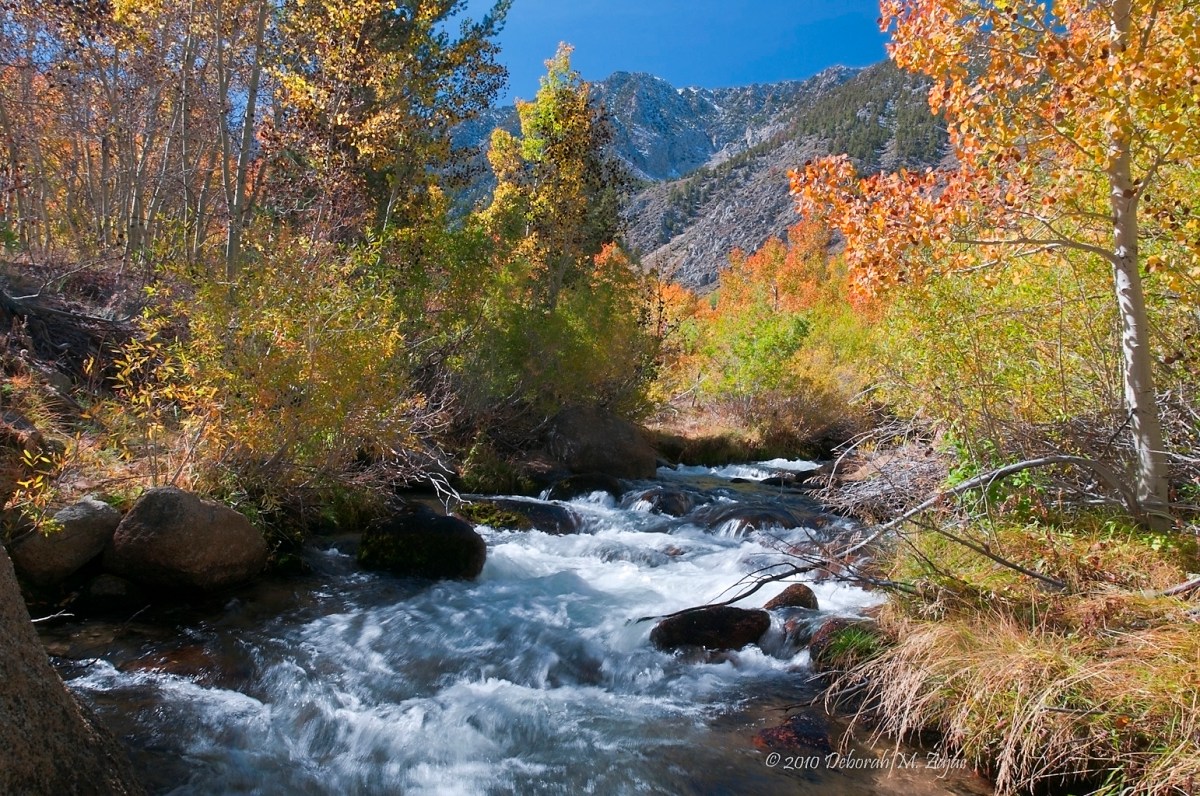
This is near the “Tree Tunnel” off the road to North Lake and Bishop Creek I believe. While my companions were photographing the “tree tunnel”, and the creek a little further down I wandered up the trail and found a boulder out in the creek- really this was flowing like a river, and jumped over onto the boulder and set up my tripod to take this photograph.
It was easier jumping on the boulder getting out here than it was getting back…the gap seemed a lot smaller when I jumped out here- why does that always happen? I didn’t fall in! Phew!

Exposure and PP- I used my Hoya warming 81A filter for this scene. I wanted to bring out those lovely reds, oranges, and yellows. I also used my B&W 0.9 Neutral Density Filter to cut the glare of the water and slow it down just a wee bit.
Vibrance, clarity, levels, played with the color adjustment- but liked it the way it was shot originally, and a little sharpening, and resized.

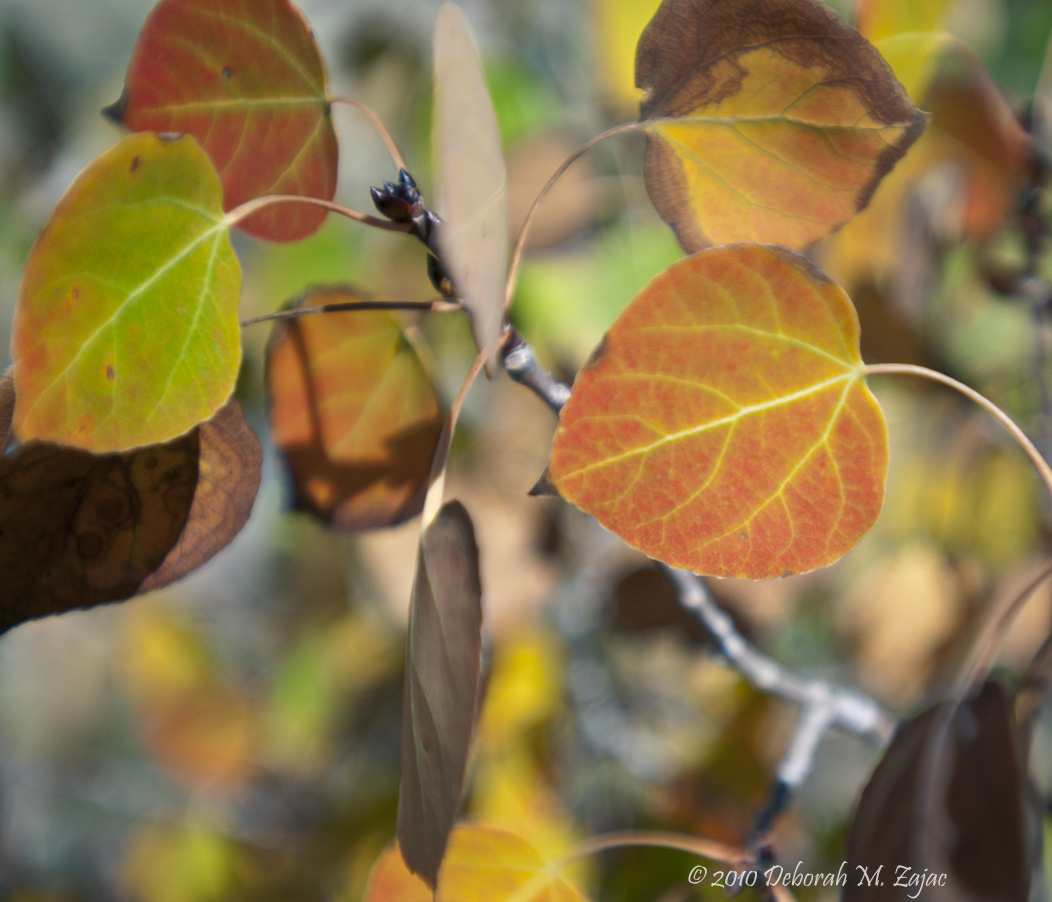
When out taking photos I like to zero in on the little details too. Here’s a little bunch of Aspen leaves. I liked the reds, and greens, and the vein patterns.

“Go, sit upon the lofty hill,
And turn your eyes around,
Where waving woods and waters wild
Do hymn an autumn sound.
The summer sun is faint on them —
The summer flowers depart —
Sit still — as all transform’d to stone,
Except your musing heart.”

~ Elizabeth Barrett Browning

“Come forth into the light of things, Let Nature be your teacher.” William Wordsworth

Copyright © 2010 Deborah M. Zajac. All Rights Reserved.

This is just one of many stops we made along the way to the Eastern Sierras with 2 friends to spend the week-end shooting Fall Color with Bill Wight and Mountain High Workshops. We were able to cross the mountains via Tioga Pass. We had feared the Pass would be closed due to a 2 day rain/snow storm that has passed through the area only days before. Fortunately the sun came out and the roads weren’t snowed under preventing a crossing.
This is a view of Lembert Dome, and the snow capped mountain peaks behind it. This dome is located in Tuolumne Meadows.
I was last here in June of this year and this whole meadow was covered in snow then.

I have lost some of the detail in the snow capped mountains. I shot two frames this was the -0- or middle frame. I suppose I should have taken another shot 1 stop under also then blended the two frames in post processing. However, I’m weak in Photoshop skills. I think in the future I will spot meter the snow capped mountains and work around that chimping and adjusting my EV compensation until I get better detail all over. It’s more satisfying for me to do that in the field than to try and do it in Photoshop later merging, blending, layering, masks and painting…bleh!!

This is the photo I’m happiest with for this stop. No more tweaking or worrying about those blown out mountains caps. I do love the detail in the tree trunks, and light filtering through this grove, the shadows on the trunks and in the mulch below came out well, and the golden meadow looks great with the sky. Overall I think I did a good job of capturing the dynamic range in this one frame.

PP- Recovery, vibrance, clarity, resized, levels and tried curves but that didn’t do anything good to the mountains snow caps.

Nikon D300s, Nikkor 17-35mm @ 19mm, f9, 1/100s, ISO 200

“There is nothing more musical than a sunset. – the book of Nature. ” Claude Debussy

Copyright © 2010 Deborah M. Zajac. All Rights Reserved.

Another photograph from my Elkhorn Slough Meet-Up on the 18th.

At the end of the day myself and two friends found this beach to shoot the sunset. The sun set right here. This was the best light and color of the sunset. I’m so glad we were here in time for this. After the sun set there was no color at all…the day faded into night. With it we headed north for home.

PP- Recovery, vibrance, clarity, resized
Nikon D300s, Nikkor 17-35mm f2.8 @ 17mm, f13, 1/8s, ISO 200, Manual Mode

“They can be like a sun, words. They can do for the heart what light can for a field.”~ St John of the Cross

Copyright © 2010 Deborah M. Zajac. All Rights Reserved.

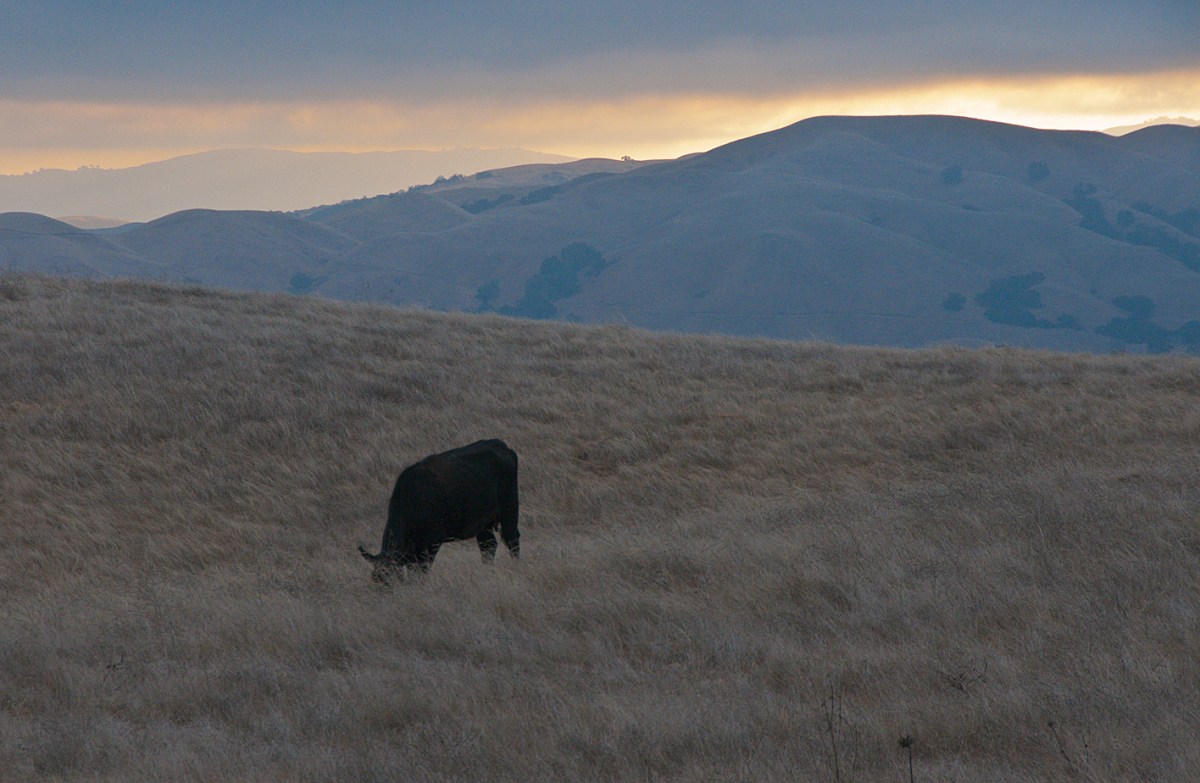
Here’s another photo from my hike up to Mission Peak on Weds.  We saw these cows grazing on the way down Peak Trail. The Sun was beginning to burn off the fog, and the light on the distant hills gave them a wonderful glow.

Nikon D300s, Nikkor 18-200mmVR, Hoya Multi Coated Pro1 UV filter, Sundisk Ultra SDHC Digital Film

A Foggy Morning Hike

I rose at 3AM to meet some members of my Night Photography Group at Peak Trail in East Bay Regional Park Dist. to hike up to Mission Peak.

I and only one other hiker did this hike this morning. We met at 4:30AM and walked about 15 mins to the trailhead.

This is was an arduous climb for me. My legs are still tired from Sunday’s 9.4 mile hike out to Tomales Point  and back. I made it to the top! After two previous hikes up that fell 500ft short. I’ve finally made it!

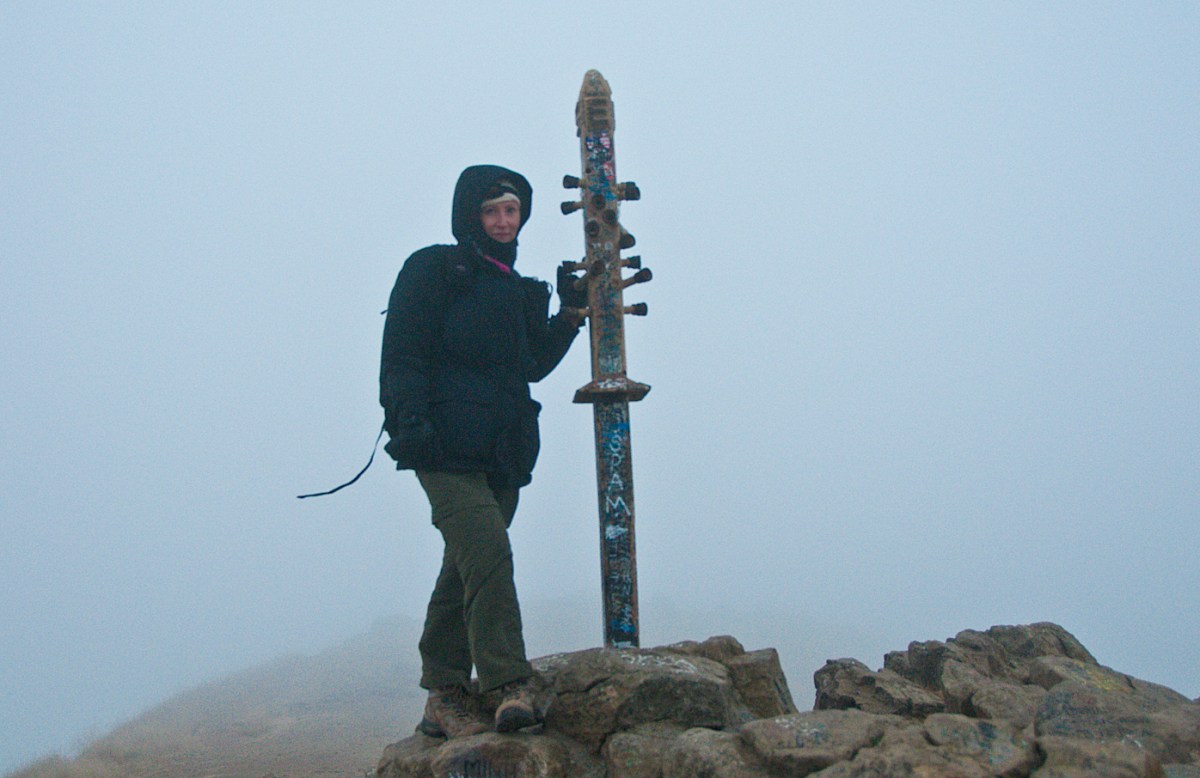
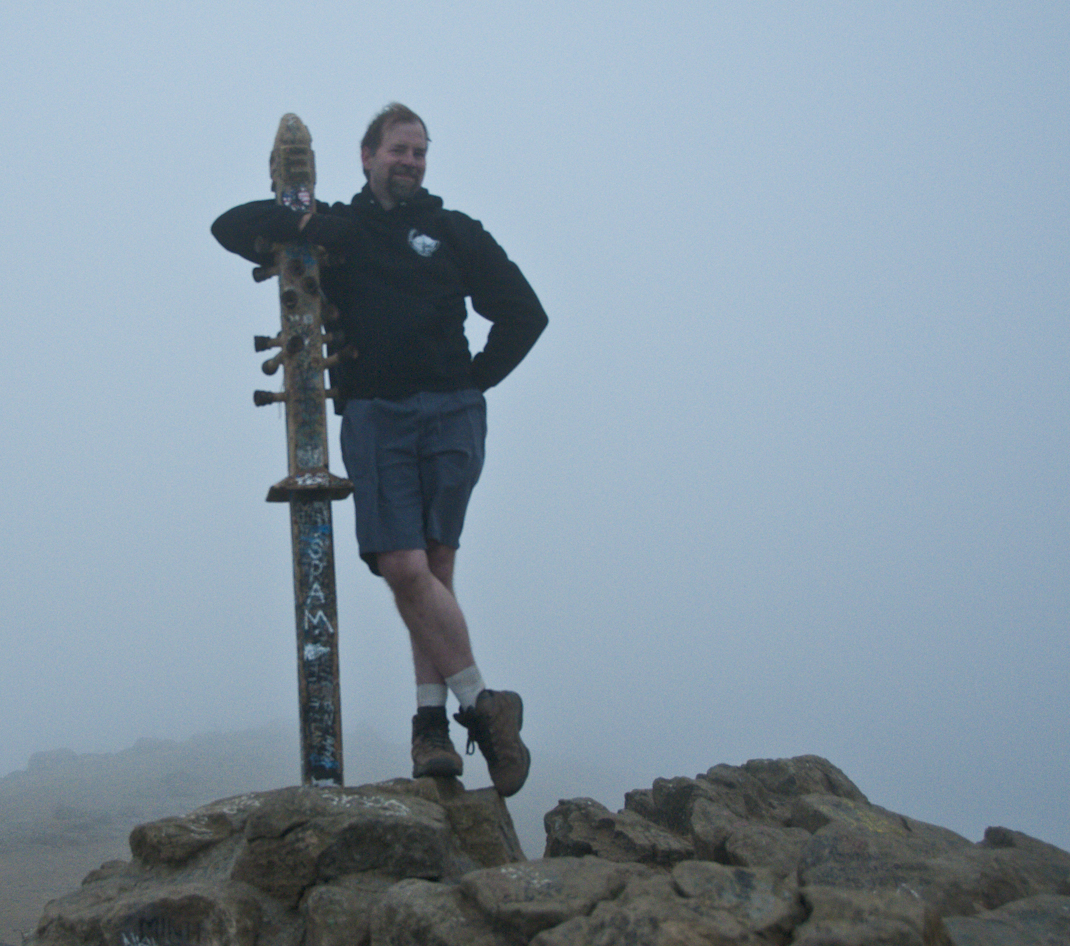
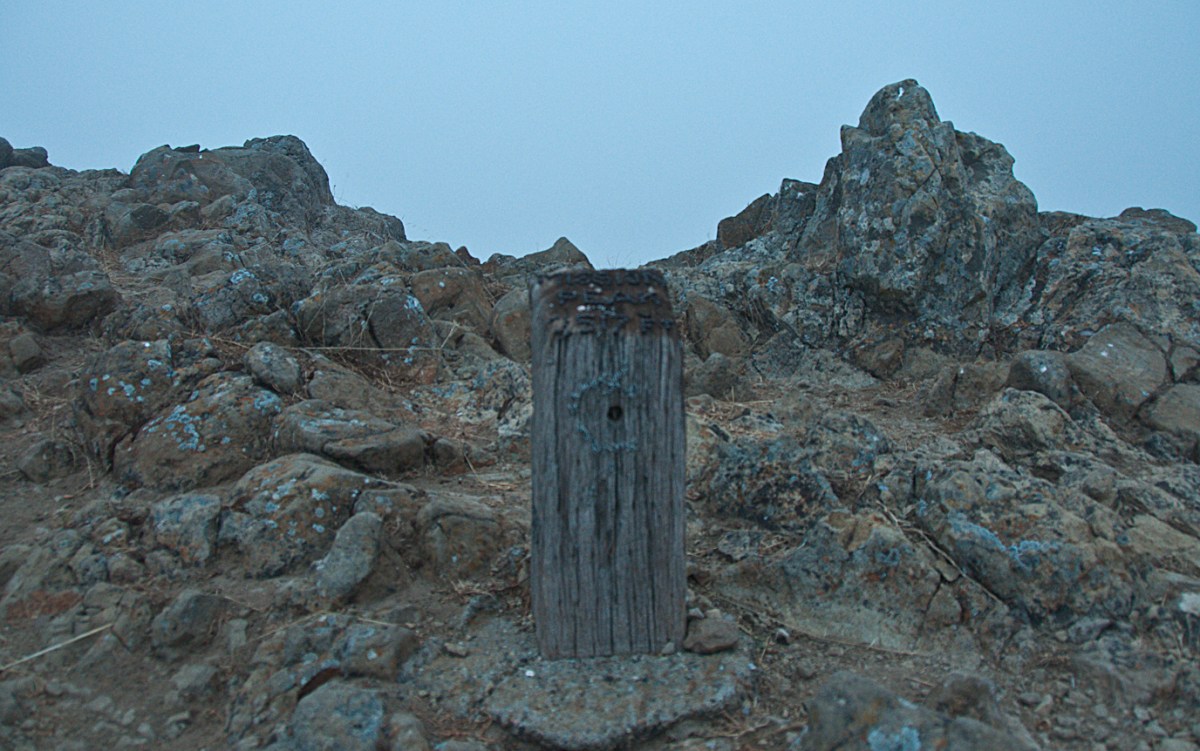
The fog was low and the Summit was shrouded in it. We could not see the sunrise, or the city lights below. I did take a few photographs of me, and Steven at the pole, and one of the Summit elevation marker. You can see how bundled up a I am; I was cold. The wind is whipping around my pack straps. I had 3 layers of clothes on top and two on the bottom and hand warmers in my gloves.

Deborah Copyright © 2010 Deborah M. Zajac.  All Rights Reserved

Steven C.- Thinks he lives in “Sunny” California!  Copyright © 2010 Deborah M. Zajac. All Rights Reserved.

The Summit Marker- Says, Mission Peak 2,517 ft

The climb- The trail starts at 500ft and the top is  2,517ft.at the top.  A  2,100 foot ascent.  It’s 3.4 miles from bottom to the top. Pretty STEEP!

The trail traverses rocky loose soil, rutted, dusty, with rocks jutting out of the trail, wooded areas,  you may run into cows that roam freely through the park on or near the trail, and there are open areas with strong winds, and gusts.   Today at the top the wind was blowing pretty hard WNW 10-20 MPH.

We didn’t stay up any longer than to take a few photos then we started our descent.

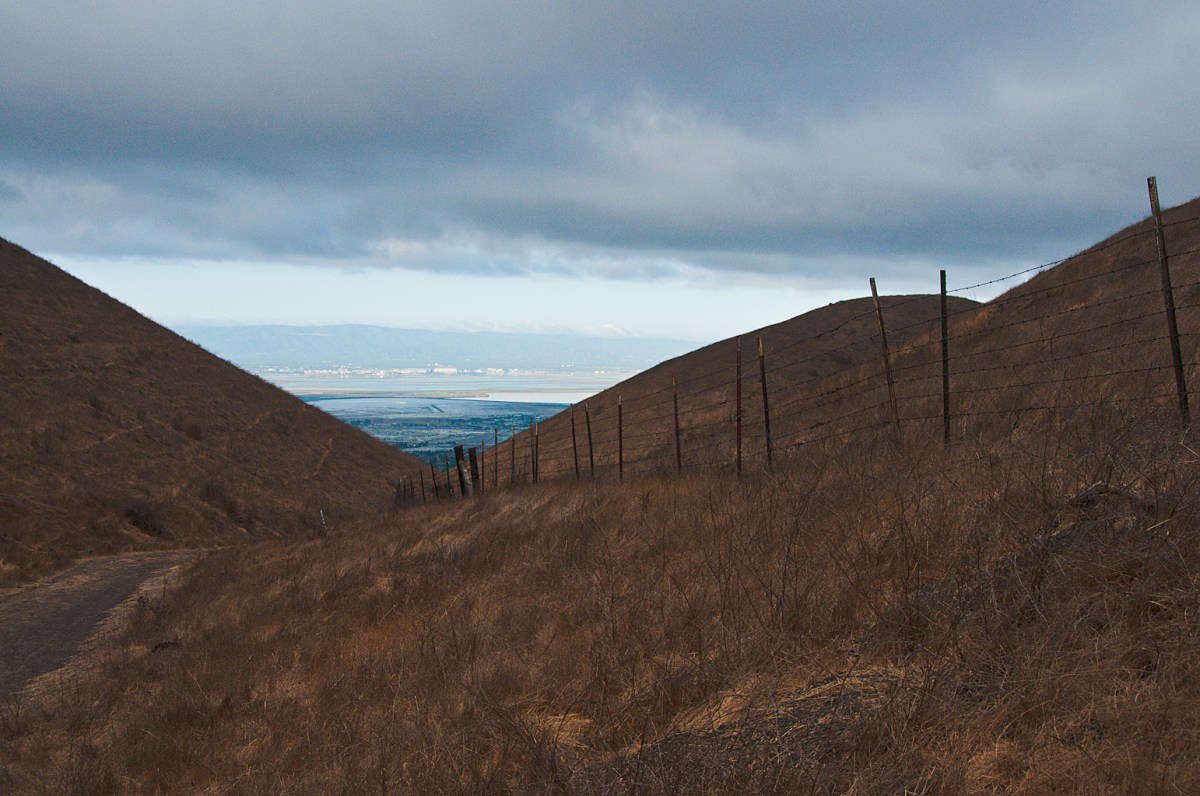
Under the fog layer.

View of Moffet Field, Mt. View, and Northern Sunnyvale,CA from Peak Trail

It took me 2h5m to reach the summit and about half that to get down.

I traveled up here really light this morning. Only taking the Nikon D300s, Nikkor 18-200mmVR w/one spare battery, my ND Grads, tool kit, rain gear for me and the camera, water, and tripod.

BTW- I think Rocky, rutted, and Dusty  would be an excellent name for a Grunge or Heavy Metal Band!

All Images are Copyright © 2010 Deborah M. Zajac. All Rights Reserved and may not be used or copied without the expressed written permission of the photographer.