Wawona Hotel

Copyright © 2010 Deborah M. Zajac. All Rights Reserved.
Wawona Hotel
Outside the Valley
Wawona means “Big Trees”
It was known to Native American Indians as Pallachun which meant ” a good place to stay.”

More photos from my Dave Wyman Yosemite Water-Works Workshop in May.
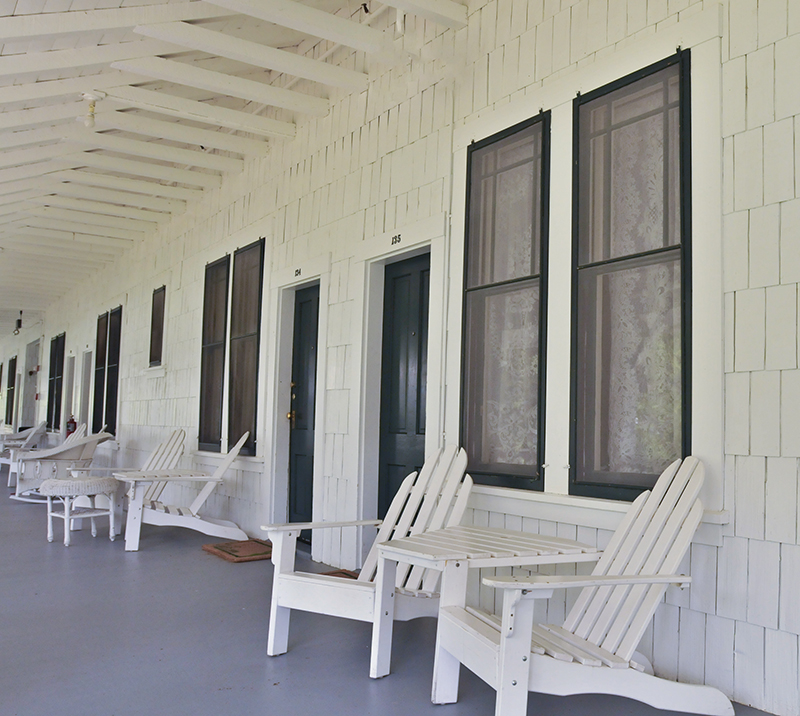
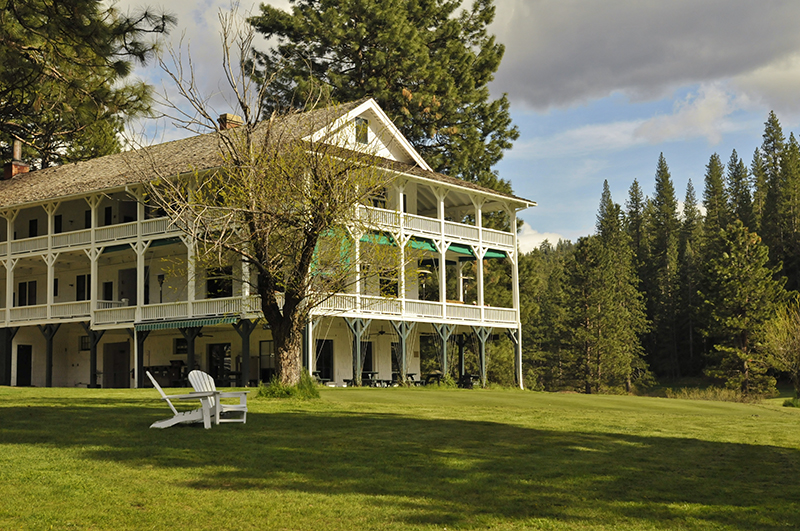
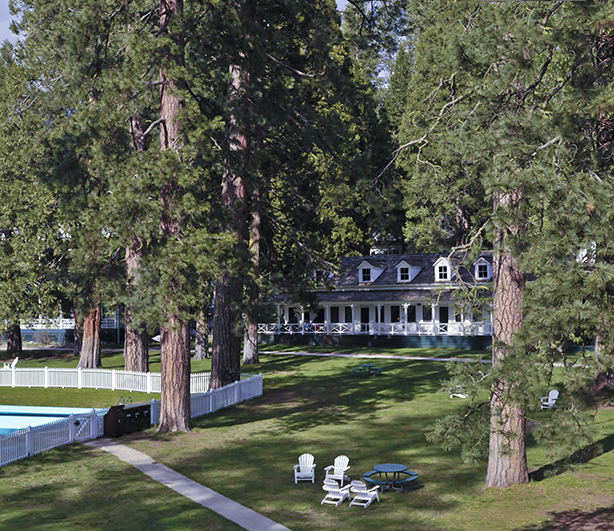
The Wawona Hotel built in 1875, is a beautiful white building with neatly trimmed grass, deck chairs, and a golf course. There are several cottage like and dorm type buildings that house the guest rooms and each building has a lovely veranda kitted out with wicker tables and deck chairs.

There is a stone fountain out front that is falling apart now, but once must have been lovely. We stopped here on the way back to Yosemite Valley for dinner and night shooting after spending a little while at the swinging bridge. We were headed to the Mariposa Grove with the Giant Sequoia trees but it was closed due to snow. I’d like to stay here someday.

Nearby there is an a living museum – The Pioneer History Center which is said to transport you back in time to the late 1800’s. There is a New England style covered bridge, a collection of stage coaches, and in the summer the staff wear Victorian costumes. It was closed  for winter when we passed it. I’d like to spend some time there too.
All Photos Copyright © 2010 Deborah M. Zajac. All Rights Reserved.

Cascade Creek


Cascade Creek, originally uploaded by dmzajac2004.

Copyright © Deborah M. Zajac. All Rights Reserved.
This was our first stop this morning. The sun was lovely shining through the leaves of the trees. Several in the party climbed rocks and risked slipping on the slick rocks to get further back into the creek.
I walked back where they were, but didn’t want to climb up on the wet rocks.
One of the guys did slip. He got a bump on the head, but he was alright thankfully.

After this stop we headed to Foresta Barns.

Nikon D300s
Nikkor 17-35mm f2.8AF-S

My twice weekly morning constitution

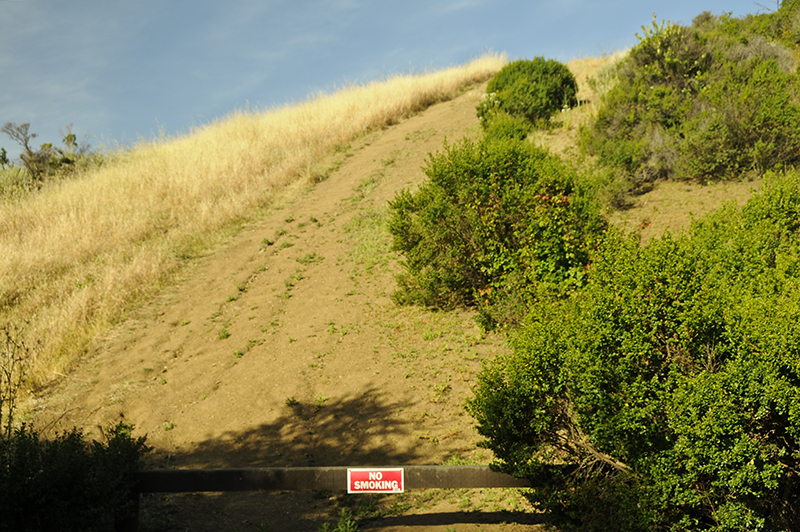
I’ve been hiking up the “Steep Hill” twice a week in preparation for an upcoming July hiking trip.

The grade of the Steep Hill is more than 11% at its steepest. 11% the rest the way from what I can find on the web.

Once at the top if you continue on there are two more hills which by comparison are not steep at all, but brutal after the initial climb up . After that the trail flattens out and then descends. It’s quite a workout for a short 2.5 mile hike.

Here are some photos of the Steep Hill and one of the Mt. Umunhum taken while on my way up The Steep Hill recently.

The beginning of the trail and The Steep Hill

Copyright © 2010 Deborah M. Zajac. All Rights Reserved.
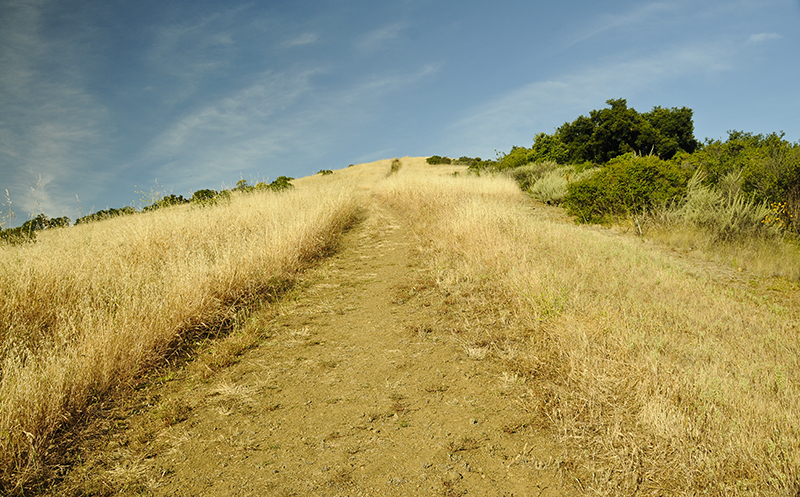
Almost halfway up the Steep Hill

Copyright © 2010 Deborah M. Zajac. All Rights Reserved.
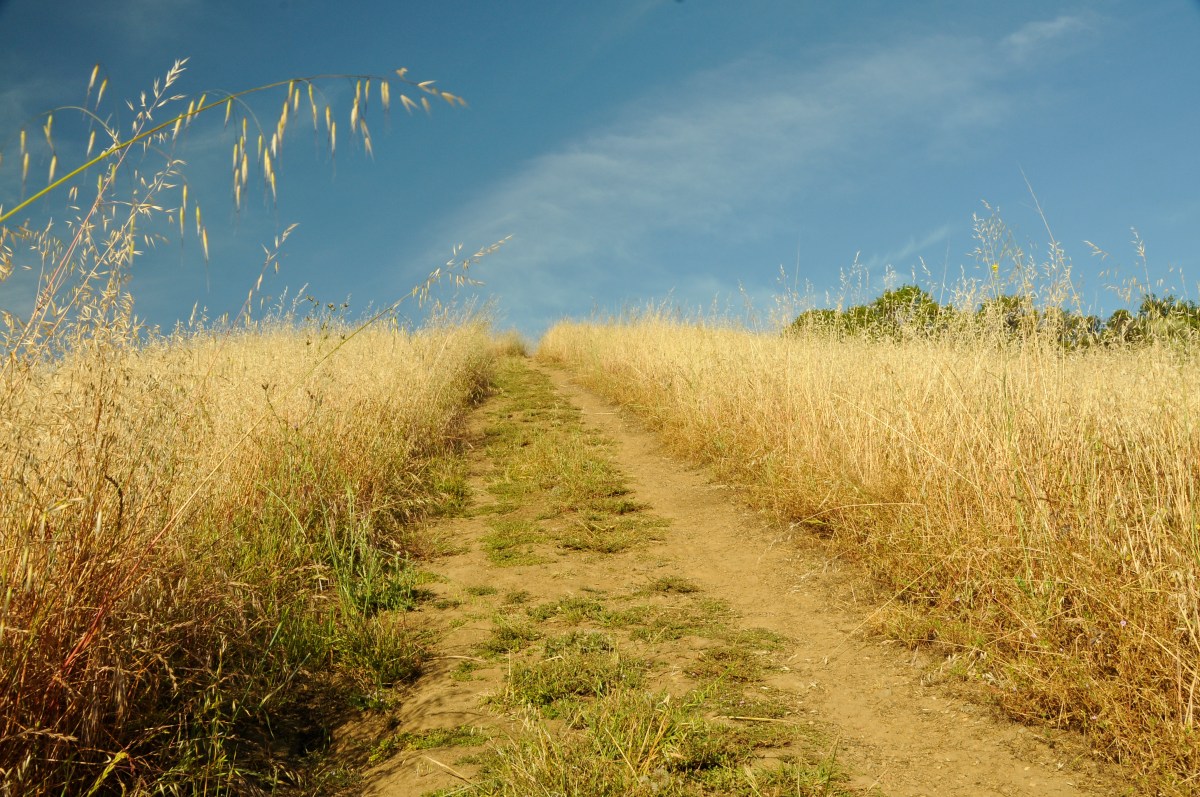
Catching my breath, and enjoying the golden grass and blue sky.

Copyright © 2010 Deborah M. Zajac. All Rights Reserved.
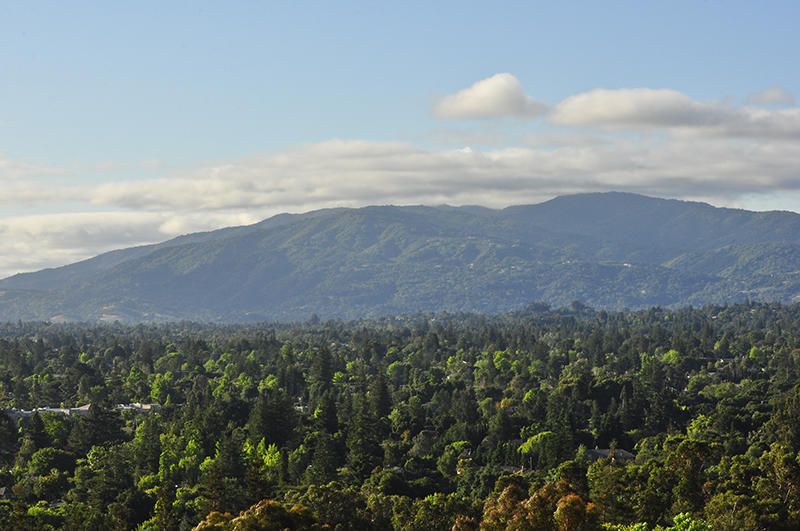
Mt. Umunhum shrouded in morning clouds. View from The Steep Hill

Copyright © 2010 Deborah M. Zajac.  All Rights Reserved.

Sunset Mission San Juan Bautista

Copyright © 2010 Deborah M. Zajac. All Rights Reserved.
San Juan Bautista Mission
Outer Courtyard
Twilight
Nikon D90
Nikkor 15-35 f2.8 AF-S

I drove out to Mission San Juan Bautista to photograph the Mission and grounds before meeting up with friends from my Night Photography group. The town is very rural with roosters, hens, and chicks roaming freely through it, and there are many original building still in use.
I plan to go back and photograph more of the town.

My entire gallery of this day is here:
http://www.flickr.com/photos/dmzajac2004/sets/72157624145463865/

In June, 1803, the cornerstone was laid for the present church. With three naves or aisles, it became the widest of all the mission churches. It was dedicated on June 23, 1812. Padre Esteban Tapis is buried in the sanctuary of the church. He was, at one time, Presidente of the Missions and he is founder of the Mission Santa Ines. When he retired from office he came to San Juan Bautista where his musical talents brought fame and a new name to San Juan, “THE MISSION OF MUSIC.” Two of his handwritten choir books can be seen in the Museum.

Interior completion of the church continued through 1817 when the floor was tiled and the main altar and reredos (which holds the six statues) were completed by Thomas Doak, an American sailor who jumped ship in Monterey. He painted the reredos in exchange for room and board.
The Old Mission San Juan Bautista has had an unbroken succession of pastors since its founding on June 24,1797.

Can I have the table by the lake please?

Copyright © Deborah M. Zajac. All Rights Reserved.

Silver Lake
Inyo National Forrest
Hwy 395

This was one of the first lakes Theresa and I visited on my first full day in the Eastern Sierras.
What a beautiful valley this is.
We are resolved to go back in the fall.
I’d love to walk this path again and see how the colors have changed.

Nikon D300s
Nikkor 17-35mm f2.8 AF-S
B+W Circular Polarizer
Hoya 81A warming filter

Good morning, good morning, good morning!

Copyright © Deborah M. Zajac. All Rights Reserved.
Mono Lake Tufa SNR
State Natural Reserve
Nikon D300s
Nikkor 17-35mm f2.8AF-S

I spent 3 days in the 395 corridor. My last morning a girl-friend from a Meet-up group and I got up just before 3AM to drive out to Mono (Moe-noh) Lake to photograph sunrise.
We started out at Navy Beach but there weren’t as many tufas (two-fahs) there and the few that were there were quite a walk out. We would have missed the sunrise had we walked out there so we drove over to the south side where all the tufas are. Yes, these have probably been shot a zillion times by other photographers…many were here this morning, but this was my first time to the lake. I was so thrilled to see them and photograph them.

The “Save the Mono Lake” group has won their battle and the lake will be restored. When it hits it’s mandatory depth all these tufas will be submerged under water. Get there while you can!

B+W Circular Polarizer

PP-Clarity, vibrance and wee bit of adjustment of the midtone curve. I’m liking that adjustment feature.

Historical Information:
The reserve was established to preserve the spectacular “tufa towers,” calcium-carbonate spires and knobs formed by interaction of freshwater springs and alkaline lake water. It also protects the lake surface itself as well as the wetlands and other sensitive habitat for the 1 – 2 million birds that feed and rest at Mono Lake each year.

Mono Lake is a majestic body of water covering about 65 square miles. It is an ancient lake, over 1 million years old — one of the oldest lakes in North America. It has no outlet.

Throughout its long existence, salts and minerals have washed into the lake from Eastern Sierra streams. Freshwater evaporating from the lake each year has left the salts and minerals behind so that the lake is now about 2 1/2 times as salty as the ocean and very alkaline.

June Lake

June Lake, originally uploaded by dmzajac2004/.

Copyright © 2010 Deborah M. Zajac. All Rights Reserved.
June Lake
Eastern Sierras
Hwy 395

On my first full day along the Hwy 395 corridor after sunrise a girlfriend and I headed north. We wanted to see Devil’s Postpiles but discovered they were still buried under snow so closed. At the Mammoth Lake Visitors Center we picked up tips on where the most scenic places were.
The Ranger suggested June, Gull, Silver, Convict, and Rocky Creek Lakes as well as Hot Creek Geological Site, and of course Mono Lake.

This wasn’t too crowded. The water was just a gorgeous shade of blue. More aqua than blue. The snow capped mountains ringing the lake was just as lovely.

More lake photos to follow as I visited 4 lakes on Sat. June 5th.

Nikon D300s
Nikkor 17-35mm f/2.8 AF-S
PP- Recovery slider, vibrance, clarity, resized