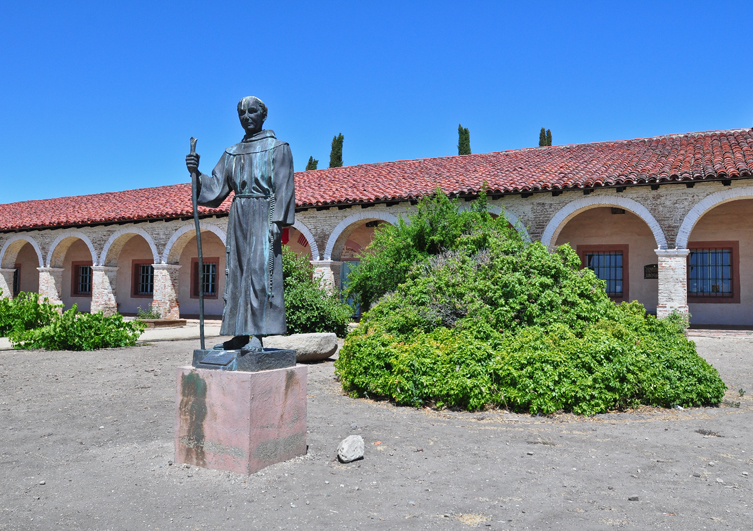
 © Copyright 2010 Deborah M. Zajac. All Rights Reserved.
My local power company shut down the power in the neighborhood to replace transformers and repair the lines. So I thought it a great time to go explore two Missions I spotted along Hwy 101 while driving down to visit my son that I didn’t have time to stop and visit then.
I called two friends to see if they were free to join me. I was in luck. We had a lovely day with a picnic lunch here, and fit in 3 Missions not 2!
What the information below doesn’t tell you about this Mission is that it is surrounded by a Military Base and you use their road to get to the Mission. We were told we would need all sorts of ID and proof of vehicle ownership to get to the Mission, but as it turned out they’ve changed the check point so the turn off to the Mission is just before you need to show all your ID. You do pass right through their training grounds though. It’s interesting to see in itself!
Nikon D300s and Nikon D90
Nikkor 17-35mm f/2.8 AF-S
Nikkor 70-300mm AF-S VR
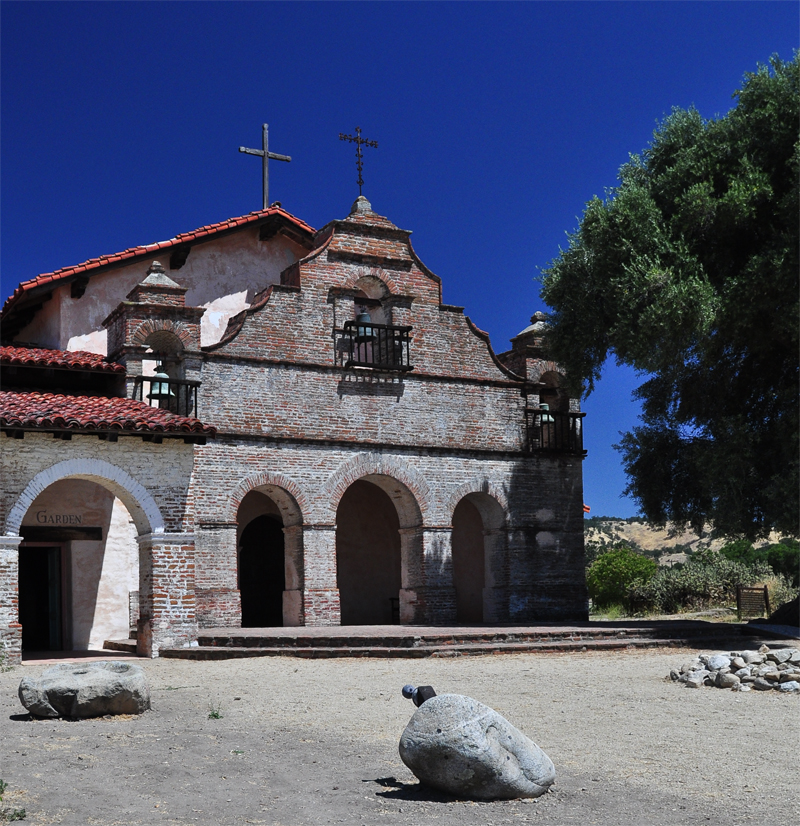 © Copyright 2010 Deborah M. Zajac. All Rights Reserved.
For the historians:
Mission San Antonio De Padua
Located on eighty pristine acres on what was once the Milpitas unit of the sprawling Hearst Ranch, Mission San Antonio de Padua sits within the “Valley of the Oaks” on California’s scenic Central Coast.
The rugged Santa Lucia mountains backdrop this historic mission, where ancient oak trees, their branches dangling webs of Spanish moss, frame the fully restored adobe buildings which include the Church, museum, cloister, fragrant peristyle garden and outbuildings.
Founded as California’s third mission in 1771, it has been said that of all the California missions, San Antonio de Padua is the only one that would be recognizable today to its founder Blessed Junipero Serra. Mission San Antonio de Padua sits upon holy ground, virtually unchanged for more than two centuries.
The mission and its environs have been truly blessed by its secluded location. Offering visitors a true “look back in time” Mission San Antonio de Padua rewards travelers with peace and tranquility far from the hustle and bustle of our modern world and everyday lives.
Come, experience California as it used to be…
~ Mission San Antonio de Padua
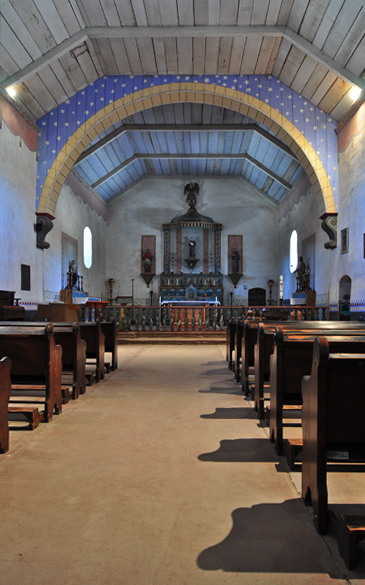 © Copyright 2010 Deborah M. Zajac. All Rights Reserved.
A gallery of all 21 photos of this mission is located here:

 Circadianreflections Blog
You must be logged in to post a comment.