On the Mission Trail

© Copyright 2010 Deborah M. Zajac.  All Rights Reserved.

My local power company shut down the power in the neighborhood to replace transformers and repair the lines. So I thought it a great time to go explore two Missions I spotted along Hwy 101 while driving down to visit my son that I didn’t have time to stop and visit then.
I called two friends to see if they were free to join me. I was in luck. We had a lovely day with a picnic lunch here, and fit in 3 Missions not 2!

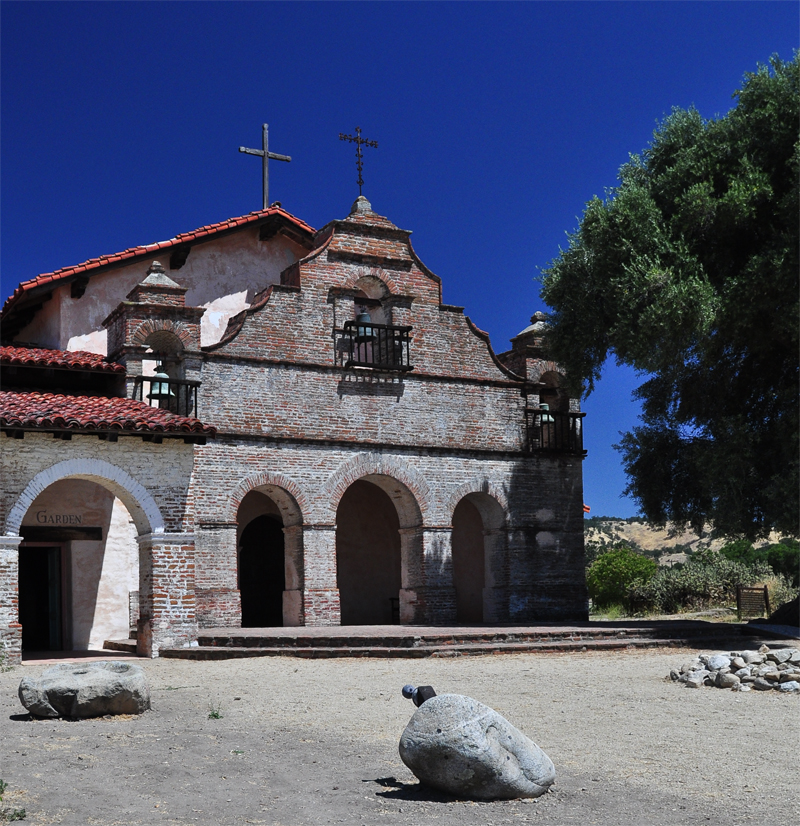
What the information below doesn’t tell you about this Mission is that it is surrounded by a Military Base and you use their road to get to the Mission. We were told we would need all sorts of ID and proof of vehicle ownership to get to the Mission, but as it turned out they’ve changed the check point so the turn off to the Mission is just before you need to show all your ID. You do pass right through their training grounds though. It’s interesting to see in itself!
Nikon D300s and Nikon D90
Nikkor 17-35mm f/2.8 AF-S
Nikkor 70-300mm AF-S VR
© Copyright 2010 Deborah M. Zajac.  All Rights Reserved.
For the historians:
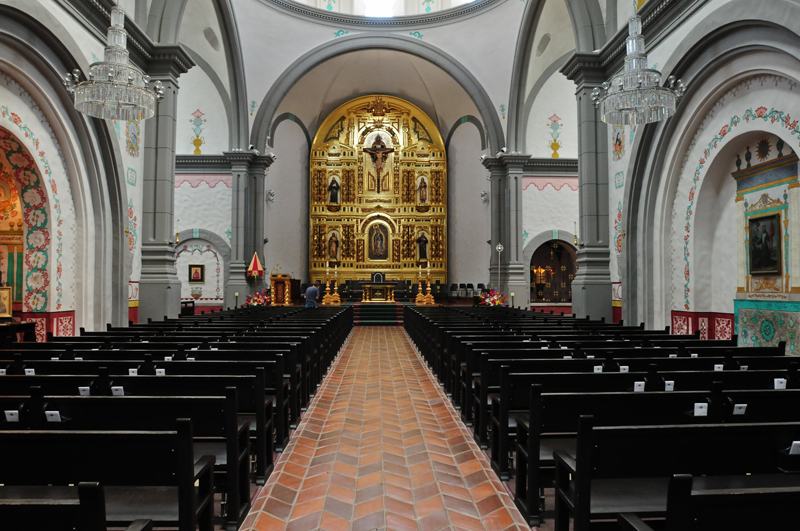
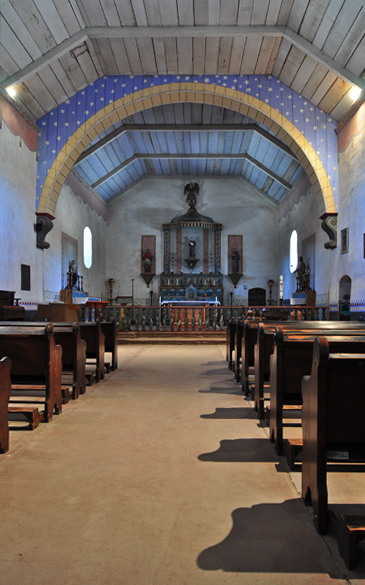
Mission San Antonio De Padua
Located on eighty pristine acres on what was once the Milpitas unit of the sprawling Hearst Ranch, Mission San Antonio de Padua sits within the “Valley of the Oaks” on California’s scenic Central Coast.
The rugged Santa Lucia mountains backdrop this historic mission, where ancient oak trees, their branches dangling webs of Spanish moss, frame the fully restored adobe buildings which include the Church, museum, cloister, fragrant peristyle garden and outbuildings.
Founded as California’s third mission in 1771, it has been said that of all the California missions, San Antonio de Padua is the only one that would be recognizable today to its founder Blessed Junipero Serra. Mission San Antonio de Padua sits upon holy ground, virtually unchanged for more than two centuries.
The mission and its environs have been truly blessed by its secluded location. Offering visitors a true “look back in time” Mission San Antonio de Padua rewards travelers with peace and tranquility far from the hustle and bustle of our modern world and everyday lives.
Come, experience California as it used to be…

~ Mission San Antonio de Padua
© Copyright 2010 Deborah M. Zajac.  All Rights Reserved.

A gallery of all 21 photos of this mission is located here:

Mission San Antonio de Padua

Ice Café

Someone on a forum I’m in wanted to know how well the Nikkor 35mm f/2 performed in low light with moving subjects. They had taking photos of their children in their home in mind.

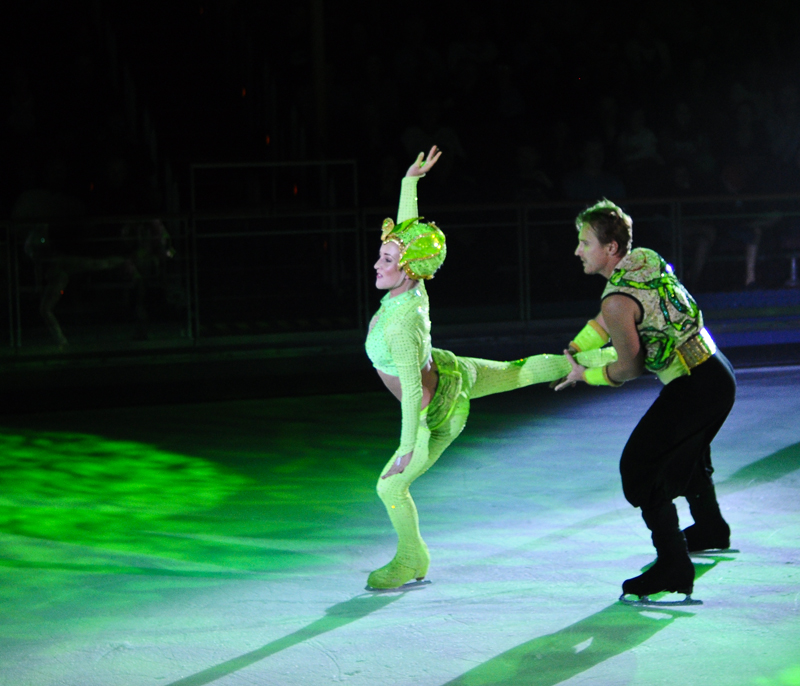
I have that lens, and have found it to perform quite well for me in low light. One such time was last Christmas while on a cruise. I had the pleasure of catching the Royal Caribbean Ice Skating show. Armed with my Nikon D90 and 35mm f/2 from the 4th row I managed to get  quite a lot of good shots using only ambient light. The lens didn’t hunt, and found focus fast, and my D90 performed quite well too. For ISO 1250 there is very little noise.

This little lens is a gem. It does cost more than the new  35mm f/1.8, but the f/2 version is FX or DX, and has a metal mount. If you even think you’ll be adding a Full Frame camera to your kit in the future get the f/2 version.

35mm, f2, 1/500s, ISO 1250, Shutter Priority

© Copyright 2010 Deborah M. Zajac.  All Rights Reserved.

35mm, f/2, 1/1000s, ISO 1250, Shutter Priority

© Copyright 2010 Deborah M. Zajac.  All Rights Reserved.

35mm, f/2, 1/1000s, ISO 1250, Shutter Priority

© Copyright 2010 Deborah M. Zajac.  All Rights Reserved.

On the Mission Trail.

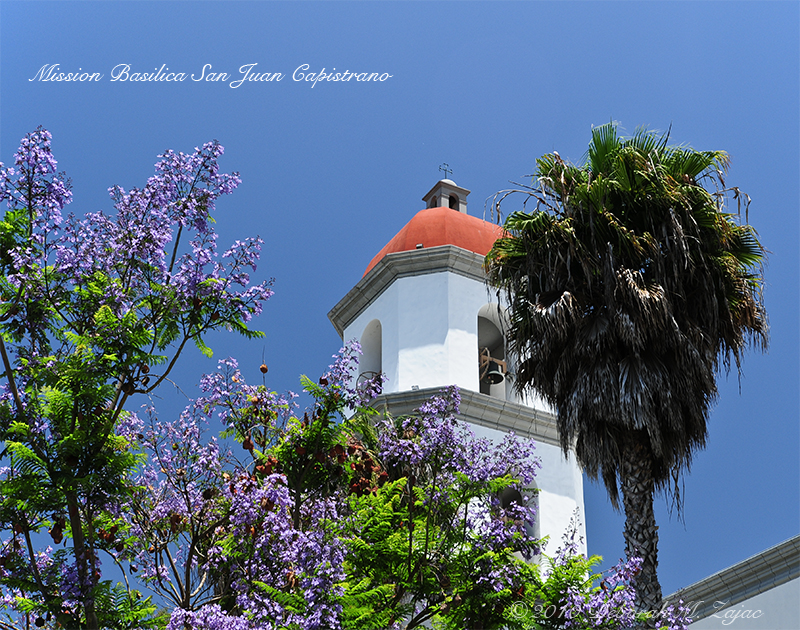
Continuing on my Mission adventure while visiting Big Baby Boy in southern California we went to Mission Basilica San Juan Capistrano.

Here are some photos of the newer chapel and grounds. I’ll post photos of the ruins soon, Here’s some history to pique your interest though.

HISTORY

Mission San Juan Capistrano has been the home to many people over 230 years of history. Its history consists of memories and stories of its past inhabitants and present visitors. It is a place of historical, cultural, and religious significance, as well as a place of inspiration and education.

The story begins in 1775, when Mission San Juan Capistrano was first founded by Father Lasuen, on October 19th. But just a few weeks after the party of padres and soldiers arrived, they received word of the revolt occurring in San Diego. The founding padres, and soldiers decided to leave San Juan Capistrano, and go back to San Diego to help there. Once things had settled in San Diego, Father Serra personally led a party to re-found Mission San Juan Capistrano on All Saint’s Day, November 1, 1776.

Mission San Juan Capistrano, became the seventh of twenty-one missions to be founded in Alta California. Like the previous six missions, San Juan Capistrano was established to expand the territorial boundaries of Spain, and to spread Christianity to the Native peoples of California. Unlike the British colonies on the East Coast of North America, who brought people from their homeland to form colonies, the Spanish believed they could transform the Native peoples into good Spanish citizens. The idea was to make colonial outposts called missions, led by Franciscan padres and Spanish soldiers. The missions would be a center of learning and training of Native peoples. The Spanish government and Catholic Church wanted to convert the people to Christianity, train them in Spanish or European lifestyle, so that the Native peoples would eventually live in towns and pay taxes, like good Spanish citizens.

In 1984, a modern church complex was constructed just north and west of the Mission compound; the design is patterned after the old stone church, and is twenty percent larger.

~Mission San Juan Capistrano

I have 11 photos posted here.

Copyright © 2010 Deborah M. Zajac. All Rights Reserved.

Copyright © 2010 Deborah M. Zajac. All Rights Reserved.

Copyright © 2010 Deborah M. Zajac. All Rights Reserved.

Copyright © 2010 Deborah M. Zajac. All Rights Reserved

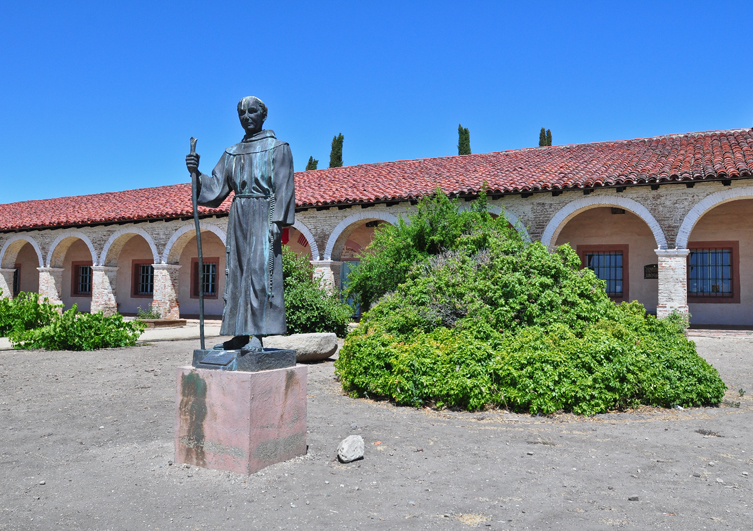
Santa Barbara Mission

Santa Barbara Mission, originally uploaded by dmzajac2004.

Copyright © 2010 Deborah M. Zajac. All Rights Reserved.

I took US 101 down to southern CA to visit my son. This route is the Historic El Camino Real, and the Mission trail. I visited 4 missions between June 25 and 28th. This is the first of my Mission stops.
To see my entire set of 11 photos of this mission follow this link:
http://www.flickr.com/photos/dmzajac2004/sets/72157624415574456/

History
Old Mission Santa Barbara. The Santa Barbara Mission was the tenth of the California Missions to be founded by the Spanish Franciscans. It was established on the Feast of St. Barbara, December 4, 1786.

Padre Junipero Serra, who had founded the first nine Missions, had died 2 years earlier. It was Padre Fermin Francisco de Lasuen, his successor, who raised the cross and made the first converts.

The original buildings were unpretentious and made of adobe. Over time three adobe churches were constructed on the grounds, each larger than the one before until the fourth and present church was built in 1820. The third was destroyed by earthquake in 1812. The fountain in front was built in 1808.

Bits and Pieces

photo

Copyright © 2010 Deborah M. Zajac. All Rights Reserved.

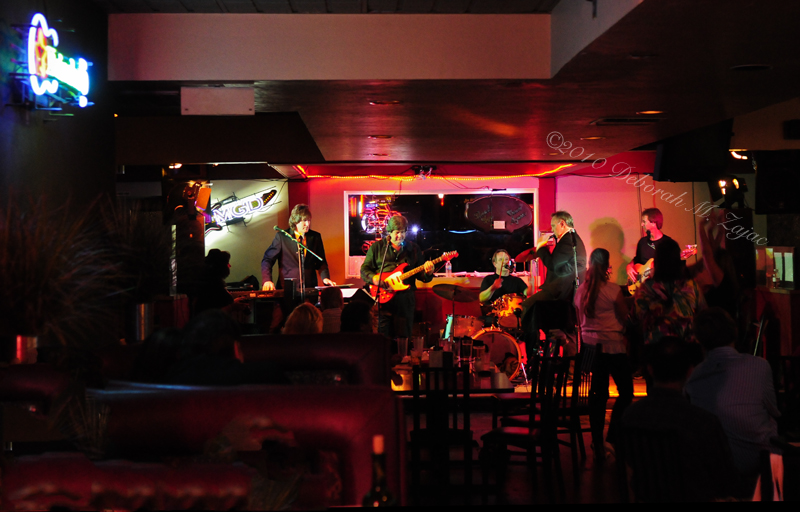
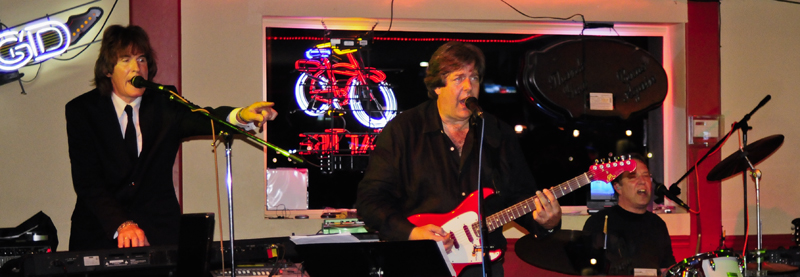
This band plays 60’s and 70’s classic rock. Songs from the Kinks, Turtles, Beatles etc. The music was great. There was music trivia. I got one question right! The only question I made in time to hear. The answer was Chubby Checker. Can you guess the question?
The lead guitarist is the father of one of Big Baby Boy’s room-mates.
The band has been together for more than 20 years.

Thanks for asking me to come to the Westside Bar and Grill to hear them play Rachael. It was fun. We left this club and went over to Durty Nellie’s pub for Karaoke. I did not sing.

Malibu Moon

I had hoped to find a good location to take a full moon shot while visiting Big Baby Boy this week-end…I thought this would do. What do you think?

It was a lovely evening and really nice week-end.

PP- not much different. Vibrance, clarity and a slight crop off the side, top,and bottom.

Nikon D300s
Nikkor 17-35mm f2.8 AF-S
Malibu
California
Travel
Beach

“Adopt the pace of nature: her secret is patience.” ~ Ralph Waldo Emerson

Copyright © 2010 Deborah M. Zajac. All Rights Reserved.
Mono Lake
Eastern Sierra
Owens Valley
Sunrise
B+W Cir Polarizer
Nikon D300s
Nikkor 17-35mm f2.8AF-S

As the sun rose higher in the East making its trek west the colors over Mono Lake changed to this rosy, golden glow. The reflections in the lake were so intense and the snow capped Sierras reminded me of
rose gold.

PP- a little recovery, clarity, vibrance, curves for the mid-tone, a wee crop off the top and bottom, and resized.

History
Mono Lake is believed to have formed at least 760,000 years ago, dating back to the Long Valley eruption. Sediments located below the ash layer hint that Mono Lake could be a remnant of a larger and older lake that once covered a large part of Nevada and Utah, making it among the oldest lakes in North America. At its height during the last ice age, the lake may have been 900 feet (270 m) deep;[6] prominent old shore lines, called strandlines by geologists, can be seen above Lee Vining (near the white “LV”) and along volcanic hills northeast of the current lake.

It is the Endorheic basin, the terminal lake, in a watershed fed by melting runoff, with no outlet to the ocean. Dissolved salts in the runoff thus remain in the lake and raise the water’s pH levels and salt concentration. The Mono Lake tributaries include Lee Vining Creek and Rush Creek.

The lake is in a geologically active area at the north end of the Mono-Inyo Craters volcanic chain and is close to Long Valley Caldera. Geological activity is caused by faulting at the base of the Sierra Nevada, and is associated with the crustal stretching of the Basin and Range Province.

Volcanic activity continues in the Mono Lake vicinity: the most recent eruption occurred 350 years ago at Paoha Island in Mono Lake. Panum Crater (on the south shore of the lake) is an excellent example of a combined rhyolite dome and cinder cone.
~Wikipedia