Last month when several friends and I went up to the city for a day of photography we finished our day shooting St. Ignatius Cathedral. It’s such a beautiful building all lit up at night that I suspected it would be just as lovely inside. I had mentioned that night wanting to come back to shoot the interior. My friend Alex also wanting to shoot the interior of this building, and also of others sent us a couple of photos he found on the internet of the interior which peaked our interest even more.
Yesterday, Dali emailed me wondering if I was free to go out shooting. Fortunately I was. I thought we might go to the zoo, or the Japanese Tea Garden, but he had other ideas. When he said, “how about the churches.” I was in!
Here’s a night shot from my visit in January:
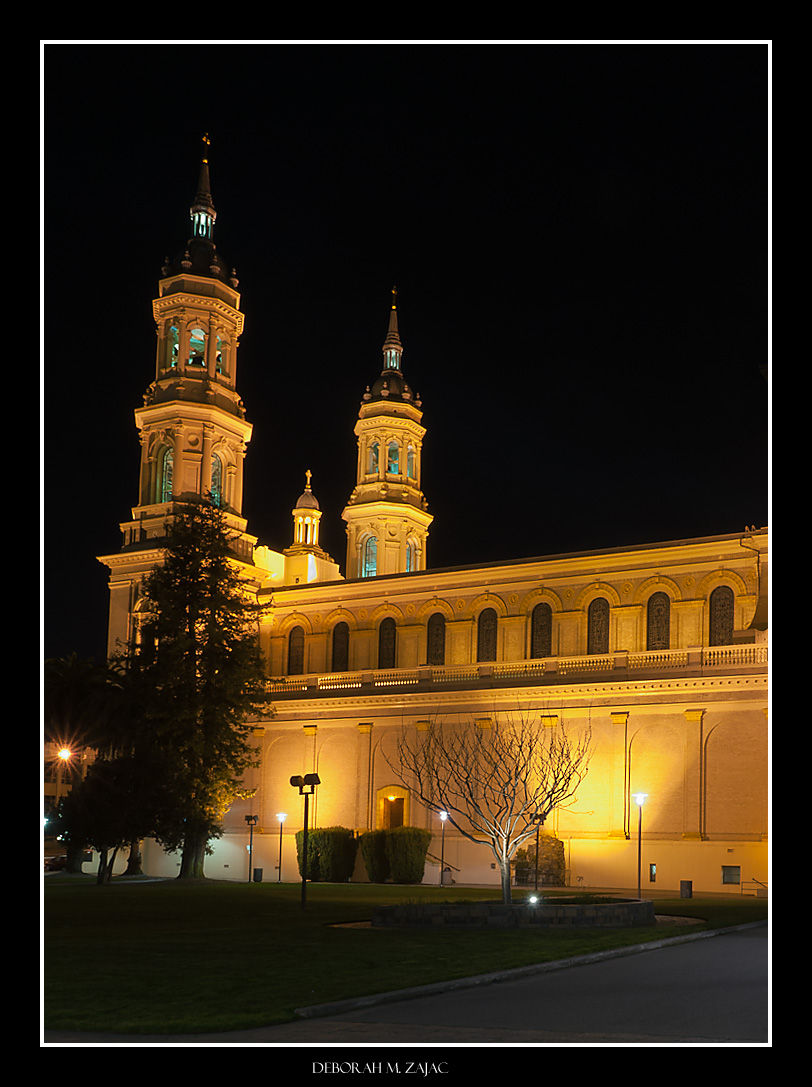 This is the 5th such church to be built in San Francisco. This present day church was built in 1912 and dedicated in 1914. It is located on the campus of University of San Francisco.
The present church’s architecture is a mix of Italian Renaissance and Baroque elements, and its floor-plan follows that of ancient Roman basilicas. Though Saint Ignatius Church survived the 1989 Loma Prieta earthquake unscathed, it was recently renovated and seismically reinforced. One of the city’s largest churches, its location on a hilltop as well as its twin spires and dome makes it a prominent San Francisco landmark.
~Wikipedia
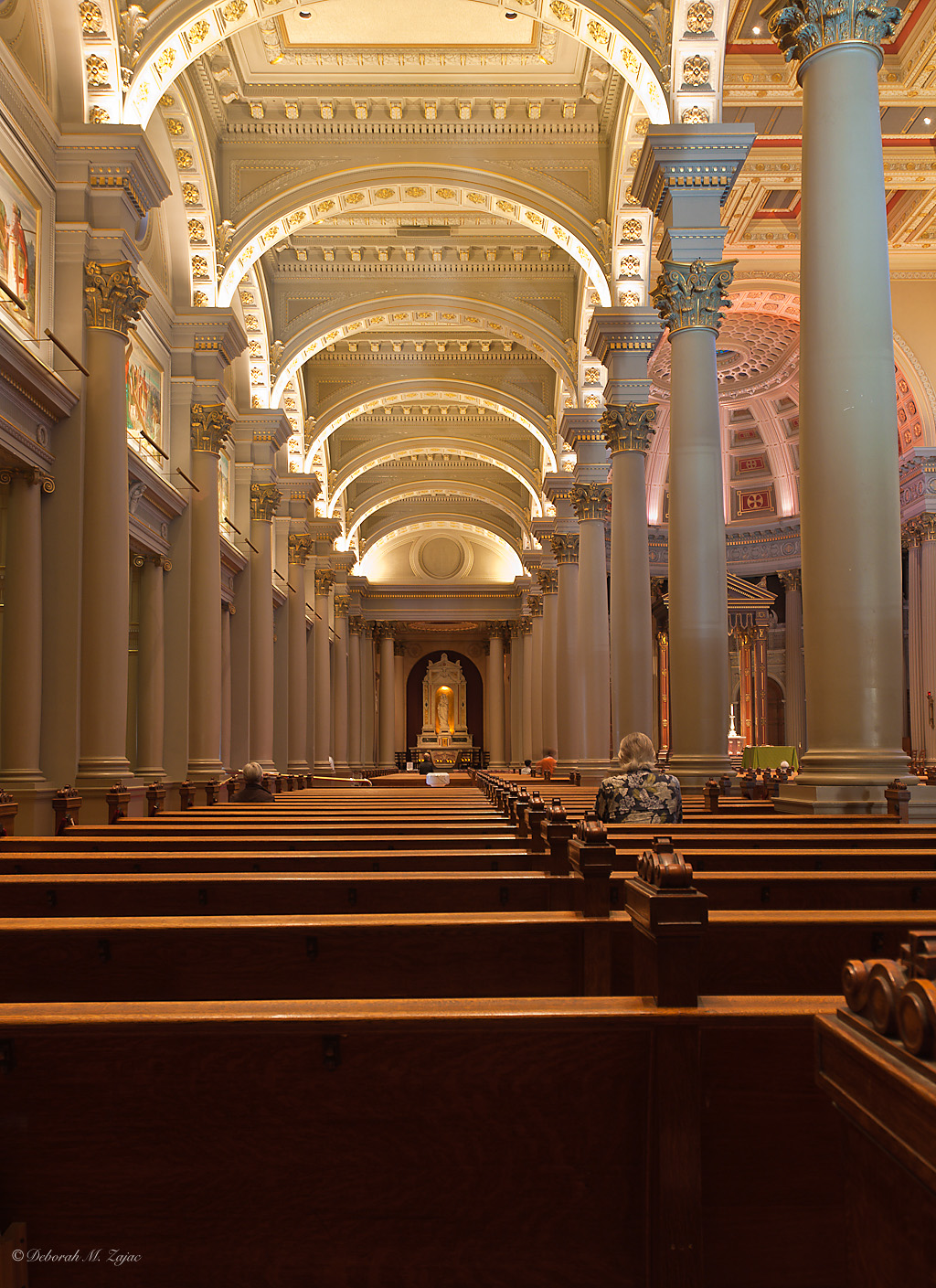
The Nave:
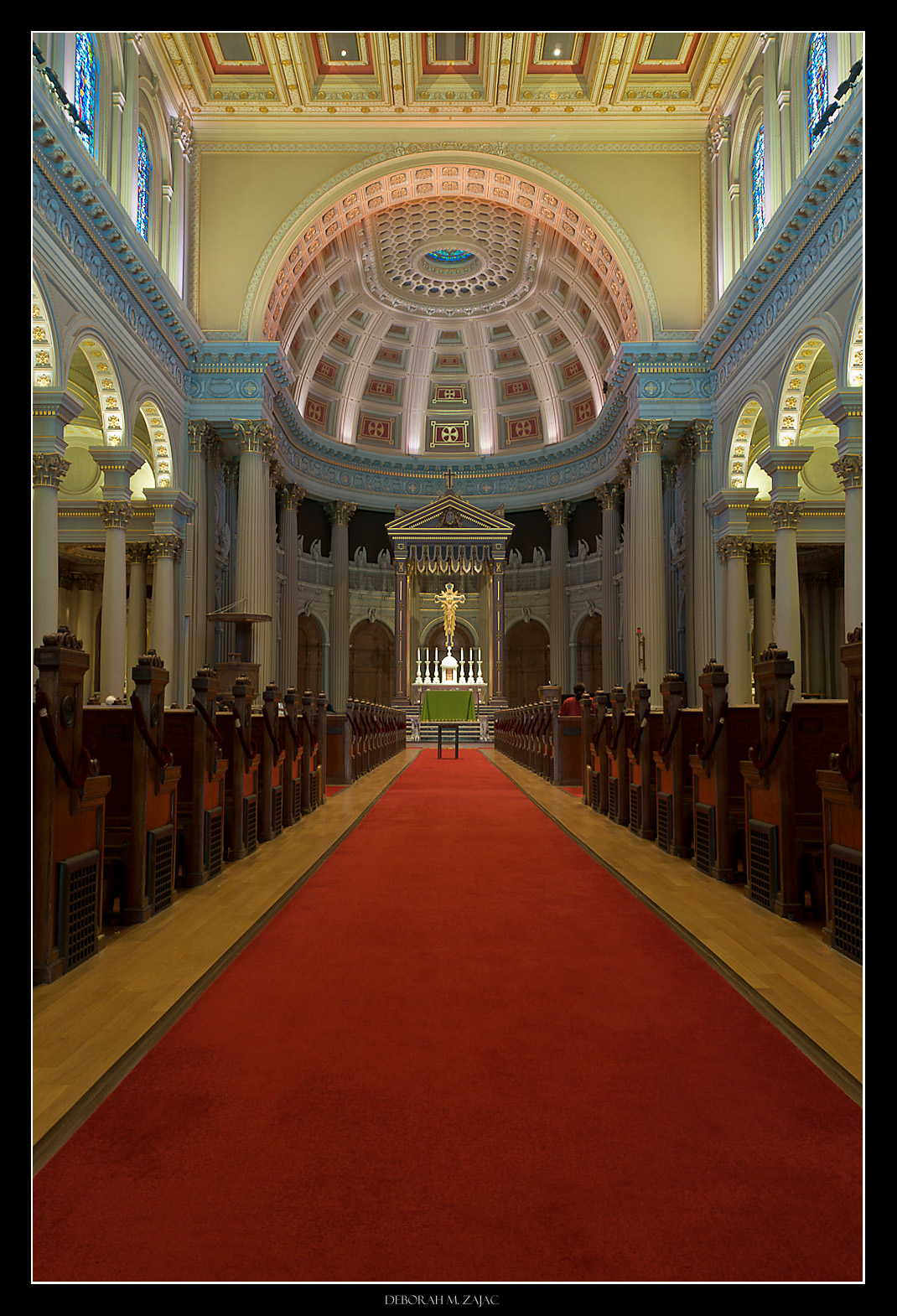 The general layout of the nave is based on the ancient Roman basilica, or law court building. The focus of the nave is the sanctuary, which here takes the form of a semicircular, semi-domed space, or apse, often seen in the Roman basilica. This space is separated from the nave by the chancel arch springing from grouped free-standing columns. The elaborately coffered half-dome ceiling contains a central stained glass panel representing the Holy Spirit descending toward the assembly below, and on either side wall is an elaborately framed plaster relief representing the Madonna and Child. The centerpiece of the sanctuary, the polychrome white oak baldacchino or canopy over the former High Altar, was added in 1949, as was the altar itself, along with the marble floor and communion rail.
~University of San Francisco
A couple of Altars:
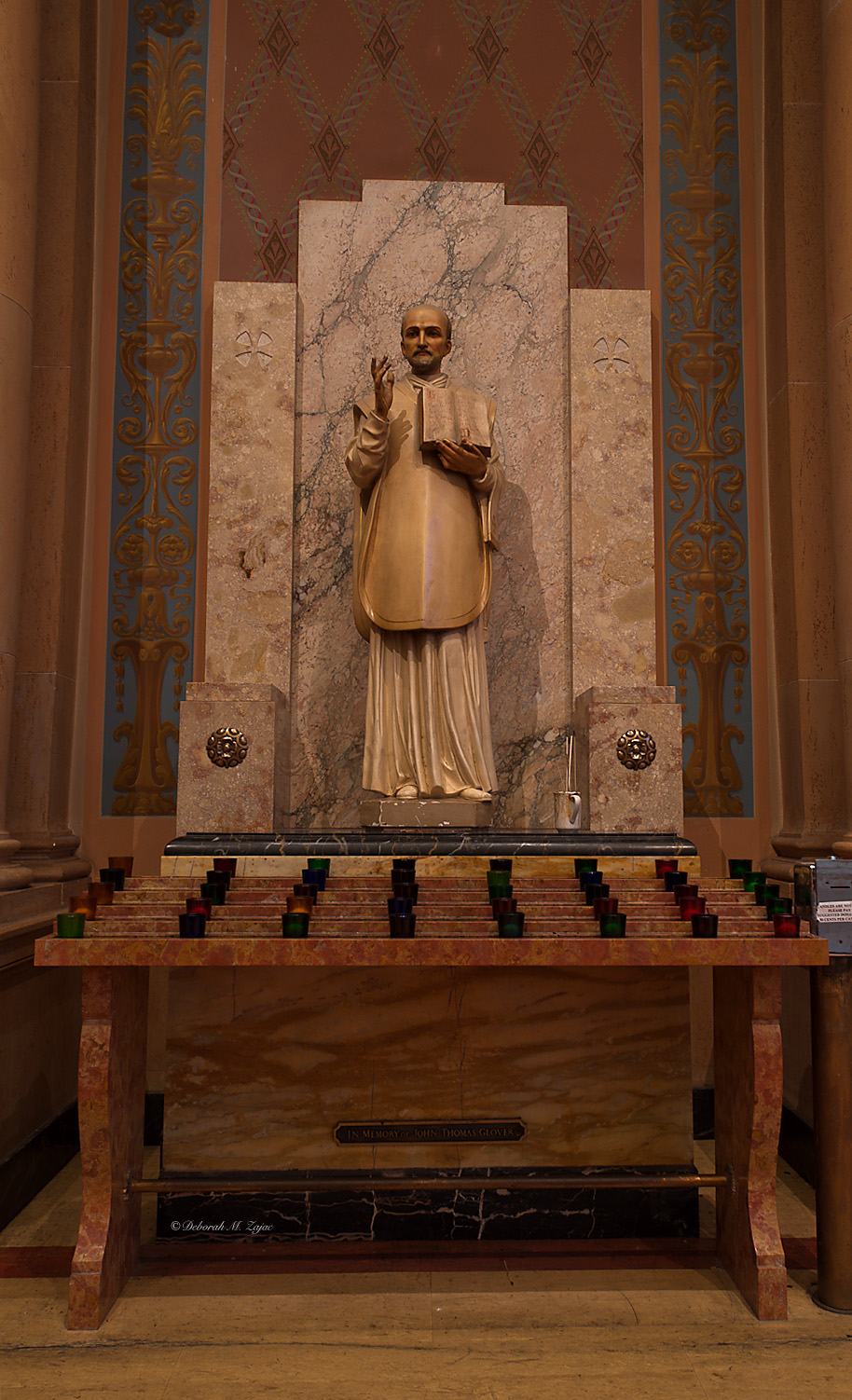 …and
…and
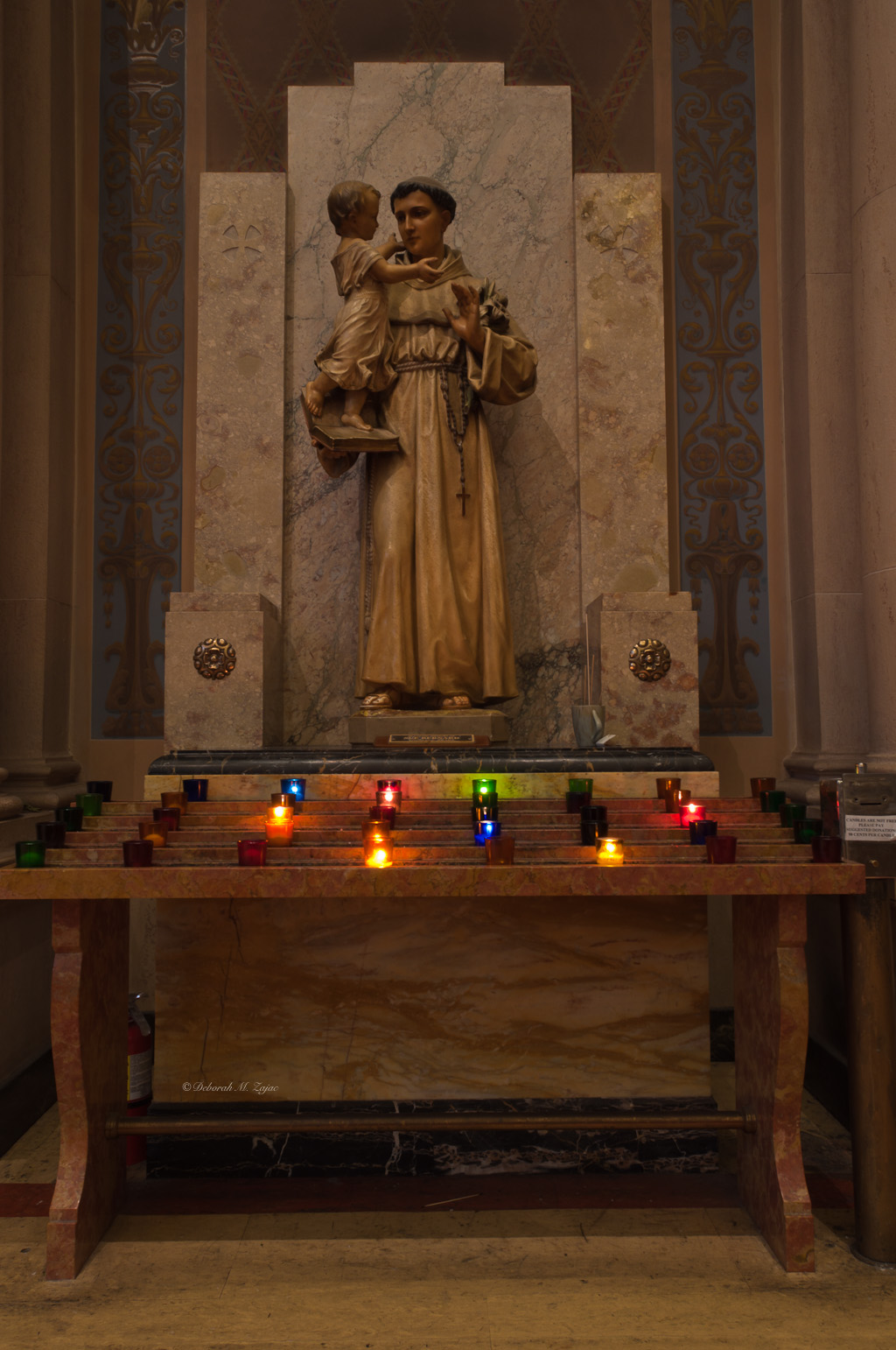
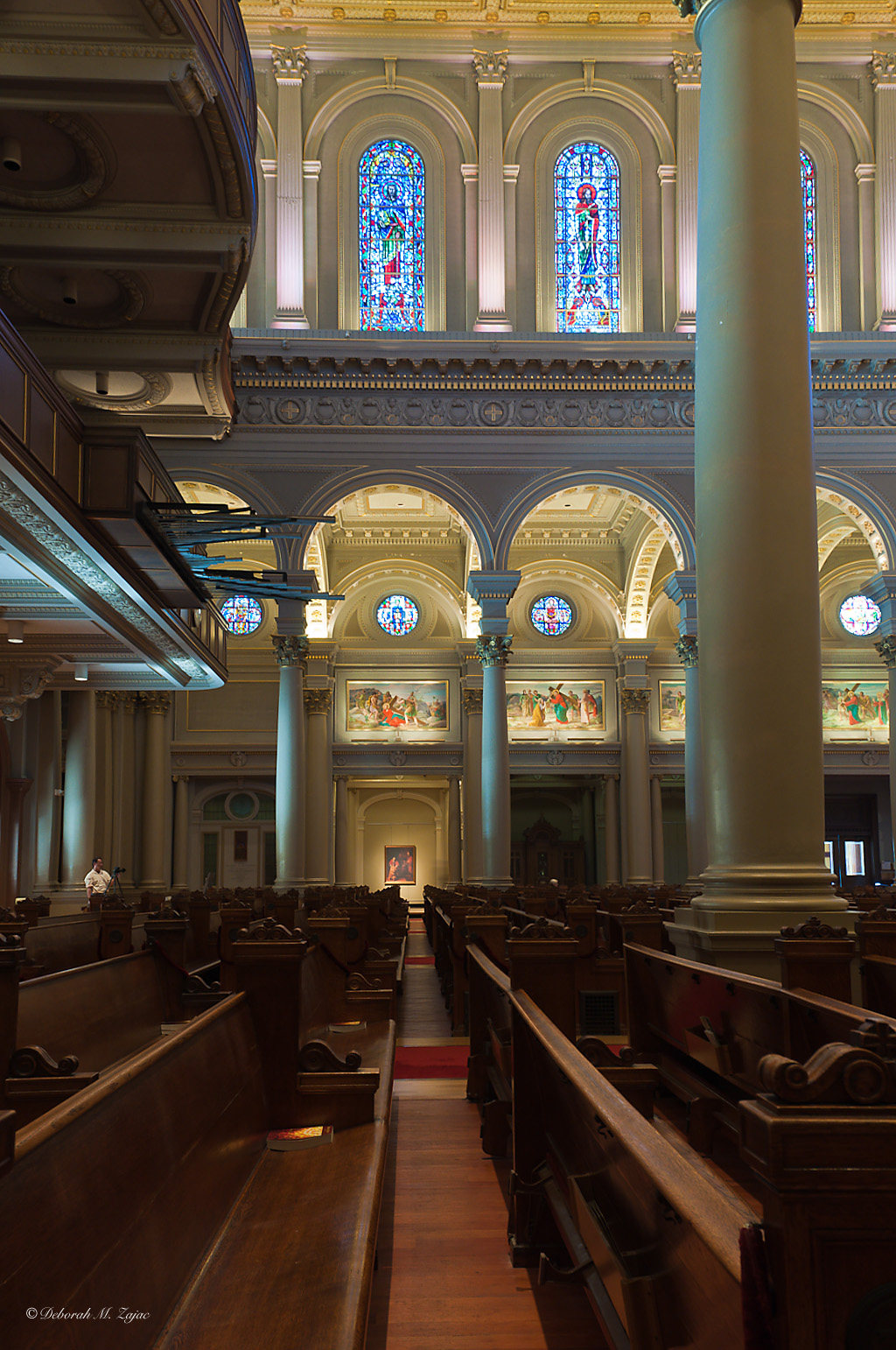
A Side Aisle:
The Interior
Entering the church from Fulton Street, on each side, freestanding Corinthian columns support nine arches carrying a deep ornamental entablature. Above this, the clerestory wall rises to the ceiling and is divided into a corresponding nine bays by Corinthian pilasters framing arched windows. The deeply coffered ceiling offers a rhythmic counterpoint to the divisions of the bays below. The profusion of columns and arches produces striking and ever-changing perspectives as one moves through the space. Beyond the side aisles are individual chapels, each with a domed ceiling and central skylight.
~University of San Francisco
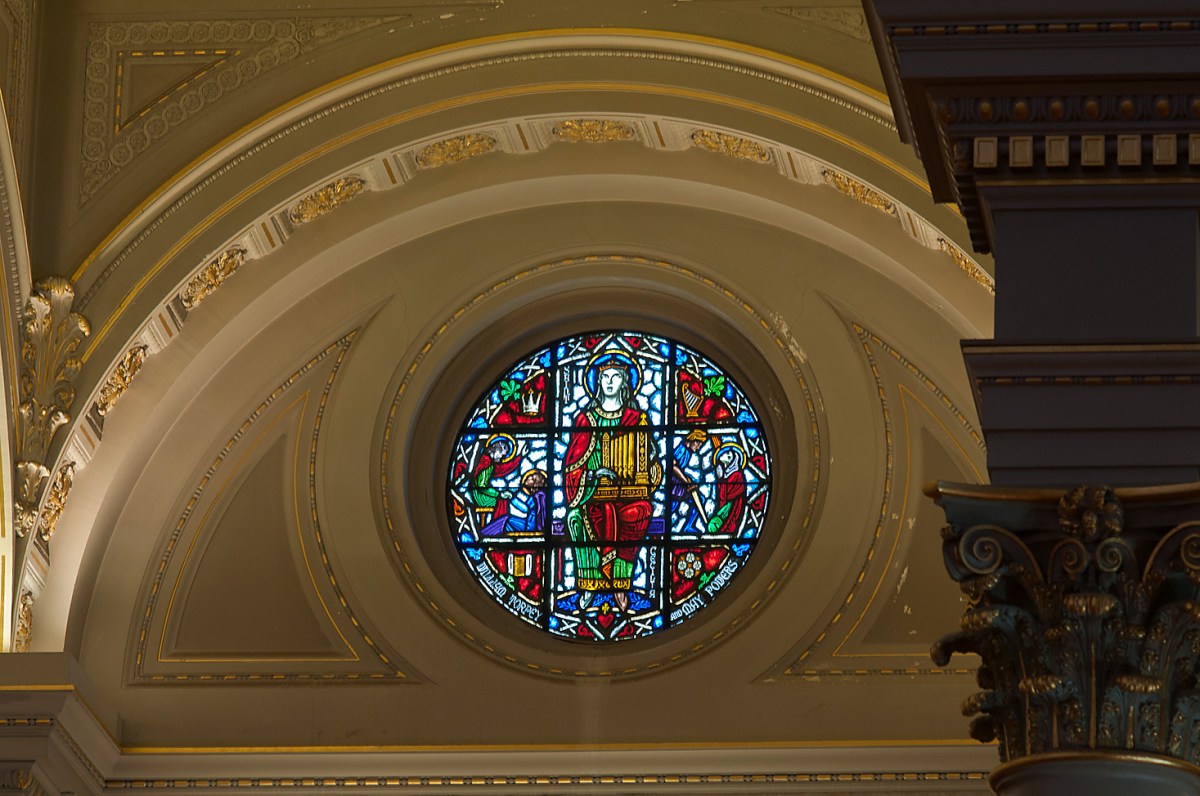
 Art, Iconography, and the Stained Glass Windows:
To either side of the sanctuary, at the ends of the side aisles, are the Mary and Joseph chapels, each with a graceful carved reredos bearing a Carrara marble statue of the saint carved in Italy.
The framed oil paintings above the entrances to the side chapels depict the Stations of the Cross and are the work of Pietro Ridolfi of Rome. Other paintings in the chapels that were completed according to the original decorative scheme (the first three on either side) show scenes from Jesuit history. The side chapels demonstrate techniques of decorative painting used on plaster to resemble stone or wood, a practice often found in the buildings of this period. These chapels also illustrate the importance of the painted and carved human figure in humanizing and bringing a sense of intimacy to even very large buildings. At the same time, they reflect Jesuit spirituality, which places great emphasis on the use of concrete imagery in spiritual reflection.
~University of San Francisco
 We spent nearly an hour in the chapel. We would have spent more time, but mass was going to start so we went to lunch then went onto another Cathedral in the city. I felt very comfortable here. It’s a gorgeous chapel and if you’re in the city worth a visit! I wouldn’t mind going again.
 Circadianreflections Blog
Superb images Deborah. I particularly love the POV from the Side Aisle. Thank you for the tour.
LikeLike
More beautiful shots and narrative to complete the impact of your visit to this most gorgeous Chapel!
LikeLike