“A good snapshot keeps a moment from running away.” ― Eudora Welty
Author: circadianreflections
My name is Deborah Zajac. I'm a photographer living in Nevada at the base of the Eastern Sierras. I am a passionate nature, landscape, night/astro photographer. I shoot predominately in color and use Nikon Digital Cameras, and lenses.
I hope you enjoy seeing some of the photos I've taken while on my travels.
Please feel free to leave a comment I'd love to hear from you.
I wrote the date down for June’s full moon and it’s position to set over the San Francisco skyline back in Feb. I had hoped I would be able to photograph it, but you know what they say about, “The best laid plans…”
I had work scheduled early this particular week on the days of the full moon setting, so couldn’t make it up to the city. The first free morning I had to try it was Friday. The moon was 98% full, and a lot higher than I had wanted it to be, but I wanted to try it anyway. Practice! Had I waited for the Moon to be lower where I really wanted it, it would have been daylight and too bright. By 5:30a.m. it was too light. So light that the lights on the bridge went off then!
The belt of Venus is lovely isn’t it. The skyline was diffused by a light fog hanging over the city.
I love it when even the failures are fun, and the view is pretty, and friend Downhill Dali who is so NOT a morning person got up, met me, and went up to the city with me to shoot. Thanks Dali!
This is the other snake I mentioned seeing while hiking down from Black Mountain last week.
I think this is a Night Snake. Please correct me if I’m wrong! Not the best photo I know the background isn’t great, but he picked his spot well didn’t he.
I’m seeing snakes on nearly every hike these days. While up in the Sonoma area last week-end I nearly stepped on a large Gopher Snake…and Thurs. I saw Kingsnake sunbathing in the middle of the trail. Signs of Summer!
This morning I rose early to hit the trail. The PG&E trail in Rancho San Antonio Open Space Preserve. I needed a good hike since we didn’t do nearly as much hiking as I had hoped to do last week-end.
Getting out in the country early in the morning is wonderful for so many reasons; it’s cool; there is usually no problem finding parking; there is hardly any one else around; and the wildlife is out and about. That was the case this morning;
Here’s what I saw this morning while on the way up to Vista Point.
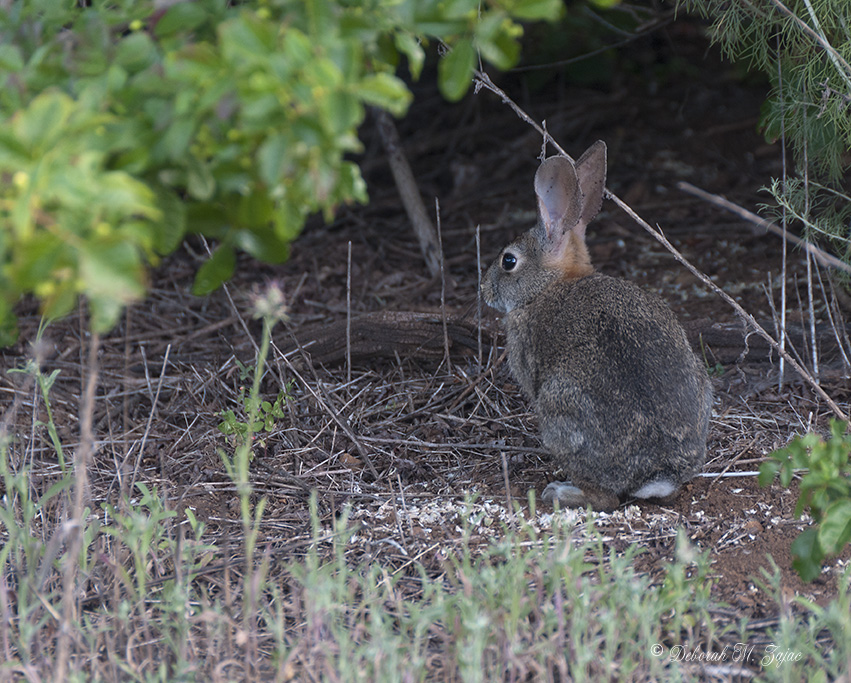
A widdle wabbit!
Photo by Deborah M. Zajac
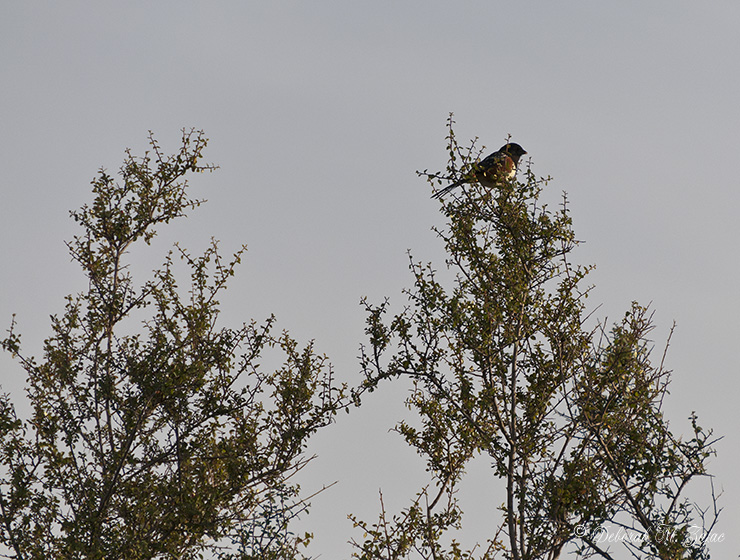
A Junco surveying the land.
Photo by Deborah M. Zajac
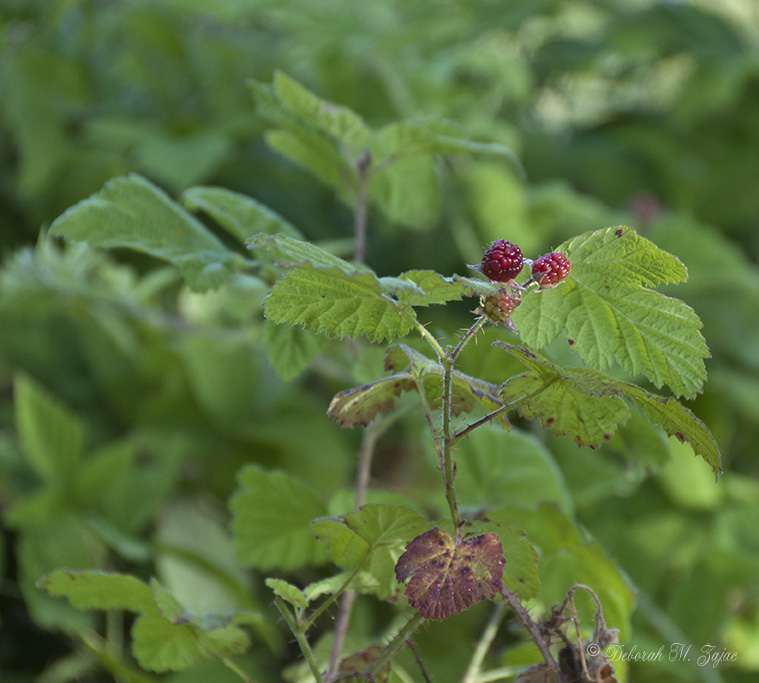
The flowers have changed and will soon be plump and juicy berries!
Photo by Deborah M. Zajac
Oh, we startled each other. He was curious about my shutter clicks and would look at me each time I clicked. After 3 clicks he thought it was safe and began to munch on these leaves. I let him graze a bit then moved which scared him up the hillside.
Photo by Deborah M. Zajac
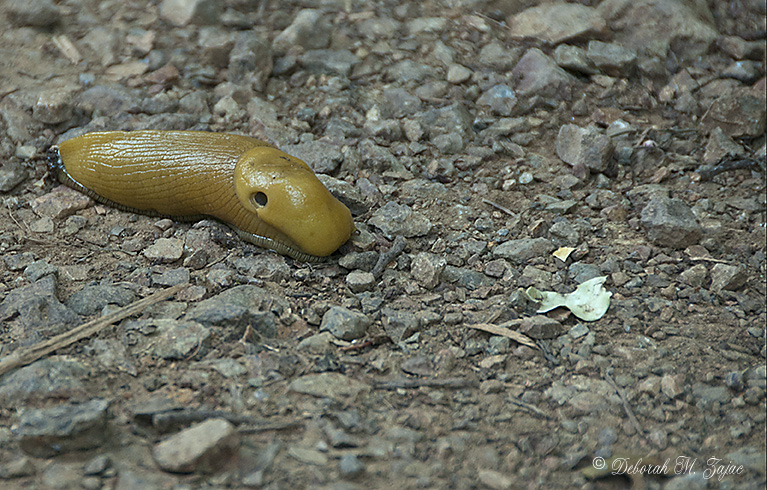
Just after I rounded the bend in the trail I nearly stepped on this guy.
Photo by Deborah M. Zajac
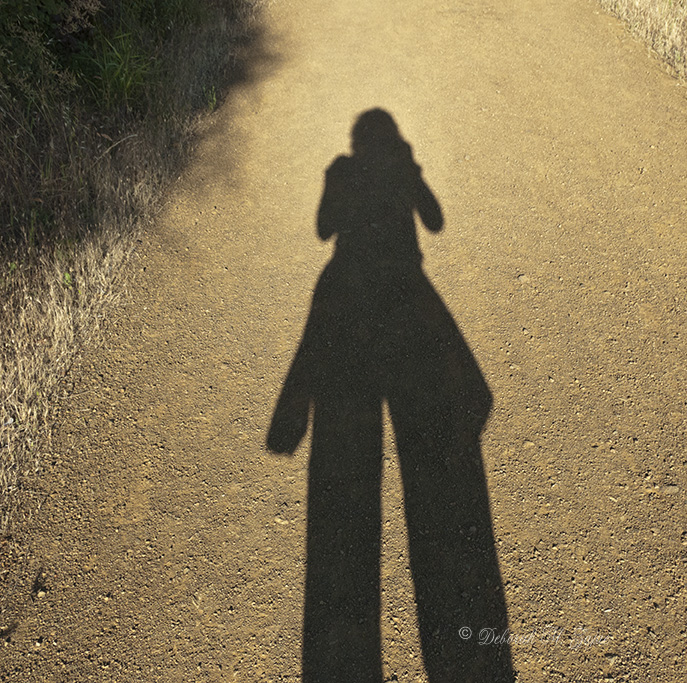
My sunny day companion…
Photo by Deborah M. Zajac
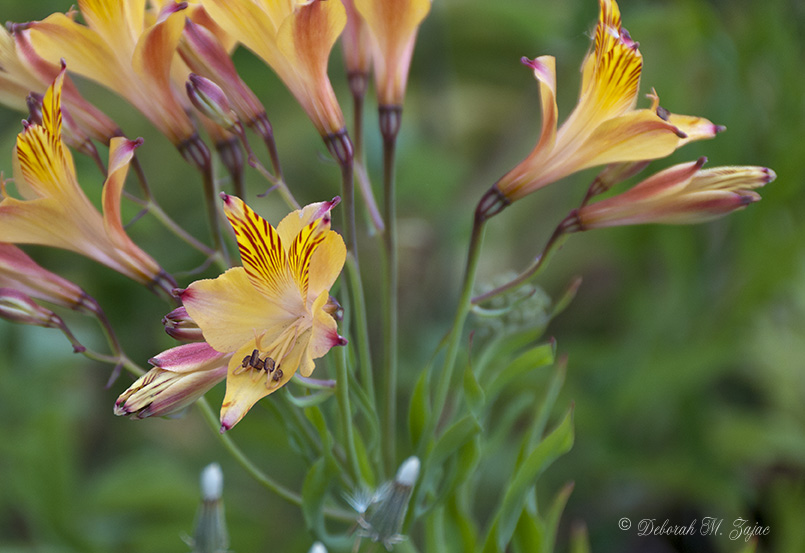
Lilies…I saw only one other plant of these while going up today. I don’t think they fit here. Are they indigenous or not?
Photo by Deborah M. ZajacPhoto by Deborah M. Zajac
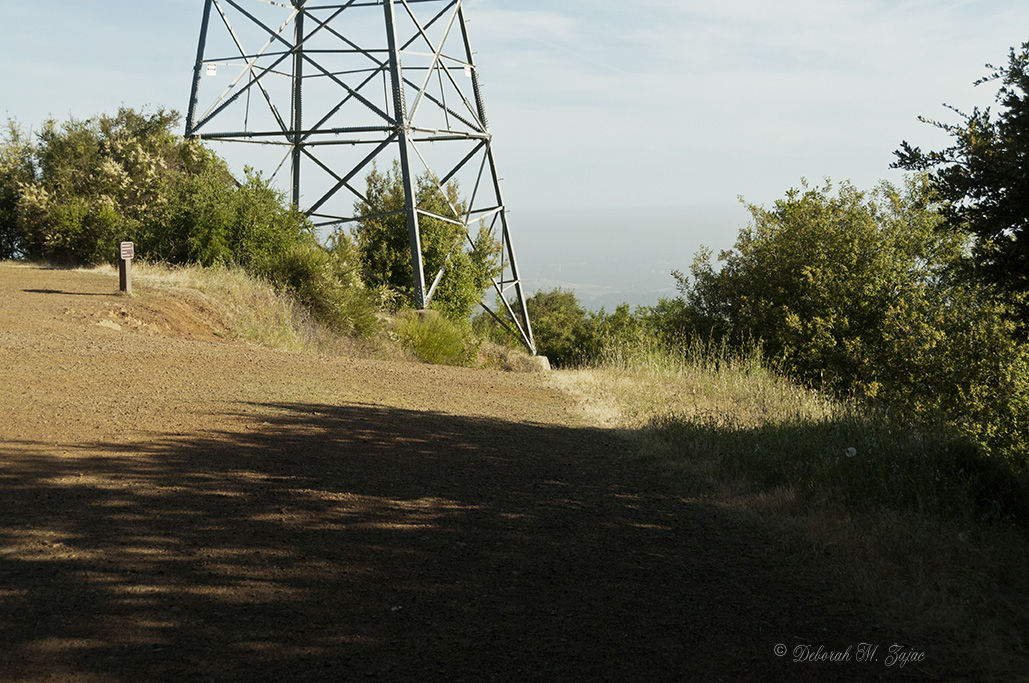
It was warm by 7:30a.m. I’m glad I got started early. Here’s Vista Point!
There isn’t much here, the power tower, a sign, and a bench you can’t see on the other side of the tower, the view was hazy this morning too, but I made it here in my best time yet. 1h34m!
Photo by Deborah M. Zajac
The trip down was interesting and had wildlife too. A King Snake, and fawn and its Mother, and …well I’ll save that until next time.
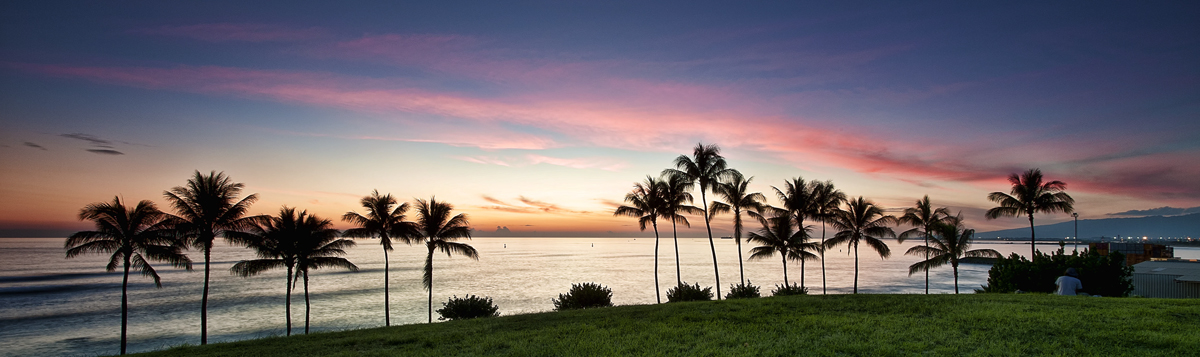
If you’ve ever tried to capture a photograph of a beautiful sunset you know just how challenging it can be. Time is the enemy. The light and color fade as the shadows deepen with the setting sun, and you only have minutes to shoot that precise moment when all the elements come together. Photographer and lifelong Hawaii resident Todd Maeda captures those magic moments time after time, and shares with us how he did it on this beautiful tropical evening in Oahu.
Photo by Todd Maeda
Q. Tell us about this location.
Todd: This is at Kaka’ako Waterfront Park, in Honolulu, Hawaii, a State park that was reclaimed from the old town dump. It is situated near the entrance of Honolulu Harbor, so there is a stream of boats and ships going in and out. It’s part of the game; ship, barge, wave, sunset… A “go to”spot for solid sunsets while keeping your feet dry; most of my mid-week forays are right after work, so I am usually still in work attire.
This particular spot is on a hill closest to the harbor. At the bottom of the hill, about the center of this image, is a MADD (Mothers Against Drunk Driving) memorial. Rather poignant, and a decent sunset subject/foreground. The vantage point is such that I actually get better views of the water, and usually fewer people. Usually. A problem with this spot, and actually any spot on a hill in the park, is the maintenance crews sometimes turn on the sprinklers in the middle of the sunset. Something to watch for.
Q. What time of day?
Todd: This was that magic moment around 15 minutes after the sun sets, when the colors “pop,” then die quickly. During the “winter” months, so a little after 6PM. Yeah, I know; Hawaii don’t have winters. Hey, we have to wear warm shorts, so there!
Q. How difficult was this to capture?
Todd: This was a fairly basic capture; hardest thing is to be sure you have everything you want in the frame. Since I do a fair amount of post-processing, I try to give myself some latitude in the composition for possible creative cropping, which I did here.
Q. How did you expose for this shot?
Todd: I used a 3-stop Reverse Graduated Neutral Density filter to hold back the light at the horizon, as it was still bright enough to darken the foreground without it. Other than that, Aperture Priority on Matrix Metering (Nikon’s equivalent to Canon’s Evaluative mode), because the light is moving so quickly. I usually input -0.7EV, because I prefer that look. This one ended up at ISO200, f/22 for 1/4 second; you can see a bit of the effect in the trees and water.
Q. What camera and lens did you use for this shot?
Todd: The Nikon D700 is my standard landscape body. I had the Nikkor 17-35mm/2.8D mounted for this shot, as it is the widest reasonable lens with filter threads I have; I did know I would be using filters for this particular day, based on the sky. Had that mounted on a Really Right Stuff BH-55 ballhead on a Gitzo GT1531 tripod, with the Rapid-Rise column at the lowest position.
You can see more of Todd’s photographic work here:
I spent a long week-end up in the Sonoma Coastal area with Naturalist Jon Menard and 6 other hikers this was one of the first places we stopped to visit. I enjoyed the garden so much I didn’t have a chance to go in the house! You know what that means don’t’ you? Right! I must go back.
For the Historians:
The famed horticulturist Luther Burbank made his home in Santa Rosa for more than fifty years. On this garden site and in nearby Sebastopol, Burbank conducted the plant-breeding experiments that brought him world renown. His objective was to improve the quality of plants and thereby increase the world’s food supply. In his working career Burbank introduced more than 800 new varieties of plants- including over 200 varieties of fruits, many vegetables, nuts and grains, and hundreds of ornamental flowers.





 Circadianreflections Blog
You must be logged in to post a comment.