Test Driving Adobe’s ACR 7.0

Copyright © 2012 Deborah M. Zajac. All Rights Reserved.

I recently received the new version of Photoshop CS6. I downloaded it and had some time to play with ACR 7.0 today.

ACR is the acronym for Adobe Camera RAW. The latest version has had a total revamp. They’ve retooled all the sliders and the algorithm giving us more control to recover highlights, shadows the blacks, and whites.

They’ve replaced the Recovery slider with several new sliders.imagethey’ve given us a Whites, Blacks, Highlights, and Shadows sliders.
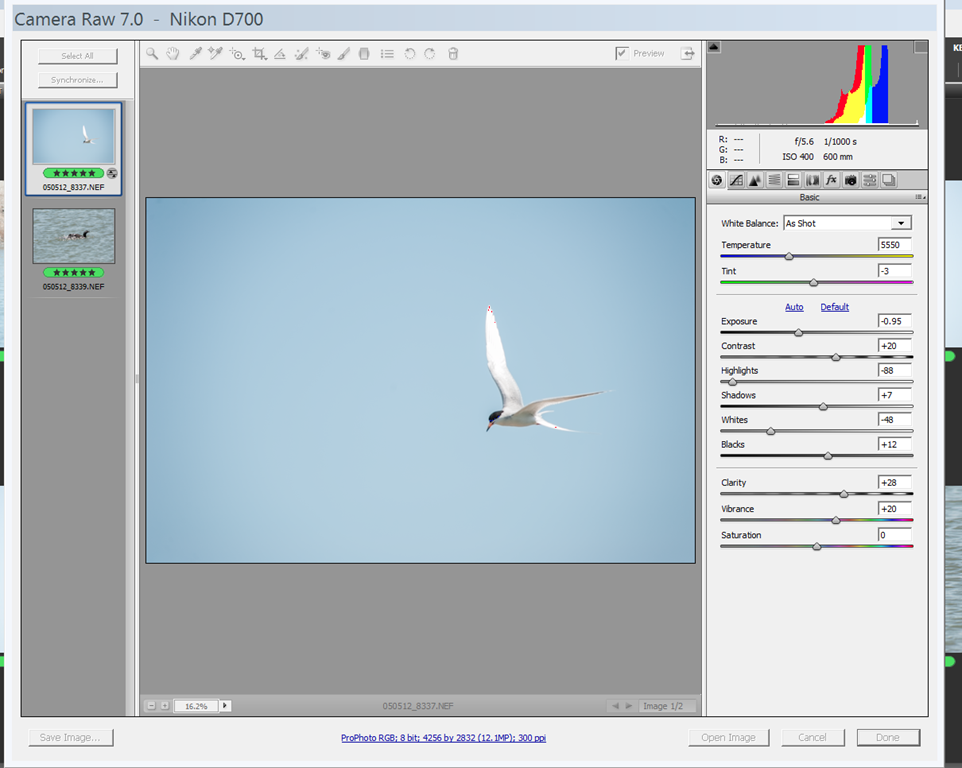
I’ve got quite a few files in my archives that I’ve been saving for the time my editing software would be able to recover the data and save the photo. Let’s look at what I’ve been able to recover today.

I took this photo in January 2012 while on a New Year’s Trip in the Eastern Sierras with friends. I haven’t done any retouching to it at all in this shot. I only added my tag, and resized it for the web.
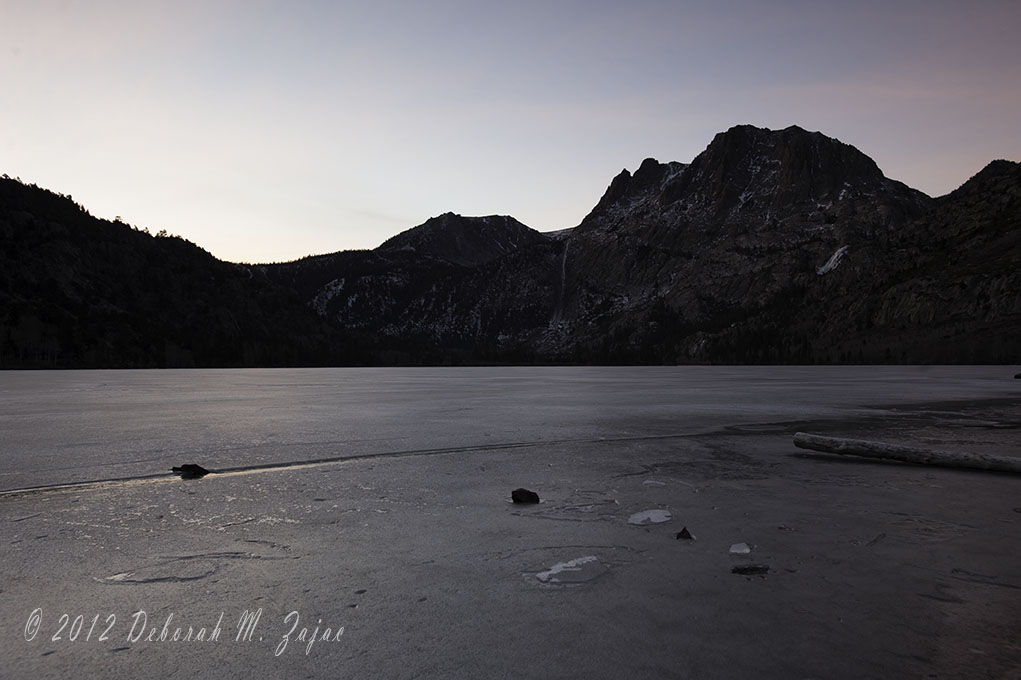
It’s completely blow out in the upper left sky where the sun was shining, and a lot of the mountain range is lost in the shadow. I thought I used my 2 stop Graduated Neutral Density filter on this shot, but by the looks of it I grabbed my 1 stop by accident.

Here’s what I was able to recover using CS6 new ACR 7.0.
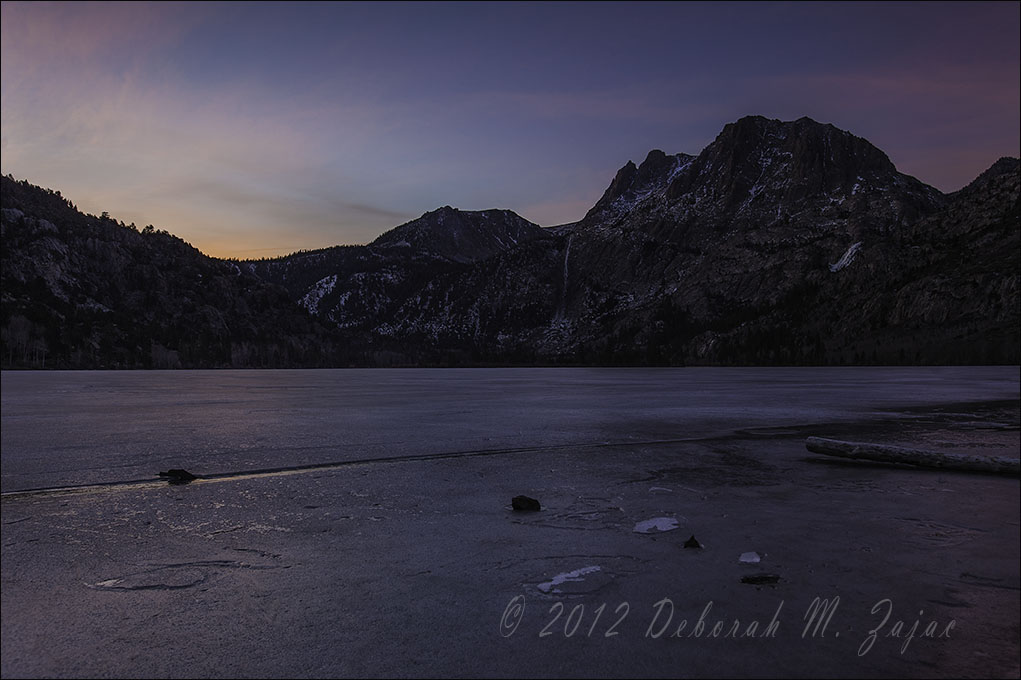
It’s amazing the amount of color  that I was able to recover, and there are even a few wispy clouds there that couldn’t be seen!

I made all the adjustments in ACR using the new highlights, shadows, whites, and black sliders. I also adjusted the contrast,  and exposure then I opened  it in Photoshop to remove some spots, add my tag, and resize it for the web.

ACR 7.0 made the upgrade worth it to me.


“I’m waiting for you Morning Star…herald of the dawn.” ~ Deborah M. Zajac

Copyright © 2012 Deborah M. Zajac. All Rights Reserved.

“Rise quickly for I am numb with Winter’s morning chill.
My fingers ache for your warm embrace.”~

That’s my plea every sunrise shoot, and to be honest most nights too! My fingers are the first to go numb, and I’ve not found a hand-warmer or pair of gloves to keep me warm enough to thwart the chill.

This is a shot from Convict Lake taken the third morning of 2012.  Seeing sunrises like the one my friends and I saw on this morning make the early rise, drive time, and standing in the cold worth it!

Nikon D700| Nikkor 17-35@17mm| f13| 10 seconds| ISO200| Manual Priority| Tripod

Annular Solar Eclipse May 20, 2012

Copyright © 2012 Deborah M. Zajac. All Rights Reserved.

Several friends and I went to the Nevada desert to view and photograph the Annular Solar Eclipse from the centerline.
After weeks of calculations to determine the best spot to be on the centerline, and be doable in a day we had a couple of choices and nailed down our final choice Sat. Thanks to Rico’s, Phil’s, and Andy’s awesome calculations we were spot on the centerline.
As the afternoon wore on more photographers, and Eclipse viewers gathered around us to view the celestial show. One guy hiked up with a huge telescope. Kids big and small liked looking though that.

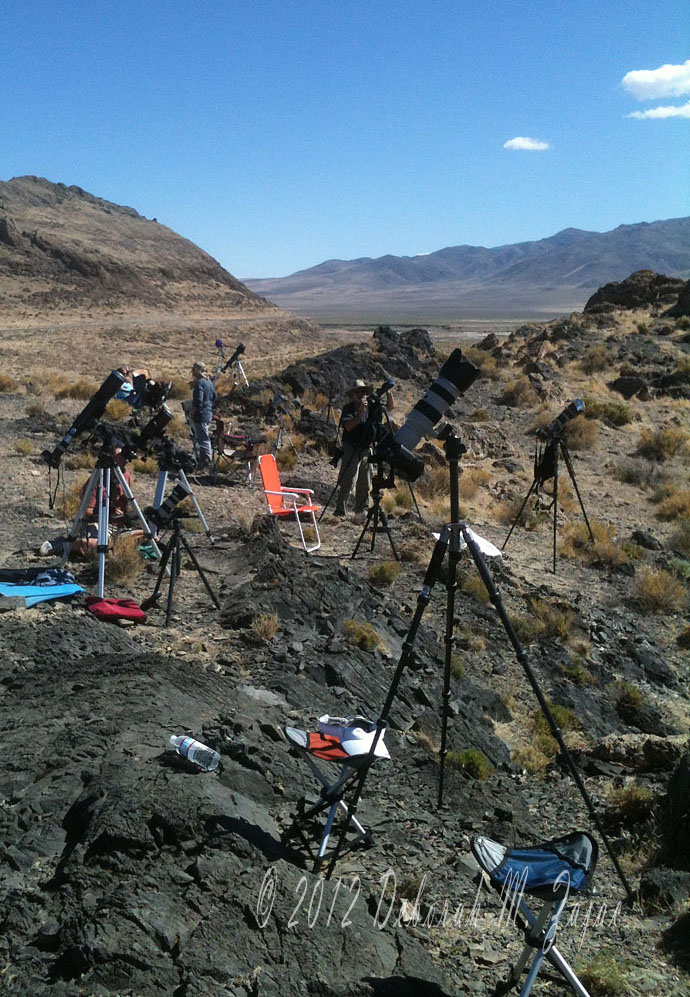
Here’s where we were based. That guy down there with the hat is setting up his Spotting Scope. There were cameras, lenses, and telescopes of all sizes. Some folks came out just to view it.

Wearing the right eye gear!


It was work for me. I don’t own a motorized tracker so I had to manually track the sun, making adjustments every 1-2 minutes for the entire 2.5 hours of the Eclipse.
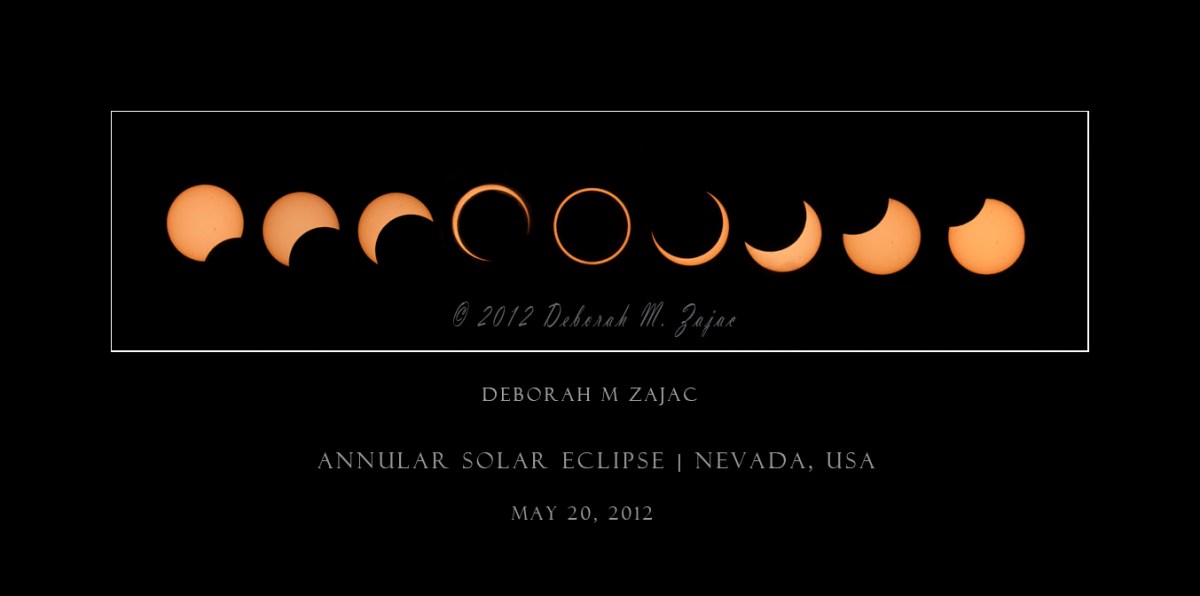
It was worth the effort.  This is also the first time I’ve photographed an Eclipse from start to finish then process the phases in Photoshop. It may be a bit uneven…forgive me! I couldn’t get my guides to work in my workspace so I eyeballed it.  I am pleased I was able to do this at all. I need to give a shout out to PJ for reminding that copy/paste works to do a step I needed too. Thank you!

Looking at my Poster are the phases of the Eclipse. Starting on the left is the beginning of the Eclipse with the “Ring of Fire” in the middle followed by the final pass of the Moon as it made its way across the sun. If you look close you can see the Sun Spots! It was the neatest thing to see from start to finish.

Our little group setting up and getting ready to shoot the Eclipse. I’m off to the right in the hat.  Although that man behind me wasn’t part of our group. He was a spectator who said he’s traveled all over to view Eclipses.  Thank you Rico for the Photo!

And to my traveling and planning companions THANK YOU, Anne, Dali, Phil, Steven, Andy, and Rico for a great day!

Nikon D300s| Nikkor 80-200mm + Tamron 1.4x TC| Manual Priority| Tripod| various shutter speeds, ISO 400| f11

more to come…

Viewing the Annular Solar Eclipse May 20, 2012

Copyright © 2012 Deborah M. Zajac. All Rights Reserved.

My mother asked me if I was going to photograph the upcoming Annular Solar Eclipse, and said she wasn’t sure if they would be able to see it in the San Francisco Bay Area.

I told her “Yes, I’m planning to view, and photograph it.”  and that she will be able to see a “Partial Solar Eclipse” if she stayed home or in the Bay Area.

In the Bay Area  you won’t see the Full Annular “Ring of Fire” to view that one must drive about 4+ hours to a place where you can see that. I gathered several links for her to glean some more information about what she could expect to see here in the Bay Area and thought I’d pass them along here too.

The link below is an animation of the what will be seen in the Bay Area. Click your refresh or reload button once the map page is open. It should be animated then.

http://astro.ukho.gov.uk/eclipse/0132012/San_Jose_CA_United_States_2012May20_anim.gif

To view the Full Annular Ring of Fire the map in the link below shows the path in the west one can view that. The red line is the center line on which one can view the Full Circle.

http://eclipse.gsfc.nasa.gov/SEgoogle/SEgoogle2001/SE2012May20Agoogle.html

Don’t look at  the Sun without protection. Use the old fashion cardboard box and paper method if you haven’t got Solar viewing glasses or a solar filter for a telescope or your camera’s lens. It’s called a Pinhole Camera. There are places around the Bay Area that are offering viewing too.

Making a Pinhole Camera
http://www.exploratorium.edu/eclipse/how.html

http://pacifica.patch.com/articles/ready-for-the-eclipse-how-to-view-it-safely-41c76507

They dance!

Copyright © 2012 Deborah M. Zajac. All Rights Reserved.

I’ve been a bit  behind working on my photographs from my trip to Oregon to see Clark and Western Grebes do their Spring mating courtship and Dance. I’ve still not transferred my files from my laptop to my PC where I do my processing and editing, but I have finally finished some.

By the last morning of our trip I still had not taken any photographs of the Grebes dancing that I liked. I had nearly given up hope of getting any really good photos as they tend to be very shy; keeping themselves pretty far from shore which really tested the limits of my focal range of 300mm + a 2x Teleconverter which gave me an effective range of 600mm. It wasn’t far enough!

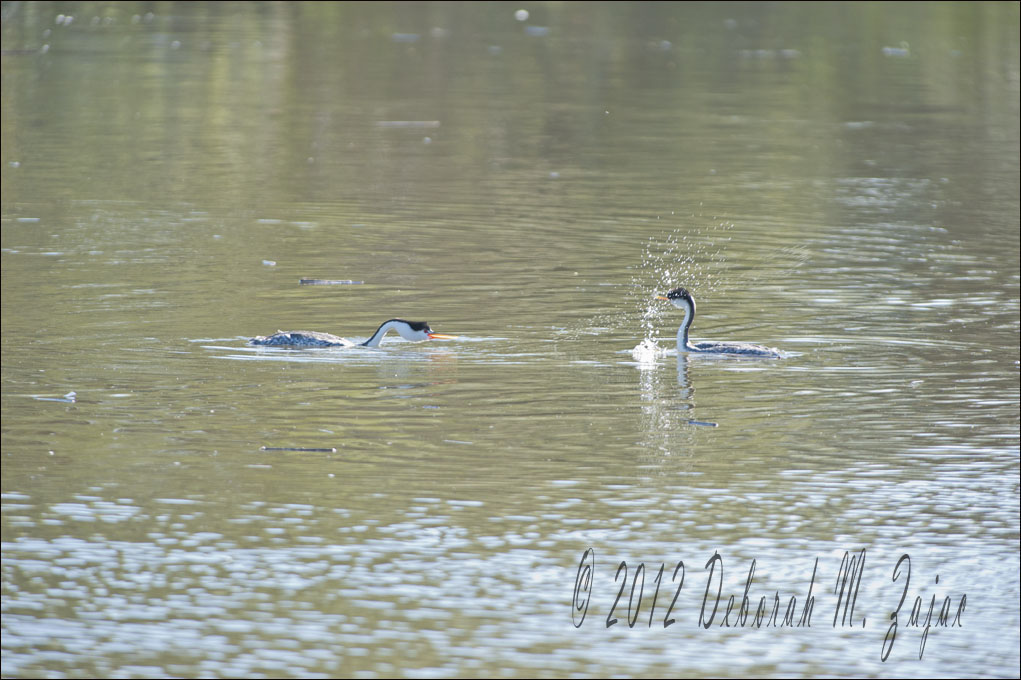
We decided to go back once more before leaving for home. After spending 2 mornings on the pond we learned they’re awake and most active beginning about 8AM and settling down by 10AM, so arriving just before 8AM we set up in our favorites spots and waited for them wake up. About half past 8AM this is what I saw and captured with my camera…

The Visual Connection


After a quick sizing up one after the other dipped their heads in the water and then flung the water off!

I feel the tension rising as both were totally oblivious to anyone or anything around them. They only saw each other as they flung the water over and over again. This went on for a full minute!

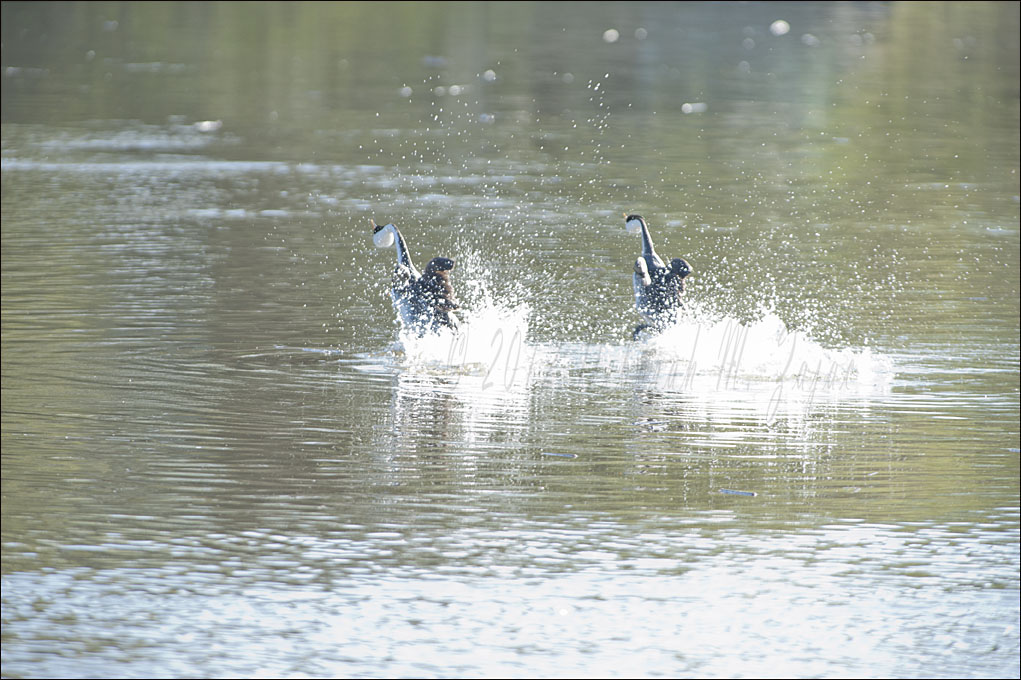
and suddenly they were up gliding across the water in perfect synchronization!

The sound of the beating water was the only sound I heard. It was marvelous, and thrilling to watch. I feel very blessed to have seen it, and to have shared the experience with good friends.

Nikon D700| Nikkor 300mmVRII + 20eIII TC =600mm| Tripod| Wimberley Sidekick

Sun May 17, 2012

Copyright © 2012 Deborah M. Zajac. All Rights Reserved.

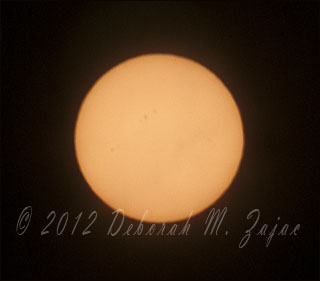
Still practicing for the upcoming Annular Solar Eclipse.

I’m working on getting the exposure right using Live View, and reading lots and lots of articles written by other photographers about how to go about photographing it.

This is a bit blurry you’ll notice. I think this is due to all the atmosphere between me and the sun;wind, dust, clouds, etc. This morning we have clouds in the sky.

Here’s an article I liked that has  handy settings charts for a good starting base. Here’s my friend Steven’s advice on Solar Filters. Don’t try to watch or photograph this event without proper protection for your eyes and camera! I use this Solar Filter.

I’ll be driving with friends 4-5hours away from home to view this event. Will you be traveling to view the Annular Solar Eclipse?

Nikon D300s| Nikkor 80-200@200mm+ Tamron 1.4x TC=420mm|f11| 1/200s| ISO 200| Manual Priority| Tripod| Orion Solar Filter